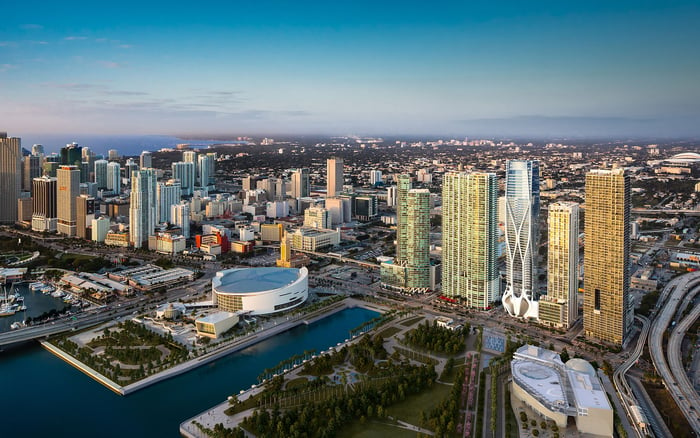
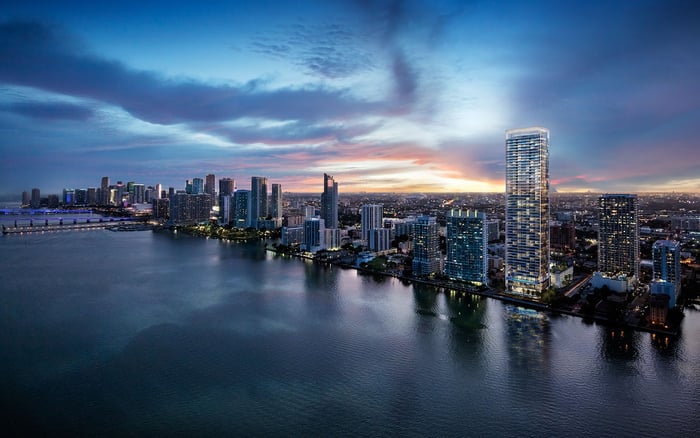
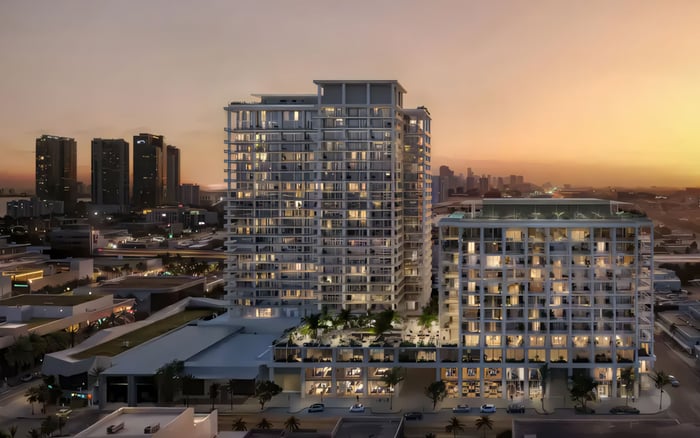
A buyer-focused guide to evaluating view-corridor risk before purchasing luxury real estate in and around Miami Design District, with questions for legal, planning, and resale diligence.
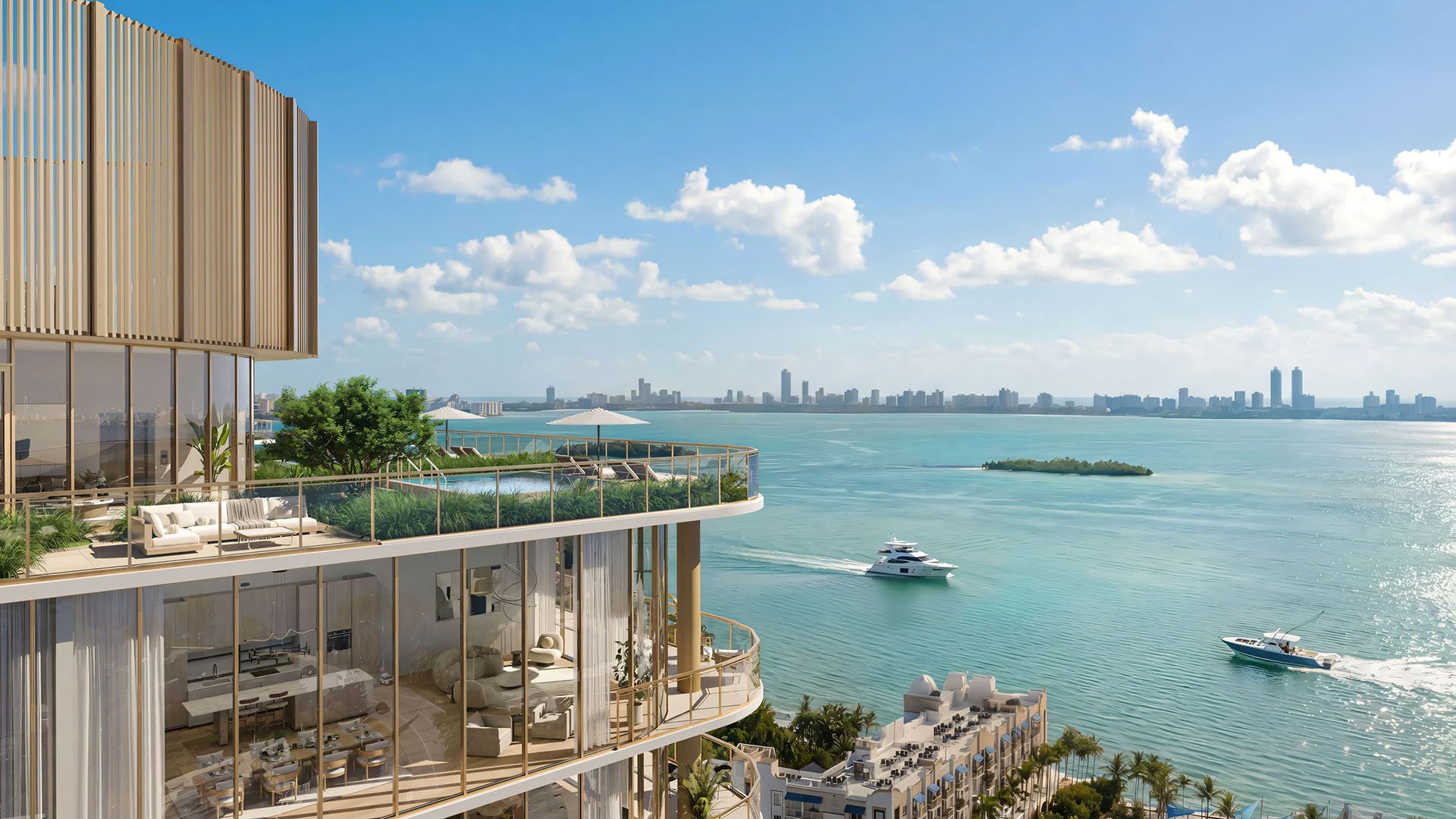
In Miami Design District, the view is often part of the architecture. A residence may frame treetops, skyline, Biscayne Bay glimpses, the energy of Wynwood, or the expanding vertical profile of nearby Edgewater and Downtown. Yet a beautiful outlook is not always a protected asset. Before buying, the more refined question is not simply, “What can I see today?” It is, “What can change in the line of sight tomorrow?”
For luxury buyers, view-corridor risk belongs beside title, insurance, association health, finishes, privacy, and parking in the diligence process. It can affect daily enjoyment, rental appeal, long-term liquidity, and the premium assigned to high-floor residences. A water view, skyline frame, or open sunset exposure may command real value, but only if the buyer understands how durable that value may be.
Begin by separating the view into its components. Is the appeal based on height, distance from neighboring buildings, a low-rise parcel across the street, a road alignment, a park-like opening, or the angle between towers? A view can feel expansive because of a single undeveloped site, which makes the risk more concentrated.
In and around the Design District, buyers comparing new residences such as Kempinski Residences Miami Design District or Miami Design Residences Midtown Miami should ask for a line-of-sight conversation, not just a presentation of renderings. The question is practical: from the exact residence, on the exact floor, in the exact exposure, what land or airspace sits between the window and the view?
The most important risk may not be a known building. It may be what neighboring land is allowed to become. Buyers should ask counsel, planning consultants, or a trusted advisor to review surrounding parcels for allowable height, massing, setbacks, transfers of development rights where applicable, and any public approvals or applications that may influence future scale.
This is not about predicting every future tower. It is about understanding whether today’s openness is structurally likely to remain open, or whether it exists because adjacent land has not yet been fully used. In a market where Design District adjacency overlaps with Wynwood, Edgewater, and Downtown buying patterns, the surrounding urban fabric matters as much as the building itself.
A strong question for the sales team is: “Which parcels have the greatest ability to affect this residence’s primary view, and what assumptions were made when presenting the view?” If the answer is general, ask for the specific exposure analysis by stack and floor range.
Not every view can be protected, and many are not. Still, buyers should ask whether any recorded easements, setback conditions, height limitations, restrictive covenants, association-controlled parcels, or public right-of-way conditions support the openness in front of the residence. A protected view corridor is different from a pleasant current condition.
This distinction is especially important when paying a premium for a special exposure. If the value story depends on an unobstructed angle, the purchase file should identify whether that angle is legal, practical, or merely present-day. The more expensive the view premium, the more precise the documentation should be.
A luxury home should not rely on a single feature. If a neighboring project changes a sightline, the residence should still offer light, layout, ceiling height, privacy, materials, arrival experience, amenities, parking logic, and neighborhood access. View quality is a layer of value, not the entire value proposition.
For comparison, buyers considering broader Miami alternatives such as EDITION Edgewater or 888 Brickell by Dolce & Gabbana often evaluate skyline and water orientation through multiple lenses: the primary view, the secondary view, morning and afternoon light, balcony usability, and potential future obstruction. The same discipline applies in the Design District.
A practical test is to ask: “Would I still want this residence if the most obvious view were softened, narrowed, or partially interrupted?” If the answer is no, the buyer may be speculating on permanence rather than purchasing a resilient home.
View risk should be reflected in negotiation. If two residences have similar interiors but one commands a meaningful premium for openness, the buyer should ask whether that premium is justified by height, scarcity, legal protection, or simply by today’s visual experience. The answer can guide offer strategy.
For an investment-minded buyer, view durability can influence future resale language. A buyer may accept some risk if the price is balanced by design quality, location, and amenities. Conversely, a fragile view priced as permanent should invite sharper diligence.
Contracts and reservation documents vary, but buyers should understand what is promised, what is illustrative, and what is expressly not guaranteed. Renderings, photographs, model views, and sales conversations should not be treated as substitutes for written terms.
Before signing, ask whether view-related representations are included, disclaimed, or limited. Ask whether the developer reserves rights that may affect windows, terraces, glazing, or surrounding improvements. Ask whether material change clauses could alter the buyer’s experience. The goal is not to make the impossible guaranteed. It is to avoid confusing a marketing impression with a contractual right.
Is a luxury condominium view in Miami Design District guaranteed? Usually, a view should not be assumed permanent unless a specific legal protection supports it. Buyers should verify the documents before assigning a major premium.
What is view-corridor risk? It is the possibility that future development, massing, or nearby changes may alter the view, light, privacy, or openness from a residence.
Which exposures deserve the most scrutiny? Views across vacant land, low-rise parcels, parking areas, or underbuilt sites deserve careful review because they may be more likely to change.
Should I rely on renderings when judging the view? Renderings can be helpful for orientation, but they should not replace legal review, floor-specific analysis, and an understanding of surrounding parcels.
Are higher floors always safer from obstruction? Higher floors may improve resilience, but they are not automatically immune. The answer depends on nearby development potential and viewing angles.
What documents should my advisor review? Ask for condominium documents, purchase agreements, recorded easements if any, surrounding parcel information, and any available planning context.
Can a partial obstruction still affect resale value? Yes. Even a narrowed view can affect buyer perception, especially if the residence was originally priced around openness or water orientation.
How should I compare two similar residences? Compare the durability of the view, not only the beauty of the view. The stronger residence is often the one with multiple value drivers.
Does Brickell face similar view issues? Brickell buyers often evaluate view risk carefully because dense urban settings can change over time. The same discipline is useful in the Design District.
What is the best way to shortlist comparable options for touring? Start with location fit, delivery status, and daily lifestyle priorities, then compare stacks and elevations to validate views and privacy.
For a tailored shortlist and next-step guidance, connect with MILLION.
If branded residences are on your mind — as a home or as an allocation — we would be glad to share what we are seeing, privately.
Begin a quiet conversation