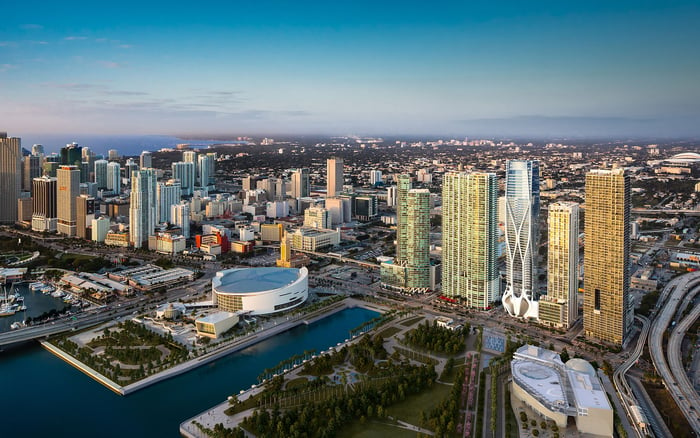
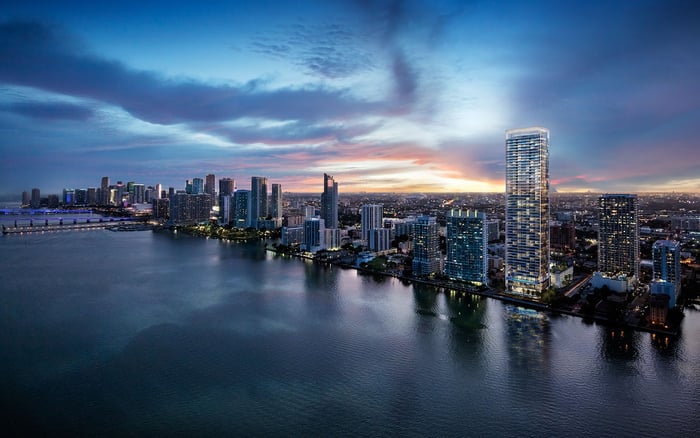
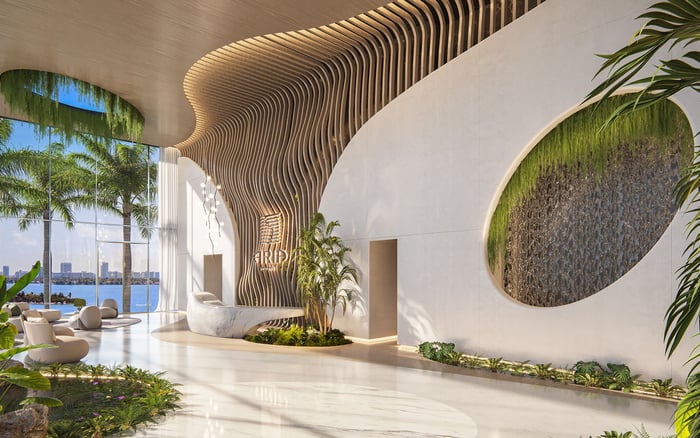
A discreet buyer’s reading of Miami Design Residences Midtown Miami, focused on the central tension of Midtown living: cultural immediacy outside and residential composure inside.
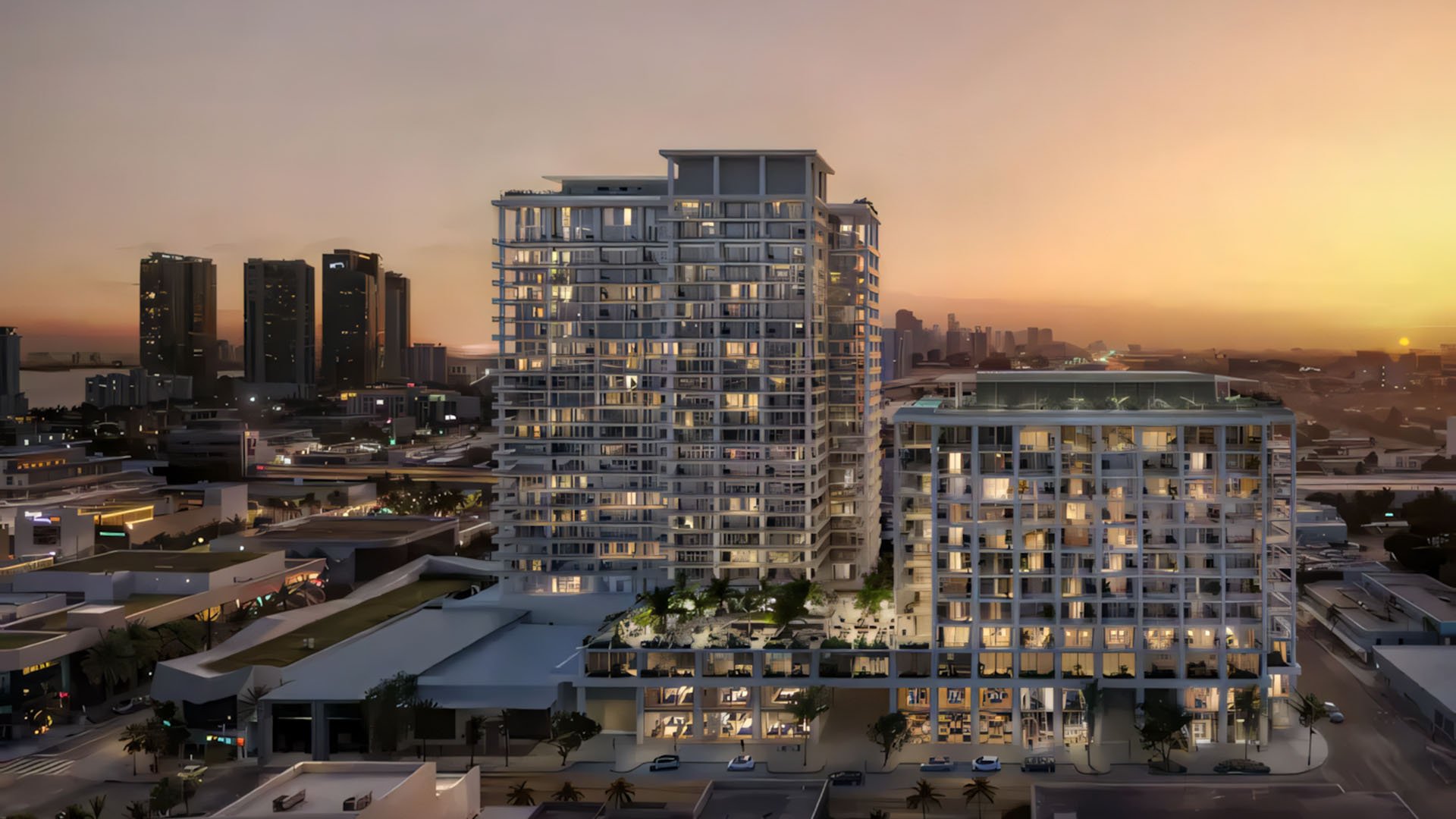
For the ultra-premium buyer, Midtown Miami is not simply a point on the map. It is a lifestyle proposition built around proximity. The district sits within the current of Miami’s cultural, dining, retail, and design life, which is precisely why the best residential concept here must do more than offer a fashionable address. It must create an intelligent buffer between the public tempo of the neighborhood and the private rituals of home.
That is the core lens for Miami Design Residences Midtown Miami. The project’s name signals a relationship with design culture, yet the real buyer question is quieter: can a residence in this setting feel like a retreat rather than a continuation of the street? In a city where branded towers, waterfront estates, and boutique condominiums compete for attention, Midtown’s appeal depends on whether a building can turn energy into convenience without allowing that energy to become noise.
This is the balance between scene and sanctuary. It is less about spectacle than sequence: the approach, the lobby, the elevator ride, the view corridor, the amenity rhythm, the way a home holds light, and the emotional shift that occurs when the door closes.
Scene is not a superficial word in Miami. For many buyers, it means being close to the restaurants, galleries, showrooms, fitness studios, and retail patterns that shape everyday life. A primary residence in Midtown can reduce friction during the week. A pied-à-terre can place owners near the city’s social calendar without requiring a beach commute. A long-hold buyer can see value in proximity to neighborhoods that continue to attract design-minded residents and visitors.
Wynwood, the Miami Design District, and Edgewater all influence the buyer psychology around Midtown. Each offers a different expression of urban Miami. Wynwood leans creative and kinetic. Edgewater adds bay proximity and a vertical residential profile. The Design District brings a polished retail and cultural language. Midtown’s advantage is that it can sit between these worlds without being defined by only one of them.
That proximity also raises the bar. Buyers who understand luxury do not want to feel as if they are living inside a corridor of constant activity. They want access on demand and retreat by instinct. In that sense, the most compelling Midtown residences are not trying to compete with the street. They are trying to edit it.
Sanctuary in a dense, high-energy neighborhood begins before the residence itself. It begins with arrival. A successful urban luxury building choreographs the transition from public to private with care. The experience should feel intuitive, protected, and composed, not performative. In Midtown, where movement is part of the lifestyle, that choreography becomes especially important.
The buyer should look for a sense of compression and release. The city may be animated outside, but the residential entry should slow the pulse. Elevators should feel like private conduits rather than shared interruptions. Amenity spaces should invite use without becoming social pressure. Residences should prioritize livability, not only presentation.
This is where comparisons become useful. A buyer considering Midtown may also study the more waterfront-oriented character of Aria Reserve Miami, where Edgewater offers a different relationship to openness and skyline. Another may look at Villa Miami for an urban bayfront lifestyle that speaks to hospitality-inflected residential living. These comparisons do not diminish Midtown. They clarify it. Midtown’s sanctuary is not about isolation. It is about privacy amid cultural immediacy.
A design-forward buyer usually notices the details others overlook. Sightlines matter. Proportions matter. The first ten seconds of an arrival matter. In a neighborhood associated with creative and retail sophistication, the residence cannot rely on location alone. The interior experience must feel resolved.
At Miami Design Residences Midtown Miami, the buyer should assess whether the building’s design language supports a daily life of calm. That means considering where the eye rests, how natural light is handled, how storage supports a polished home, and whether social spaces are flexible enough for both quiet mornings and evening guests. Luxury here is not measured only by finishes. It is measured by the absence of friction.
The same scrutiny applies to amenity programming. The best amenities in an urban tower do not merely add square footage to a sales narrative. They solve real lifestyle questions. Where does one work privately? Where can one reset after travel? Where can guests be received without making the residence itself feel overexposed? In a Midtown context, amenities should function as a private club residents actually use, not a backdrop that photographs well but complicates daily living.
The buyer choosing Midtown is often choosing a more culture-adjacent form of Miami luxury. Brickell offers a financial-district rhythm and a denser high-rise language. Downtown continues to evolve as a vertical, mixed-use urban center. Miami Beach offers ocean proximity and a more resort-residential cadence. Coconut Grove and Coral Gables, by contrast, speak to shade, scale, and established neighborhood texture.
Within that competitive set, Midtown’s argument is particular. It is for the buyer who wants the city close, but not necessarily the corporate gravity of Brickell or the resort posture of the beach. Someone considering 888 Brickell by Dolce & Gabbana may be drawn to a more formal, branded Downtown and Brickell-adjacent skyline experience. A buyer looking at Frida Kahlo Wynwood Residences may be responding to an even more art-led neighborhood identity. Midtown sits between these impulses.
For a new-construction buyer, the decision should not be reduced to which neighborhood is most fashionable. The more useful question is how one wants to move through Miami. If the week includes design appointments, gallery openings, dining, wellness, and quick drives to the bay or beach, Midtown can feel strategically placed. If the day requires deep quiet, wider setbacks, or direct waterfront, other submarkets may be better aligned.
Investment in Miami luxury increasingly rewards clarity of lifestyle. The strongest residences are not generic boxes in desirable ZIP codes. They are homes that answer a specific buyer desire with discipline. Midtown’s desire is access to cultural Miami without surrendering the privileges of privacy, security, and ease.
That is why the balance between scene and sanctuary is not simply a design conversation. It is a value conversation. If the building feels too public, the premium buyer may hesitate. If it feels too insulated, it loses the reason for being in Midtown. The sweet spot is a residence that lets owners participate in the neighborhood selectively, with home remaining the controlled environment.
This is also why buyers should tour at different times of day when possible. Morning, late afternoon, and evening can reveal different versions of an urban address. The right residence should maintain its composure across those moments. It should not depend on perfect conditions to feel luxurious.
The most intelligent way to evaluate Miami Design Residences Midtown Miami is to approach it as a sequence of thresholds. Start with the neighborhood: does the surrounding energy align with your life, or only your idea of your life? Then consider arrival: does the building make the transition from street to residence feel seamless? Then study the plan: does the home support privacy, entertaining, work, wellness, and storage with equal seriousness?
Finally, ask whether the project’s design identity will age gracefully. In Miami, visual confidence is common. Restraint is rarer. The residences that endure are those with enough character to feel distinct and enough composure to remain livable after the initial excitement fades.
For the right buyer, Midtown can offer a sophisticated urban base that is neither fully resort nor fully financial district. It is a way to live near Miami’s creative center while preserving the rituals that make a home feel personal. That is the promise. The execution lies in how well the tower turns proximity into ease.
Is Miami Design Residences Midtown Miami best for a primary home or a second home? It can be considered for either, depending on how much a buyer values cultural access, walkability, and an urban Miami rhythm.
What is the main lifestyle appeal of Midtown Miami? Midtown offers proximity to design, dining, retail, and creative neighborhoods while remaining distinct from the beach and financial core.
How should buyers think about privacy in a busy neighborhood? Privacy should be evaluated through arrival, circulation, amenity placement, acoustic comfort, and the feeling inside the residence.
Is Midtown more similar to Wynwood, Edgewater, or Brickell? Midtown borrows energy from Wynwood, urban convenience from Edgewater, and city access from Brickell, but it has its own residential logic.
What should a design-focused buyer inspect first? Prioritize proportions, light, storage, material restraint, and whether the plan feels calm rather than merely photogenic.
Do amenities matter more in Midtown than in quieter neighborhoods? They can matter more because well-planned amenities create private places to work, reset, host, and retreat from the surrounding activity.
Is this type of residence mainly about nightlife access? No. The stronger argument is broader cultural access, including dining, design, wellness, retail, and daily convenience.
How does Midtown differ from Miami Beach luxury? Midtown is more urban and culture-adjacent, while Miami Beach typically emphasizes ocean proximity and resort-residential living.
What is the biggest risk for buyers in a scene-driven area? The risk is choosing excitement over livability, which is why the residence must feel calm, private, and practical every day.
What is the simplest way to judge the scene and sanctuary balance? Ask whether the building lets you engage Miami when you want to and withdraw from it the moment you come home.
To compare the best-fit options with clarity, connect with MILLION.
If branded residences are on your mind — as a home or as an allocation — we would be glad to share what we are seeing, privately.
Begin a quiet conversation