A discreet buyer’s guide to evaluating view-corridor risk before purchasing luxury real estate in Las Olas, from sightline documentation to contract strategy.
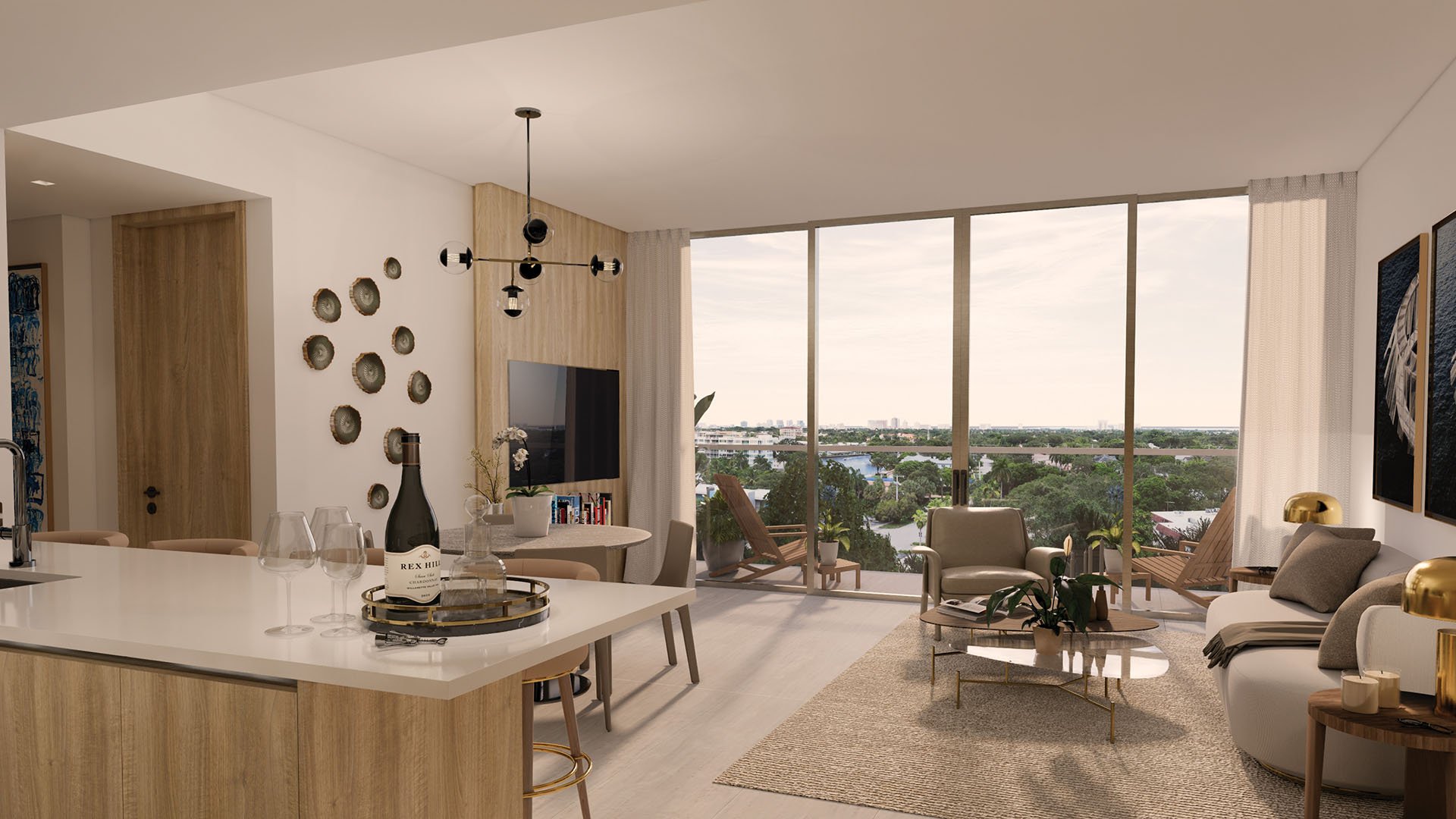
In Las Olas, a view is not merely scenery. It is part of the value architecture of a luxury residence, shaping daily experience, resale positioning, rental appeal, and the emotional confidence of a buyer choosing among a limited field of exceptional homes. The challenge is that views are often described poetically, while risk must be evaluated precisely.
For buyers of luxury real estate in Fort Lauderdale, the right question is not simply, “Is the view good today?” It is, “What could reasonably interrupt, narrow, or reframe this view in the future?” That question is especially important along waterfront and urban corridors, where low-rise, mid-rise, and newer luxury development can sit within a compact field of sight.
A residence may look directly over water, frame a skyline angle, capture a garden foreground, or depend on a diagonal gap between buildings. Each condition carries a different type of exposure. A broad Waterfront outlook may feel secure, while a narrow Waterview between neighboring parcels may require more rigorous investigation. High-floors can improve protection, but elevation alone does not eliminate risk when the premium depends on a specific corridor rather than general openness.
Before negotiating, separate the view into its components. Is the premium tied to direct water, skyline, sunset, privacy, distance, or the absence of visual obstruction? A buyer should ask the seller’s representative to define the view in plain language, then compare that description with the lived experience from the living room, primary suite, terrace, kitchen, and secondary bedrooms.
The strongest homes often offer multiple view moments, not one fragile angle. If the main living area has an expansive composition but the bedroom views depend on a slender opening between neighboring structures, that distinction matters. It may affect how the home lives, how it photographs, and how future buyers perceive value.
In the broader Fort Lauderdale market, buyers comparing Las Olas residences with options such as Four Seasons Hotel & Private Residences Fort Lauderdale and The Ritz-Carlton Residences® Fort Lauderdale should apply the same discipline: identify the exact visual asset, then test how durable it is.
A common mistake is to study only what already exists. View-corridor risk often sits in what could exist. Ask which parcels fall within the sightline, whether they appear underbuilt relative to the surrounding area, and whether their current use could change. A parking lot, smaller building, aging structure, or unusually low improvement may be visually pleasant today but strategically important tomorrow.
For a Las Olas buyer, the most useful conversation is parcel-specific. Which lots control the foreground? Which properties sit directly in the diagonal line toward water or skyline? Which side streets, corner parcels, or waterfront edges could affect privacy and openness? Even when no future project is known, the physical pattern of land around the residence can reveal where exposure is concentrated.
This is where a sophisticated buyer’s team earns its role. A luxury purchase should include planning review, survey awareness, and careful analysis of what can be built nearby. The goal is not to predict every future development. The goal is to decide whether the current premium is supported by a view that is broad, layered, and resilient, or by one that depends on a narrow and vulnerable opening.
High-floors are often prized because they improve light, distance, and perceived privacy. Yet floor level should be analyzed against the surrounding buildable envelope, not in isolation. A higher floor may clear nearby rooflines but still carry exposure if the valued view depends on a corridor over an adjacent parcel.
Ask to see the residence at different times of day. Morning light, afternoon glare, evening reflections, and nighttime building illumination can materially change the experience. A view that feels serene in the afternoon may feel less private at night if neighboring residences or amenities face back into the home.
Terrace depth matters as well. A terrace that allows seated views, outdoor dining, and visual separation from nearby structures can soften risk. A shallow balcony may photograph well but offer less practical value if a future building changes the composition. Buyers should evaluate the view from where life actually happens, not only from the terrace rail.
For those considering river, beach, or marina-adjacent alternatives, projects such as Sixth & Rio Fort Lauderdale and St. Regis® Residences Bahia Mar Fort Lauderdale underscore how varied the Fort Lauderdale view conversation can be. The diligence framework remains the same, even when the setting changes.
Marketing language can be elegant; contract language should be exact. Ask whether any representation is being made about a protected view, unobstructed outlook, water exposure, skyline angle, or future condition. In many luxury transactions, the answer may be that no future view is guaranteed. That does not end the conversation. It clarifies that the buyer must make a valuation decision with open eyes.
Request floor plans, site plans, terrace orientation, stack position, and any available visual materials that show the actual residence rather than a generalized building perspective. If the purchase is pre-construction, ask whether view renderings are illustrative and whether they account for existing neighboring structures. If the purchase is resale, document the present condition with dated photography from each meaningful room and outdoor area.
The buyer’s attorney can help determine whether any language should be added to the offer, inspection period, or due diligence schedule. The objective is not to force a seller to guarantee that the city will never change. It is to ensure that the buyer has time and access to evaluate the view as a material feature before deposits become harder to recover.
A compromised or uncertain view is not automatically a reason to walk away. It may be a reason to adjust price, negotiate terms, or shift attention to a different floor, stack, or building. The essential distinction is whether the residence offers intrinsic quality beyond the view: architecture, ceiling height, plan efficiency, service, parking, privacy, outdoor space, and neighborhood access.
If a residence is priced as though its view is permanent, but the corridor appears dependent on changeable neighboring land, a buyer should use a more cautious valuation. Conversely, a residence with a strong plan and diversified sightlines may justify confidence even if one secondary angle could evolve.
This is particularly relevant for buyers comparing Las Olas with newer branded or amenity-rich residences in nearby coastal settings, including Riva Residenze Fort Lauderdale. The question is not only which home has the most dramatic view today. It is which home offers the strongest blend of view, livability, and long-term defensibility.
Arrive at the showing with questions that treat the view as an asset class. Ask which parcels sit in the main sightline. Ask whether any known nearby construction, renovation, or land assembly could affect openness. Ask whether the view premium is reflected in recent comparable sales, and whether those comparables had similar exposure.
Ask what can be seen from the seated position in the living room, the bed in the primary suite, the dining area, and the terrace. Ask whether the view changes materially from the elevator side of the building to the water-facing side, from one stack to another, or from one floor band to the next. Ask whether window tint, terrace overhangs, glass railings, or neighboring light spill affect the living experience.
Finally, ask yourself a more personal question: if the most delicate portion of the view changed, would you still love the home? The best luxury purchases in Las Olas are rarely dependent on a single visual trick. They feel composed, private, and complete even as the city continues to mature around them.
The core principle is simple: buy the residence, not just the view. A magnificent outlook should enhance the decision, not disguise weak fundamentals.
What is view-corridor risk in Las Olas luxury real estate? It is the possibility that a current view could be narrowed, blocked, or changed by future nearby construction, renovations, or parcel redevelopment.
Is a Waterfront view always safer than an urban view? Not always. A broad water exposure may be more resilient, but each sightline depends on the surrounding parcels and the residence’s exact orientation.
Do High-floors eliminate view-corridor risk? No. High-floors can improve distance and privacy, but they do not automatically protect a narrow diagonal view or a specific skyline angle.
Should I ask about parcels that are not currently for sale? Yes. The risk analysis should consider what sits in the view corridor today and what could reasonably change over time.
Can a seller guarantee my future view? In many transactions, future views are not guaranteed. Buyers should have counsel review the contract language before relying on any view-related statement.
What should I document during a showing? Photograph the view from key rooms, terraces, and seated positions, and keep notes on the time of day, light, privacy, and visible neighboring parcels.
Does Waterview exposure affect resale value? It can. Buyers often assign value to water outlooks, but the strength of that value depends on quality, breadth, privacy, and perceived durability.
How should view risk affect my offer? If the premium depends on a vulnerable corridor, consider more cautious pricing, stronger due diligence timing, or a different floor or stack.
Is Las Olas still attractive if a view may change? Yes, if the residence offers strong architecture, plan quality, privacy, service, and location fundamentals beyond a single visual feature.
Who should help evaluate view-corridor risk? A knowledgeable luxury advisor, attorney, and appropriate planning professionals can help review orientation, surrounding parcels, and contract protections.
To compare the best-fit options with clarity, connect with MILLION.
If branded residences are on your mind — as a home or as an allocation — we would be glad to share what we are seeing, privately.
Begin a quiet conversation