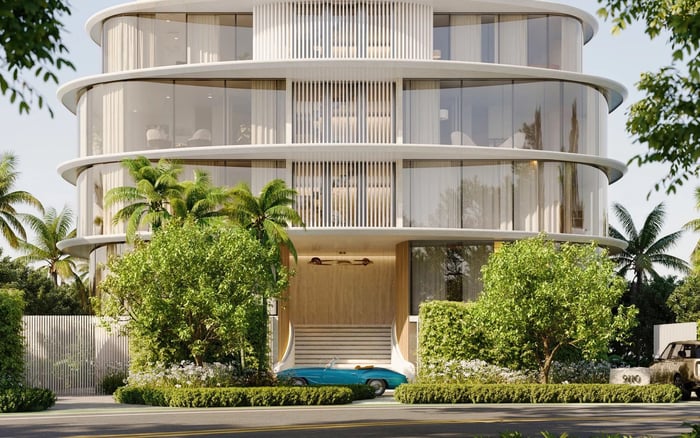
A buyer-focused guide to elevator redundancy at St. Regis® Residences Bahia Mar Fort Lauderdale, with practical questions on access, backup power, storm readiness, service protocols, and condominium documents before purchase.

At the top of the Fort Lauderdale luxury market, the conversation often begins with water views, hotel-style service, marina proximity, private access, and the atmosphere of branded living. At St. Regis® Residences Bahia Mar Fort Lauderdale, those lifestyle considerations are central to the purchase decision. Yet one of the most consequential questions is also among the least glamorous: what happens if an elevator is unavailable?
In a waterfront high-rise residence, elevator reliability shapes the rhythm of daily life, from reaching parking and welcoming guests to accessing amenities, the marina, waterfront areas, deliveries, and staff. For seasonal owners, older family members, buyers with children, and anyone with mobility or medical needs, redundancy is not simply a convenience. It is a livability threshold.
The right approach is not to assume that a luxury brand automatically resolves every operational issue. It is to ask precise questions before contract, review the relevant condominium and service documents, and understand how the building is designed to perform when demand is high, weather is difficult, or one car is out of service.
The first question is straightforward: how many passenger, service, and emergency or fire-service elevators serve each tower, residential stack, or access zone? Buyers should request the specific count by function, not a general assurance that the building has elevators.
The distinction matters because not every elevator serves the same purpose. A passenger elevator may not be available for move-ins. A service elevator may be prioritized for staff, deliveries, maintenance, or trash handling. An emergency or fire-service elevator may be governed by separate protocols. The practical experience of ownership depends on how many cars are actually available to residents on an ordinary morning, a busy holiday weekend, or during a maintenance event.
Ask for a clear explanation of what happens if one passenger car is taken out of service. Can the remaining cars maintain acceptable wait times during peak periods? Are there projections or operating assumptions for resident demand? The answer should be practical, not merely architectural.
At a waterfront site with residential, hospitality, amenity, parking, retail, or marina-related uses, buyers should confirm whether elevator banks are dedicated to residences or shared with other functions. Shared circulation is not automatically a flaw, but it must be understood.
The most useful questions are specific. Which elevators connect to parking? Which reach amenity levels? Which are tied to private residential access? Are any cars reserved or prioritized for service, move-ins, deliveries, maintenance, housekeeping, or branded staff operations? If a car is frequently assigned away from resident use, the building may have less practical passenger capacity than a simple elevator count suggests.
This is also where privacy and service intersect. Private elevator access, key-fob control, destination dispatch, and branded-service expectations can all enhance the experience when the system is working smoothly. The buyer question is what happens if a key car, control panel, or destination-dispatch system has an issue. Redundancy should be evaluated not only by hardware count, but by how access technology performs under interruption.
Buyers comparing Fort Lauderdale’s branded and waterfront market, including Four Seasons Hotel & Private Residences Fort Lauderdale, often focus on service culture. The deeper diligence is whether that service culture is supported by circulation planning that remains elegant under pressure.
Elevator zoning can matter as much as elevator quantity. Ask how banks are organized by floor range, parking level, amenity level, and private residential access. A high-rise with multiple zones may feel efficient when cars are available, but the experience changes if one zone has limited backup during an outage.
For a buyer considering a higher-floor residence, the question is not only how fast the elevator is. It is whether there is an alternate route or sufficient remaining capacity if a car serving that zone is down. For a buyer who will use parking frequently, the question is whether parking-level access depends on the same cars that serve amenities, staff, or deliveries.
In portfolio shorthand, this is a Fort Lauderdale, Broward, marina, new-construction, and water-view issue as much as it is a building-systems issue. Waterfront living depends on movement between private space, arrival sequence, lifestyle amenities, and the edge of the water. The more layered the experience, the more important elevator zoning becomes.
Backup power is one of the essential elevator questions in any coastal high-rise. Buyers should ask whether the elevator systems have backup power and, just as importantly, how many cars can run simultaneously during a utility outage.
A generator that supports one controlled elevator experience is different from a system that can sustain multiple cars across multiple banks. Ask whether backup power supports passenger elevators, service elevators, emergency functions, access-control systems, and the equipment that allows the elevator system to communicate and dispatch properly.
The location of critical components also deserves direct attention. Where are elevator controls, machine rooms, pits, and electrical components located relative to flood-risk areas? In a waterfront setting, resilience is not only about having backup power. It is about whether the components needed for operation are protected from water intrusion and can be restored quickly after severe weather.
This same logic applies across the broader luxury market. Buyers looking at Riva Residenze Fort Lauderdale or Auberge Beach Residences & Spa Fort Lauderdale should bring the same discipline to elevator questions, especially where high-rise living, water exposure, and amenity-driven design converge.
A refined building experience is tested most clearly when something goes wrong. Before buying, ask what hurricane, storm-surge, and post-storm elevator-restoration plans are in place for the waterfront site. The answer should address both immediate resident communication and the sequence for inspection, repair, and return to service.
Maintenance contracts are equally important. Ask whether elevator service agreements include guaranteed response times, spare-parts availability, and priority service after storms. In South Florida, post-storm demand can be regional, not just building-specific. Priority service and parts access can materially affect how quickly normal life resumes.
Then move from conversation to documents. Condominium documents, association budgets, and service agreements should be reviewed for elevator maintenance obligations and long-term replacement reserves. A sophisticated buyer wants to know not only how the system will operate at delivery, but how it will be funded, serviced, and renewed over time.
This is where the analysis becomes financial as well as operational. Elevator systems are capital-intensive. If the reserve structure, maintenance obligations, or replacement planning is vague, the issue may eventually show up in assessments, service limitations, or owner frustration.
Redundancy is not only mechanical. It is also procedural. Buyers should ask how elevator outages will be communicated to residents, particularly seasonal owners who may not be on site when maintenance, storms, or restoration work occurs.
The best question is simple: if one elevator is out of service, how will I know, who will tell me, and what is the expected timeline? For owners who travel frequently, communication through resident portals, management notices, concierge updates, or other official channels can make the difference between a minor inconvenience and a poorly managed arrival.
This question is especially relevant in luxury buildings where expectations are high. Owners paying for a branded residential experience expect discretion, clarity, and continuity. If the building’s procedures are as carefully designed as its arrival sequence, elevator interruptions should be managed with calm precision.
Buyers evaluating nearby options such as Sixth & Rio Fort Lauderdale can use the same standard: do not stop at amenities and finishes. Ask how the building keeps daily life moving when a system is offline.
Before signing, request a clear explanation of elevator counts by passenger, service, and emergency function. Confirm whether each elevator is dedicated to residences or shared with hotel, amenity, parking, retail, or marina-related uses. Ask how banks are zoned and what level of service remains if one car is offline.
Then address resilience. Confirm backup power, the number of cars that can run during an outage, the location of critical components, and the hurricane or storm-surge restoration plan. Finally, review maintenance contracts, response-time commitments, parts availability, owner communication procedures, association budgets, and replacement reserves.
For a luxury waterfront purchase, these questions do not diminish the romance of the residence. They protect it. The most serene ownership experience is often the one where the unseen systems have been questioned before they are ever needed.
Why should elevator redundancy matter at St. Regis® Residences Bahia Mar Fort Lauderdale? Because residents depend on elevators for daily access between homes, parking, amenities, and waterfront or marina areas.
What elevator count should a buyer request? Ask for the exact number of passenger, service, and emergency or fire-service elevators serving each tower, stack, or access zone.
Should I ask whether elevators are shared? Yes. Confirm whether elevators are dedicated to residences or shared with hotel, amenity, parking, retail, or marina-related uses.
Why does elevator zoning matter? Zoning determines which cars serve specific floors, parking levels, amenities, and private residential access points.
What should I ask about outages? Ask what happens when one elevator is out of service and whether remaining cars can maintain acceptable wait times during peak periods.
Can service elevators affect resident convenience? Yes. Cars reserved for move-ins, deliveries, staff, or maintenance can reduce practical passenger capacity.
What backup-power question is most important? Ask whether elevators have backup power and how many cars can operate simultaneously during a utility outage.
Why ask about flood-risk locations? Elevator controls, pits, machine rooms, and electrical components should be understood in relation to waterfront flood exposure.
Should condominium documents address elevators? They should disclose maintenance obligations, service responsibilities, budget treatment, and long-term replacement reserves.
Who should treat elevator redundancy as non-negotiable? Buyers with mobility concerns, older relatives, children, or medical needs should make it a core purchase question.
For a tailored shortlist and next-step guidance, connect with MILLION.
If branded residences are on your mind — as a home or as an allocation — we would be glad to share what we are seeing, privately.
Begin a quiet conversation