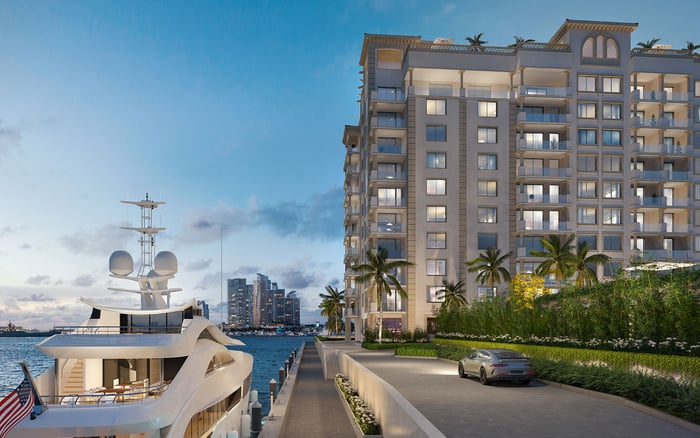
A discreet buyer’s guide to smart-home cybersecurity questions for Fisher Island luxury real estate, from network ownership and vendor access to privacy, resilience, and closing-day handover.

In Fisher Island luxury real estate, technology is no longer an afterthought tucked behind a media-room cabinet. It shapes how a residence opens, cools, lights, shades, entertains, records, and protects. For many buyers, the search may begin with Fisher Island, but the real due diligence is more intimate: who can see the home, control it, update it, and retain access after closing?
The conversation is especially important in residences where comfort is choreographed through lighting scenes, climate zones, motorized window treatments, elevators, audio, access control, surveillance, pool systems, and remote management apps. An ultra-modern home can feel effortless precisely because so many systems are connected. That convenience deserves the same scrutiny as structural condition, association documents, insurance, art walls, parking, and service arrangements.
A gated-community setting may add a layer of privacy and order, but it does not replace a unit-level cybersecurity review. Buyers considering The Residences at Six Fisher Island or estate-style opportunities such as The Links Estates at Fisher Island should treat digital infrastructure as part of the residence itself.
The first question is simple: what exactly is on the network? A credible answer should identify the major categories of connected devices, including access points, routers, control processors, cameras, door hardware, garage or gate interfaces, thermostats, shades, lighting, speakers, televisions, appliances, alarm panels, water sensors, and any remote monitoring equipment.
Ask whether the smart-home system is a single integrated platform or a collection of separate apps and vendors. Fragmented systems are not automatically unsafe, but they can create blind spots. One company may maintain lighting, another may handle audiovisual, another may manage security cameras, and another may support the network. Each relationship should be visible.
For buyers touring Palazzo del Sol, the right question is not merely whether the home is smart. For Palazzo del Sol Fisher Island, and for any comparable address, the better question is whether the system has an inventory, a maintenance history, and a clear responsible party.
Before closing, ask who owns every administrator account. That includes the router, Wi-Fi management console, smart-home controller, cameras, locks, access-control apps, cloud accounts, subscription dashboards, and any vendor portals. A seller may have forgotten a legacy account created years earlier, while a technician may still have access for convenience.
The buyer’s team should request a full credential handover plan. Passwords should not simply be emailed or casually passed along. A cleaner approach is to identify all accounts, remove former users, create new owner credentials, require unique passwords, and enable stronger authentication where available.
Ask whether any personal devices are still paired to the home. Former phones, tablets, voice assistants, remote controls, and contractor laptops may still be trusted by the system. Closing should not leave the prior owner, a house manager, a decorator, or a former technology vendor with invisible access.
Luxury homes often rely on specialist vendors, and that is not a flaw. The issue is governance. Ask which vendors can connect remotely, how they connect, when they connect, and whether the owner is notified. Remote support can be useful, but open-ended access should be understood and controlled.
Ask whether vendor access can be disabled when not needed. If a system requires remote support, consider whether access is time-limited, logged, and approved by the owner or designated manager. The goal is not to make maintenance difficult. It is to avoid permanent keys in too many digital pockets.
This is relevant across the island’s most refined condominium environments. A buyer evaluating Palazzo della Luna should ask the same questions that would apply to a custom estate. Palazzo della Luna Fisher Island may present as highly finished and serene, but serenity depends on invisible discipline as much as visible design.
In a Fisher Island residence, privacy is not only about hedges, elevators, vestibules, or water views. It is also about cameras, microphones, usage logs, app notifications, guest codes, delivery access, and recorded movement within the home. Ask where cameras are located, whether they record audio, where recordings are stored, and who can review them.
Voice assistants deserve particular attention. Some buyers prefer them removed entirely before occupancy. Others keep them in public rooms but exclude bedrooms, dressing areas, offices, and staff spaces. The decision is personal, but it should be deliberate.
Ask how guest access is created and revoked. Temporary codes for family, staff, yacht crew, chefs, trainers, estate managers, and contractors should not become permanent credentials. A refined home should make hospitality easy without allowing access to linger after a visit or employment relationship ends.
Cybersecurity is not only about preventing intrusion. It is also about what happens when systems fail. Ask which functions still work if the internet is down. Door hardware, elevator access, climate control, lighting, alarms, shades, and water shutoff systems should be considered from a practical standpoint.
A sophisticated residence should have a documented way to operate essential features manually or locally. If the owner is abroad, the house manager should know what can be reset, what requires a vendor, and what should never be touched without authorization.
Ask about update practices. Devices and control systems may need periodic software or firmware updates, but updates should be managed carefully so that one improvement does not interrupt another system. The best ownership experience is not constant tinkering. It is quiet, scheduled maintenance with accountability.
Smart-home questions should be raised early enough to influence negotiation, inspection, and closing logistics. Ask for a technology walkthrough, a device inventory, vendor contacts, service agreements, active subscriptions, warranty information, and a written plan for transferring or resetting systems.
If the seller will remove certain equipment, clarify what remains. If the home is being delivered furnished or turnkey, confirm whether tablets, remotes, wall panels, network hardware, cameras, and rack-mounted equipment are included. Ambiguity creates closing-day friction.
The most valuable question may be the simplest: if you were moving into this residence tomorrow, what would you reset first? A serious answer reveals whether the home has been maintained as carefully behind the walls as it appears in front of the glass.
Should cybersecurity be reviewed before making an offer? Yes, early review helps buyers understand whether smart-home systems are an asset, a maintenance item, or a negotiation point.
What is the most important smart-home document to request? Ask for a current inventory of connected devices, accounts, vendors, subscriptions, and primary control systems.
Should former owner access be removed at closing? Yes, prior users, paired devices, saved credentials, and vendor permissions should be reviewed and reset.
Are smart locks a cybersecurity concern? They can be, so buyers should ask who manages codes, how access is revoked, and whether activity is logged.
Should cameras be inspected before closing? Yes, buyers should understand camera locations, recording settings, storage practices, and who can view footage.
Is remote vendor support acceptable? It can be useful, provided access is controlled, documented, approved, and disabled when no longer needed.
What should happen to voice assistants? Buyers should decide whether to remove, reset, or limit them based on privacy preferences and room use.
Should the home still function without internet? Essential functions should be reviewed so the owner knows what works locally during an outage.
Can cybersecurity affect resale value? A clean, documented, well-maintained system can make a technologically advanced residence easier to understand and transfer.
Who should attend the technology walkthrough? The buyer, property manager, smart-home specialist, and a trusted representative should review systems before final acceptance.
For a tailored shortlist and next-step guidance, connect with MILLION.
If branded residences are on your mind — as a home or as an allocation — we would be glad to share what we are seeing, privately.
Begin a quiet conversation