A practical framework for weighing wellness spaces, healthcare access, family routines, and long-term usability when evaluating an Aventura residence.
For family buyers, wellness is less about a collection of impressive rooms than a system that supports everyday life. Before choosing Aventura, map the household's weekly rhythm: early exercise, school preparation, work calls, children's activities, recovery time, visits from relatives, and medical appointments. The most valuable amenity is often the one that removes friction from a recurring need.
This distinction matters because two residences can offer equally polished wellness programs yet serve families very differently. A serene treatment room may appeal to one household, while another may place greater value on a pool that accommodates both exercise and supervised family time. The essential principle is consistent: evaluate lifestyle features by frequency of use, ease of access, and fit with the household.
Begin with practical questions. Is access convenient from the residence? Are the hours compatible with school and work schedules? Do reservation rules make spontaneous use realistic? Consider noise, privacy, changing areas, storage, guest policies, age restrictions, supervision expectations, and whether different activities can take place without conflict.
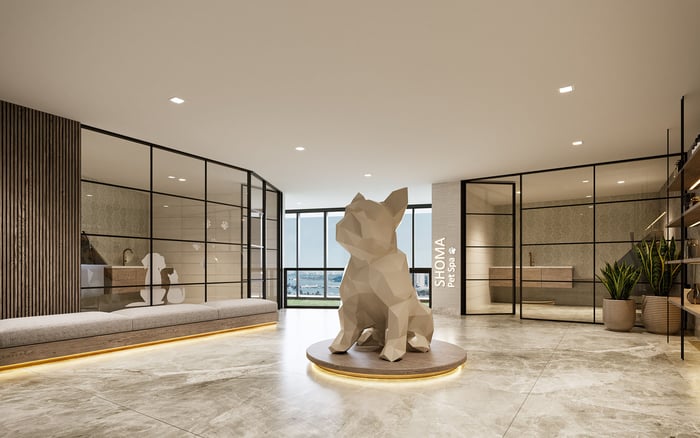
A lap pool, fitness room, sauna, studio, or treatment suite should be assessed in person at the times the family would actually use it. Buyers should also ask how equipment, finishes, ventilation, and water areas are maintained. A beautiful amenity can quickly lose value if booking is difficult, circulation feels exposed, or operating standards do not match the residence's positioning.
When reviewing Avenia Aventura, use the visit to test this broader framework rather than simply count features. Ask which spaces would become part of a Monday morning, a rainy weekend, or a recovery day after travel.
Medical proximity should not be reduced to a map pin or an optimistic drive estimate. Families should define the care they are most likely to need, then evaluate the entire journey: departure from the building, elevator access, parking or pickup, alternative routes, arrival procedures, and the return home.
The relevant standard will differ by household. Parents with young children may prioritize convenient routine care and a clear urgent-care plan. Multigenerational buyers may focus on specialist access, recurring appointments, rehabilitation, or caregiver logistics. Buyers managing an established condition should confirm that their preferred physicians, facilities, insurance arrangements, and pharmacies suit the intended location before committing.
Test important routes during realistic windows rather than relying on a single tour. Record ordinary conditions, difficult conditions, and a backup plan. Medical proximity has value when it provides dependable access, not merely geographic closeness.
A family's wellness plan extends beyond the property line. Private-school planning, extracurricular schedules, grocery routines, outdoor time, caregivers, and visits from grandparents all influence whether a home feels restorative or demanding. The right residence should reduce the coordination required across this network.
Create a weekly route map and identify the trips that cannot be moved. Then compare Aventura with nearby residential options without assuming that a shorter straight-line distance will create an easier day. Families considering Turnberry Ocean Club Sunny Isles or Bentley Residences Sunny Isles can apply the same test: measure each choice against the household's actual destinations and preferred ways of moving between them.
Wellness amenities are shared operational commitments. Request the current rules, fee structure, reservation procedures, staffing model, and available information on maintenance responsibilities. Understand how guests, trainers, caregivers, children, and service providers may use the spaces. These details can shape daily utility as decisively as design.
Consider future stages of family life as well. Children's growing independence, changing work patterns, aging parents, temporary injuries, and longer stays by relatives can alter what matters. Review elevator circulation, step-free movement, drop-off practicality, privacy, and room flexibility with those transitions in mind.
A useful comparison set can include a different neighborhood and building model. One Park Tower by Turnberry North Miami, for example, can be assessed against the same scorecard without presuming that one location or concept is universally preferable.
Score each residence across five categories: daily wellness use, medical access, family logistics, operating confidence, and adaptability. Weight the categories before touring, then ask adult decision-makers to score them independently. Differences often reveal whether the household is being influenced by presentation rather than long-term fit.
Keep nonnegotiables separate from preferences. A dependable medical route or workable child policy may be essential; a particular finish or seldom-used room may be optional. The strongest choice is not necessarily the residence with the longest amenity menu. It is the one whose wellness environment, access plan, and governance remain convincing after the novelty of the tour has faded.
What should family buyers evaluate first in Aventura? Begin with the household's weekly routine, essential destinations, and nonnegotiable care needs before comparing amenities.
Is a larger wellness program always more valuable? No. Value depends on regular use, convenient access, sensible rules, privacy, and dependable upkeep.
How should buyers test medical proximity? Travel the relevant routes at realistic times and identify alternatives for delays, urgent needs, and return trips.
Which amenity rules deserve close attention? Review hours, reservations, guest access, age limits, supervision, trainers, caregivers, and cancellation policies.
Should children participate in amenity tours? When appropriate, their reactions can reveal practical issues involving comfort, circulation, noise, and usability.
How can multigenerational families assess a residence? Consider mobility, privacy, caregiver access, recurring appointments, flexible rooms, and comfortable shared spaces.
What documents should buyers request? Ask for current operating rules, fee information, reservation procedures, and available maintenance details.
How should families compare different neighborhoods? Apply the same destinations, travel windows, care requirements, and amenity scorecard to every candidate.
What is a common wellness-amenity mistake? Buyers may overvalue visually dramatic spaces while overlooking scheduling, operating rules, and likely frequency of use.
How should future needs influence the purchase? Favor a residence that can accommodate evolving routines, older relatives, injuries, caregivers, and changing work patterns.
For a confidential assessment and a building-by-building shortlist, connect with MILLION.
If branded residences are on your mind — as a home or as an allocation — we would be glad to share what we are seeing, privately.
Begin a quiet conversation