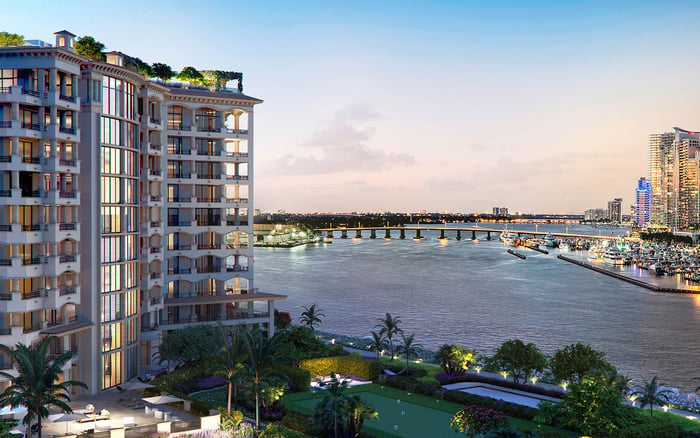
A discreet buyer’s guide to the logistical questions cash purchasers should resolve before pursuing luxury real estate on Fisher Island, from proof of funds and escrow to closing coordination, privacy, and post-closing readiness.

In Fisher Island luxury real estate, cash is often understood as a language of certainty. It can simplify underwriting, strengthen negotiating posture, and reassure a seller that the path to closing will not depend on a lender. Yet a cash offer is only as strong as its logistics. Before pursuing a residence, estate, or second home on Fisher Island, the more refined question is not simply whether funds are available. It is whether those funds can move cleanly, privately, and on schedule.
For ultra-high-net-worth buyers, a purchase may involve multiple advisors, entities, jurisdictions, and custodial accounts. That complexity is not a weakness, but it must be managed before the contract clock begins. In a market associated with privacy and waterfront living, delay can become expensive if a buyer’s team is still clarifying wire authority, title structure, escrow expectations, or closing documentation after acceptance.
This guide is designed as a practical checklist for conversations with counsel, financial advisors, title professionals, and the brokerage team before making a cash offer.
A seller wants certainty, while a buyer often wants discretion. The proof-of-funds conversation should address both. Ask what level of documentation will satisfy the seller without unnecessarily exposing account numbers, consolidated net worth, or unrelated holdings. In some transactions, a carefully prepared letter from a financial institution or wealth advisor may be appropriate; in others, redacted statements or verified liquid balances may be requested.
The key is to decide in advance who will prepare the documentation, whose name it will show, whether it aligns with the buying entity, and how quickly it can be updated. If the purchase will be made through a trust, limited liability company, or other structure, the proof of funds should not create confusion about authority to buy.
Buyers comparing opportunities such as The Residences at Six Fisher Island and estate-style offerings like The Links Estates at Fisher Island should treat documentation as part of the presentation, not an afterthought.
A cash contract may still require earnest money, and the timing of that deposit can be one of the first tests of execution. Ask how much is expected, when it must be delivered, who will hold it, and what wire instructions will be used. Confirm whether the deposit must come from the same account or entity that will close.
This is also the moment to discuss wire fraud safeguards. The buyer’s team should establish a verification protocol using known phone numbers, not email alone. For a significant investment, a few minutes of voice confirmation can protect both capital and momentum.
Escrow logistics are especially important when a buyer is traveling, operating across time zones, or relying on family office staff. Determine who has wire authority, whether dual approvals are required, and whether bank cutoffs could affect the contract deadline.
The purchasing name matters. A cash buyer should ask early whether title will be held individually, jointly, through a trust, through an entity, or through another structure recommended by counsel. That decision can affect documentation, closing signatures, insurance, tax planning, estate planning, and future resale strategy.
The correct answer is personal to the buyer. What matters for logistics is alignment. The contract name, proof of funds, deposit source, title commitment, closing statement, and signature authority should all tell the same story. When these pieces are inconsistent, even a strong cash buyer can lose valuable time.
For residences such as Palazzo del Sol or Palazzo della Luna, the elegance of the asset should be matched by equal elegance in execution. Quiet, orderly preparation is often the difference between a smooth close and a week of avoidable questions.
Cash does not eliminate every review step. Before offering, ask what building, association, membership, access, or administrative approvals may apply to the specific property. Request a clear calendar for applications, interviews, signatures, deposits, move-in coordination, and any documents that must be completed before closing.
This is not merely clerical. If a buyer intends to use the residence quickly, host family, bring staff, receive deliveries, or begin design work, the operational details should be understood before closing. Fisher Island buyers often value privacy and control; both depend on knowing the rules of ownership and occupancy before the keys are transferred.
A gated-community environment can create a heightened expectation of order. That order is part of the appeal, but it also makes advance preparation essential.
Even without a lender, a disciplined cash buyer should ask how title will be examined, what exceptions may appear, what insurance is advisable, and who will review the closing statement. The absence of financing should not mean the absence of diligence.
Ask counsel to explain the difference between the purchase price and the total cash needed to close. Closing costs, prorations, reserves, assessments, insurance premiums, association charges, and other adjustments can affect the final wire. The buyer should know the expected range well before closing day.
Insurance should also be addressed early. Waterfront ownership can involve specialized underwriting questions, and high-value interiors, art, jewelry, wine, vehicles, and household staff may require separate conversations. The objective is not merely to bind a policy, but to ensure the ownership lifestyle is protected from day one.
The best cash closings are choreographed. Ask for a written timeline that identifies contract execution, deposit deadlines, due diligence periods, document submissions, approval milestones, final walk-through, wire initiation, signing, recording, and possession. Then assign responsibility for each task.
Privacy should be considered throughout. Who receives documents? How are passports, entity records, tax forms, and financial materials transmitted? Which advisors are copied? Who speaks for the buyer if questions arise? A sophisticated closing process reduces unnecessary circulation of sensitive information.
In Fisher Island, where buyers may be balancing business travel, family obligations, and staff coordination, the calendar should reflect real-world availability. A cash buyer should not assume that speed alone is the goal. The goal is certainty with discretion.
Is a cash offer automatically stronger on Fisher Island? It can be compelling, but only if the buyer can prove liquidity, meet deadlines, and complete all required documentation without friction.
Should proof of funds be prepared before touring? Yes. Having a discreet, current proof-of-funds package ready can improve negotiating posture when the right property appears.
Can I buy through an entity or trust? Often, yes, but the structure should be reviewed by counsel before the offer so the contract, funds, and signatures align.
Does cash remove the need for title review? No. A cash buyer should still review title, exceptions, closing documents, and ownership obligations with appropriate advisors.
Who should verify wire instructions? A trusted member of the buyer’s team should verify instructions directly through known contact channels before any transfer is initiated.
What should I ask about escrow timing? Ask the amount, deadline, holder, source account, and whether banking cutoffs or approval procedures could affect delivery.
Are association or building approvals still relevant? Yes. Cash may simplify financing, but it does not necessarily eliminate administrative requirements tied to ownership or access.
How early should insurance be discussed? Early in diligence. High-value residences and waterfront exposures can require careful review before closing day.
What if funds are held in multiple accounts? Ask your advisory team how to consolidate or evidence liquidity in a way that is accurate, timely, and appropriately private.
What is the most overlooked cash-buyer question? Many buyers forget to ask who has authority to approve wires, sign documents, and answer closing questions under deadline pressure.
If you'd like a private walkthrough and a curated shortlist, connect with MILLION.
If branded residences are on your mind — as a home or as an allocation — we would be glad to share what we are seeing, privately.
Begin a quiet conversation