Forté on Flagler’s advertised services do not, by themselves, establish how an empty residence is inspected, how pest-control vendors gain access, or what documentation owners receive. A buyer-focused guide to the written policies, financial distinctions, and absence protocols worth confirming before purchase.

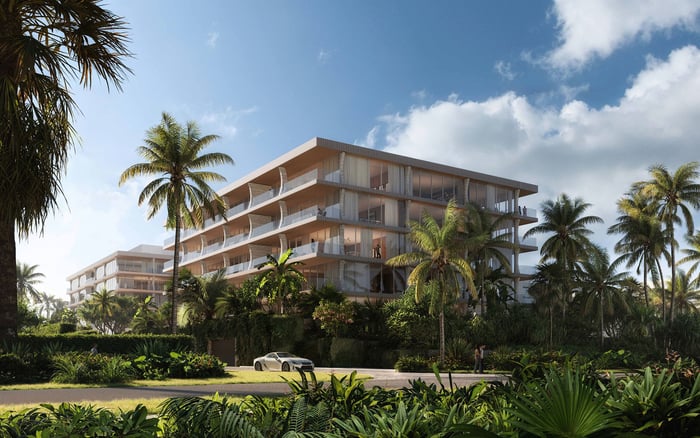
At Forté on Flagler West Palm Beach, the residential proposition is clear: 41 waterfront residences at 1309 South Flagler Drive, overlooking Palm Beach, the Intracoastal Waterway, and the Atlantic Ocean. Advertised amenities include a 75-foot lap pool, heated spa, outdoor dining and lounge areas, and health-and-wellness spaces.
The advertised service model includes 24/7 concierge and valet services, security, wellness and fitness operations, private-dining staffing, pool maintenance, and building upkeep. For a buyer who travels frequently, however, the decisive questions begin inside the residence: who checks it, under what authority, and with what record of the visit?
Public marketing does not establish a vacant-unit inspection schedule, pest-treatment arrangement, or owner-facing reporting protocol. That distinction is not evidence that these services are absent. Their scope should be confirmed through governing documents and written management responses, not inferred from an amenity description.
The marketing materials do not identify an inspection checklist, triggering events, or an assessment-funded vacant-unit inspection program. Nor do they establish whether management routinely checks empty residences for leaks, HVAC failure, humidity, mold, storm damage, plumbing problems, or pests.
Ask whether inspections are scheduled, requested by owners, or triggered only by a suspected problem. Then define the scope: a general visual check is not the same commitment as checking specified equipment or documenting moisture concerns. The goal is a defined service, not reassurance that someone is available.
Written confirmation should address frequency, notice requirements, emergency triggers, charges, and responsibility for corrective work. If an issue is discovered, who contacts the owner, who may authorize a contractor, and when is further approval required? An inspection arrangement should distinguish observation from repair authorization.
A buyer also considering Alba West Palm Beach can ask the same questions without assuming the two buildings operate alike. Compare written obligations, not the breadth of their service vocabulary.
Forté’s marketing materials do not explain whether interior pest treatment is association-wide, optional, scheduled, or separately paid by owners. Treatment inside a residence should therefore be discussed separately from general building upkeep. One service description should not be assumed to include the other.
Request the applicable treatment scope and schedule, along with the rules for owner authorization, rescheduling, or opting out. Confirm vendor credentials and whether anyone accompanies the technician. If treatment requires entry while the owner is away, establish how access is approved and completion is communicated.
Payment warrants equally direct questions. Ask whether the service is covered by regular assessments, charged per visit, or arranged independently by the owner. Clarify whether follow-up visits carry separate costs and whether treatment requires advance preparation inside the residence.
The goal is a written arrangement that addresses both service delivery and privacy. Availability alone does not explain who may enter a home or what that person is authorized to do.
Florida condominium law gives associations an irrevocable right of access during reasonable hours for specified maintenance, repair, replacement, or damage-prevention purposes. That legal authority does not establish Forté-specific notice periods, authorized entrants, key custody, access credentials, escorts, or entry logs.
Ask management to distinguish routine vendor visits, owner-requested services, and entry for damage prevention. For each category, request the applicable notice and authorization procedure. Confirm who can release a key or credential, whether authorization expires, and how entry and departure are recorded.
Florida condominium law separately permits board-authorized entry into qualifying abandoned units for specified inspection, preservation, repair, and related purposes. Seasonal or intentional vacancy should not automatically be equated with abandonment, which has separate statutory conditions.
For buyers weighing Mr. C Residences West Palm Beach alongside Forté, this distinction offers a useful comparison framework. Statutory access authority and a promised routine inspection service are different matters; neither should be treated as proof of the other. Counsel can review the governing documents and applicable law before purchase.
Forté’s public marketing does not describe owner-facing inspection or treatment reports identifying who entered, when, what was observed, and what follow-up occurred. Buyers should ask whether those records exist and what an owner would receive after a visit.
A useful record would identify the entrant and purpose, entry and departure times, observations, work performed, and unresolved items. Request an appropriately redacted sample checklist or completion record, if available. Ask how urgent findings are communicated and how an owner learns that corrective work is complete.
Florida’s condominium official-records framework generally allows association members and their authorized representatives to inspect official records at reasonable times, subject to statutory limitations. It does not establish that every concierge note, vendor message, or work order exists in a standardized format. Prospective purchasers should clarify which materials are available through the seller or purchase process rather than assume member access rights already apply.
Relevant requests may include applicable contracts, treatment schedules, invoices, work orders, entry logs, inspection checklists, incident reports, and vacant-unit policies. Ask which are maintained and available-not simply whether the building keeps records.
Monthly maintenance fees are associated with Forté’s advertised service model, but the marketing materials do not establish that routine interior inspections or pest treatment are included. Separate association-funded operations from owner-paid services before treating either as part of the ownership budget.
Before purchase, request the declaration, bylaws, rules, current budget, insurance information, recent board minutes, resale disclosures, and management agreement, if available. Read them alongside written service confirmations. Any discrepancy between an informal explanation and a governing document warrants clarification before relying on the service.
When evaluating Shorecrest Flagler Drive West Palm Beach, apply the same document-first approach. This is a purchasing discipline, not a claim that another residence offers a particular inspection program or payment structure.
Before an extended departure, agree in writing on emergency contacts, authorized entry, HVAC settings, water shutoff, storm preparation, pest treatment, and prompt notification of damage. Establish who is responsible for each action and who can approve expenditure if the owner cannot be reached.
Keep that protocol aligned with the building’s rules and the residence’s needs. The objective is not to turn hospitality into property supervision by implication. It is to define responsibilities among owner, management, and vendors clearly enough that everyone understands their role.
Forté’s amenities describe the experience of being at home. Written inspection, access, and documentation arrangements clarify what happens while the owner is elsewhere.
For a discreet perspective on South Florida residential ownership, explore MILLION.
If branded residences are on your mind — as a home or as an allocation — we would be glad to share what we are seeing, privately.
Begin a quiet conversationThe reviewed public marketing does not identify an inspection schedule, checklist, or assessment-funded program. That does not establish that inspections are unavailable; buyers should request written confirmation.
The advertised concierge service does not itself establish routine interior inspections. Confirm the inspection scope, frequency, authorization, and charges separately.
The reviewed materials do not establish that interior pest treatment is included. Ask whether it is association-funded, optional, or separately paid by owners.
Confirm notice, owner authorization, vendor credentials, key or credential handling, escort requirements, and entry logging. Also request the treatment schedule and completion-report procedure.
Florida condominium law provides an irrevocable access right during reasonable hours for specified maintenance, repair, replacement, or damage-prevention purposes. It does not establish Forté-specific entry procedures.
Seasonal or intentional vacancy should not automatically be equated with abandonment. Abandonment is subject to separate statutory conditions.
Ask for records identifying who entered, when, the purpose, observations, work performed, and follow-up. Forté’s reviewed marketing does not establish an owner-facing reporting format.
Florida law generally permits members and their authorized representatives to inspect official records at reasonable times, subject to statutory limitations. This does not guarantee that every service interaction has a standardized record.
Request the declaration, bylaws, rules, current budget, insurance information, recent board minutes, resale disclosures, and management agreement if available. Seek applicable inspection, pest-treatment, and access policies as well.
Address emergency contacts, authorized entry, HVAC settings, water shutoff, storm preparation, pest treatment, and damage notification. Clarify responsibility and spending authorization when the owner cannot be reached.