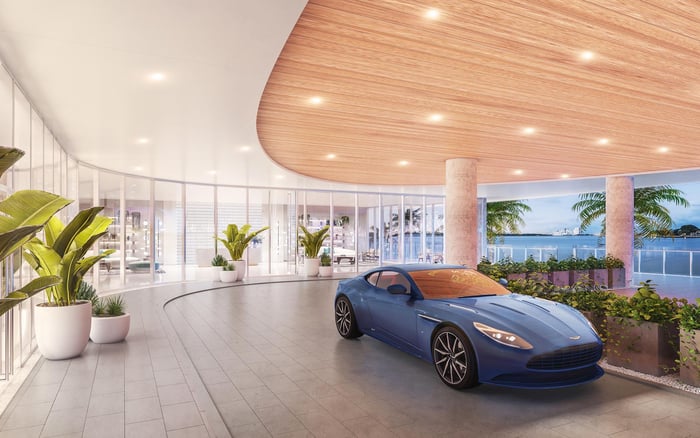
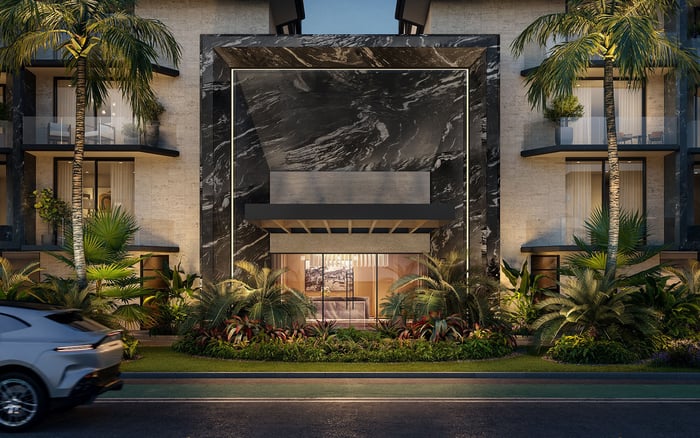
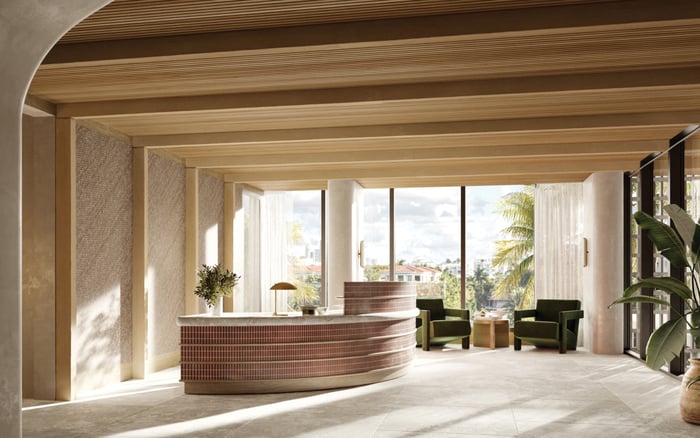
Alma Bay Harbor Islands advertises smart access and boutique amenities, but its public marketing does not establish camera coverage, monitoring arrangements, or record-retention policies. Buyers should distinguish access control from surveillance and request written operational answers before drawing conclusions about security.
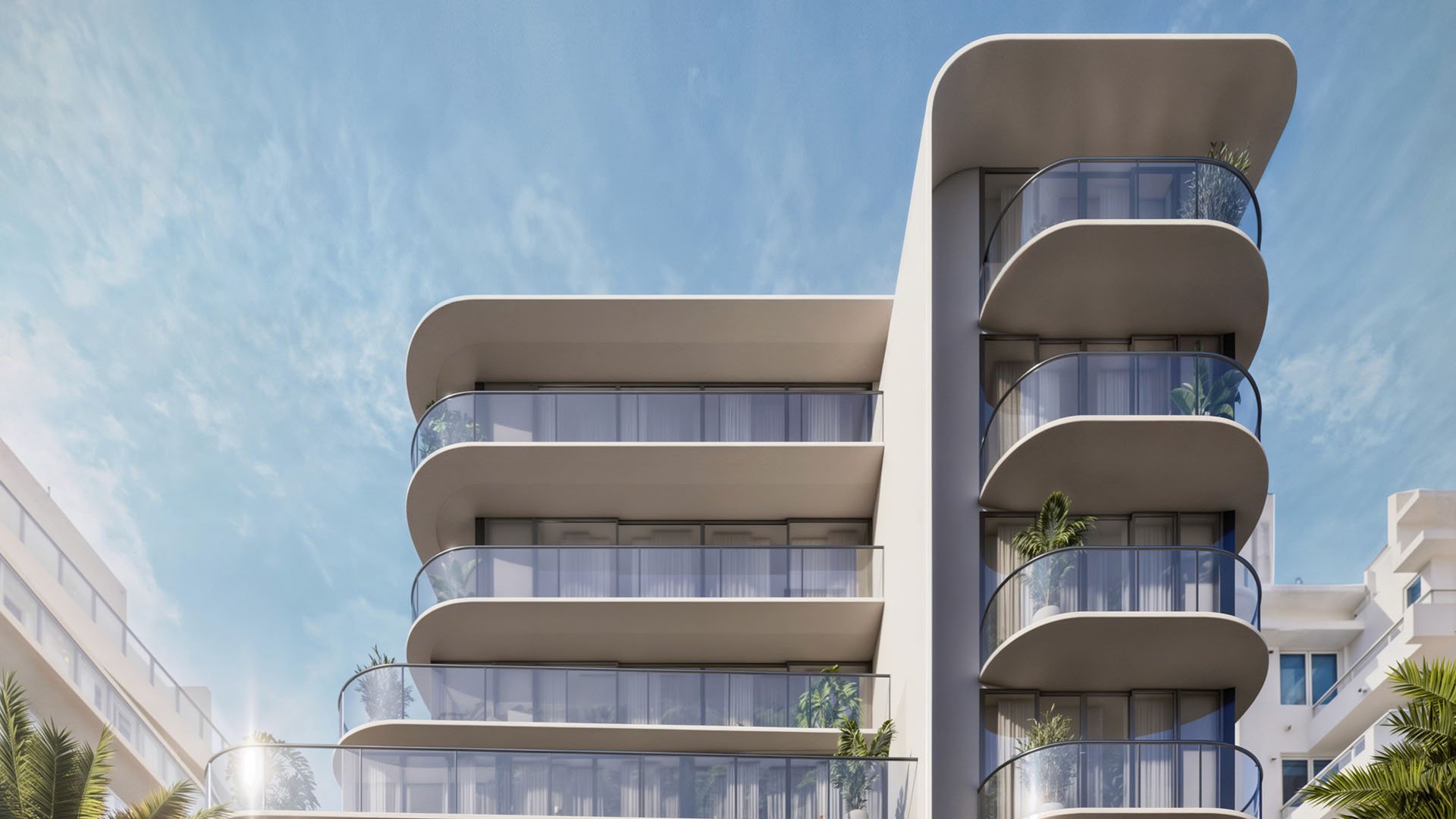
At Alma Bay Harbor Islands, the advertised proposition is intimate: a boutique, seven-story condominium at 1160 101st Street, with a rooftop swimming pool and sun deck, fitness studio, residents’ lounge, private storage and covered parking. For a discerning buyer, ownership depends on more than the amenity program. It also depends on how shared spaces are managed-and what happens when an incident requires a clear account.
Advertised features include a “secure lobby with smart access,” a virtual doorman, key-controlled residence-direct elevator access and a secured garage with smart vehicle-recognition access. Each warrants confirmation against final project specifications. None, on its own, establishes comprehensive camera coverage, continuous recording or human monitoring.
The essential distinction is straightforward: undisclosed coverage is not proof of missing cameras, actual blind spots or inadequate security. Alma’s public marketing leaves important operational questions unanswered; it does not justify a negative security verdict.
Access control addresses who may enter a space. Surveillance addresses what can be observed or recorded there. Incident response addresses who acts when something happens. Buyers should evaluate these functions separately, rather than treating “secure” as a complete operating specification.
A controlled lobby entrance does not establish that every visitor interaction is recorded. Key-controlled elevator access likewise does not establish cameras inside elevator cars or along adjoining corridors. A virtual doorman description does not, by itself, define monitoring hours, staffing arrangements or response responsibilities.
For buyers also considering Alana Bay Harbor Islands, the useful comparison is documentary, not rhetorical: request the same written answers from each property. This is a diligence framework, not a claim that either building has a particular security system or level of protection.
Alma’s public marketing does not establish a camera map or camera count, nor whether garage entrances, exits, parking spaces or pedestrian routes are continuously recorded. Covered parking and controlled vehicle entry should therefore be evaluated separately from the recording of activity within the garage.
Ask management to explain the route from vehicle arrival to residence access. Which points are recorded? Is coverage continuous along pedestrian connections or limited to entry points? Are elevator waiting areas included? A buyer-facing explanation can identify covered zones without requiring unrestricted distribution of sensitive system plans.
Extend the inquiry to stairwells, package areas, trash rooms, storage areas, service entrances and the building perimeter. Surveillance coverage for these spaces remains unspecified in public marketing. Private storage, for example, is an advertised amenity-not an assurance that the approach to each storage area is recorded.
The rooftop pool and sun deck are part of Alma’s advertised lifestyle offering, alongside wellness areas and a summer kitchen. Camera coverage for these spaces remains unspecified. Buyers should not assume that amenity access also means recorded activity.
Ask which shared rooftop areas, if any, are recorded and how the policy addresses resident privacy. The question is not whether every moment of leisure should be captured. It is whether the building has a clear, documented approach to observation, access and response in the spaces residents use.
A rooftop inquiry should also distinguish cameras from staff presence. Alma’s public marketing does not establish a 24/7 live-monitoring arrangement, an on-site security staffing model or a documented incident-response protocol. Each is a separate question deserving a written answer.
Camera presence alone would not resolve every diligence question. Alma’s public marketing does not specify resolution, low-light performance, recording mode, audio capture or license-plate recording capabilities. Smart vehicle-recognition access should not be read as confirmation that usable license-plate footage is retained.
Ask whether recording is continuous or event-triggered, which areas have low-light capability and what identification detail the system is intended to capture. Frame these as requests for confirmed specifications, not assumptions about installed equipment. Also ask who checks system operation and who is responsible when a camera or recorder fails.
When comparing Alma with Bay Harbor Towers, apply the same distinction between advertised features and confirmed operational specifications. Neither a polished presentation nor silence about a technical detail establishes how a system performs.
Alma’s public marketing does not establish a footage-retention period. Buyers should request a written video-retention policy that explains routine deletion or overwriting and how footage is preserved once an incident is identified.
Access-control logs require a separate inquiry. Ask what entry events are logged, how long those records are retained and who can retrieve them. Do not assume their retention period matches that of video.
Management incident records form another category. Alma’s public marketing does not disclose a retention schedule for incident reports. Ask how an event is documented, who maintains the record and how related footage and access logs are associated with it.
Police records are a fourth, distinct category. The available information does not verify an Alma-specific policy or historical incident record for any of these categories. That absence does not establish that the property is incident-free. A written preservation procedure is more useful than an informal assurance that records can be obtained later.
Alma’s public marketing does not identify who owns the surveillance system, controls footage exports or serves as footage custodian after developer turnover. Those responsibilities matter when a resident needs records preserved or an authorized party requests an export.
Request relevant condominium documents, camera and access-control policies, vendor responsibilities and turnover provisions. Ask who receives an incident notification, who can authorize preservation, how requests are acknowledged and who manages disclosure. The aim is to establish responsibilities without assuming residents have unrestricted access to footage.
For buyers extending their search toward Bal Harbour, the same principle applies: assess operational clarity alongside architecture and amenities. At Alma, the prudent next step is neither to infer danger nor to take reassurance from incomplete marketing. It is to obtain written answers on coverage, monitoring, retention and custody, then evaluate those answers with the appropriate advisers.
For a discreet perspective on South Florida residential choices, explore MILLION.
If branded residences are on your mind — as a home or as an allocation — we would be glad to share what we are seeing, privately.
Begin a quiet conversationAlma is marketed as a boutique, seven-story condominium at 1160 101st Street, Bay Harbor Islands, Florida 33154.
Advertised amenities include a rooftop swimming pool and sun deck, fitness studio, residents’ lounge, private storage and covered parking.
No. A secure lobby with smart access describes an advertised access feature, not verified coverage or continuous recording throughout the building.
Public project materials do not provide a camera map or camera count. That does not prove cameras are missing or that actual blind spots exist.
Public marketing does not establish whether garage entrances, exits, parking spaces or pedestrian routes are continuously recorded. Buyers should request written coverage details.
No. Advertised key-controlled elevator access does not establish cameras inside elevator cars or in adjoining corridors.
Public materials do not identify camera coverage for the pool, wellness areas or summer kitchen. Buyers should ask about coverage and privacy policies separately.
No footage-retention period is established by the public promotional materials or residence listings. Request a written policy covering routine retention and incident-related preservation.
That is not established. Video, access-control logs and management incident records require separate retention inquiries, while police records are a distinct category.
Public materials do not identify the footage custodian or export authority after turnover. Buyers should request condominium policies, vendor responsibilities and turnover provisions.