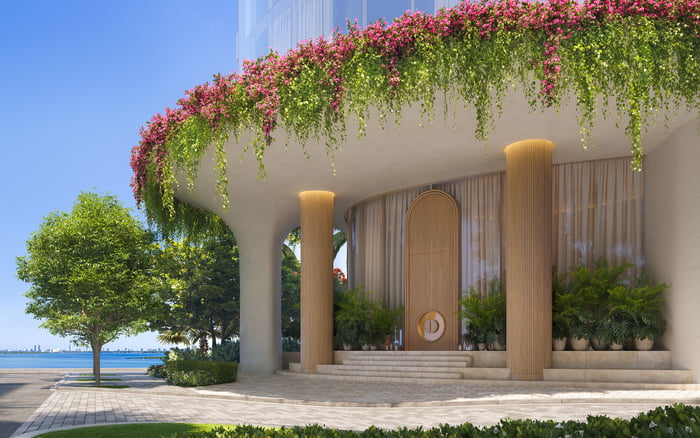
A collector-oriented ranking of five active Edgewater residences, balancing documented storage, wine refrigeration, design and occupancy milestones with the loading-access protections buyers still need to confirm.

A collector’s residence must do more than frame Biscayne Bay. It must accommodate the less visible rituals of ownership: bringing a low-clearance car home, receiving a wine shipment, or moving a substantial design piece from the loading area to the apartment without unnecessary handling. In Edgewater, these practical requirements deserve as much attention as architecture and hospitality.
This ranking prioritizes documented collector-relevant features. Protected residential loading and limited retail-delivery conflicts remain unconfirmed at all five properties. Restaurants, hotels and commercial space raise operational questions; they do not establish congestion. The distinction matters: a compelling amenity program is no substitute for a service-access plan.
For buyers considering EDITION Edgewater, owner storage and EV charging provide a useful starting point. Neither establishes specialist car accommodation or climate-controlled wine storage. Here, “active” encompasses marketing, construction, closing and pre-leasing stages; it does not establish available purchase inventory. Delivery dates below remain projections, not confirmation of present completion.
1. EDITION Residences Edgewater: 2121 N Bayshore Drive
EDITION ranks first for its documented combination of owner storage, electric-vehicle charging and hospitality amenities. Its program spans more than 45,000 square feet of indoor and outdoor amenities, including bike storage, six guest suites, private dining, a cinema and a rooftop pool. Arquitectonica and Studio Munge are part of the design team, while direct Miami Baywalk access and more than 800 linear feet of waterfront give the property a substantial waterfront setting.
Estimated completion is 2026. For collectors, the decisive next step is operational: confirm garage geometry, storage conditions and the route from receiving to residence. With an on-site fine-dining restaurant, separation between residential access and restaurant servicing must be verified, not assumed.
2. Villa Miami: 710 NE 29th Street
Villa Miami ranks second overall and first for an explicitly documented wine feature: in-residence built-in wine refrigeration and storage. Developed by Terra and One Thousand Group, with ODP Architects and Charles & Co. on the design team, it offers half- and full-floor residences. Residence counts range from 70 to 72, with estimated delivery in late 2027.
Secure private vaults, private dock access, wellness facilities, private workspaces and a screening room broaden its appeal. Without specifications, the vaults should not be treated as wine cellars. A Major Food Group-operated restaurant or members’ club also makes food-and-beverage servicing a central diligence issue; separate residential loading has not been established.
3. Aria Reserve Miami: 700 NE 24th Street
Aria Reserve has the strongest documented near-term occupancy position in this comparison. Its South Tower received a temporary certificate of occupancy and entered the closing phase, while the North Tower was described as topped out with a 2026 completion target. Buyers should distinguish these tower-specific milestones rather than apply a single delivery assumption to the entire property.
For collectors, the appeal lies in the opportunity to prioritize operational inspection where access is available. Dedicated wine storage and collector-protected loading remain unverified. Garage access, freight-elevator reservations and receiving procedures should therefore carry more weight than assumptions about what a large residential development provides.
4. VIDA Edgewater Residences: 410 NE 35th Terrace
VIDA combines a marketed residential component of 68 residences with 70 hotel units. It broke ground in December 2023, with completion scheduled for 2026. Its advertised amenities include parking, a restaurant/bar, fitness facilities, and spa and wellness offerings.
The smaller residential count may appeal to buyers seeking a more limited ownership community, but it does not establish a quieter service environment. Hotel operations and restaurant deliveries make separate arrivals, receiving areas and loading schedules particularly important to confirm. Parking alone offers no assurance of assigned collector-car spaces, suitable ramp clearance or dedicated handling for valuable deliveries.
5. Neo Edgewater: 2600 Biscayne Boulevard
Neo is the leasing alternative in this shortlist, not a verified condominium purchase opportunity. Its 399-unit residential component launched pre-leasing, with first move-ins scheduled for October 2026. Amenities include a pool deck, cabanas, co-working spaces, a padel court and a rooftop deck.
Approximately 205,000 square feet of office and retail space represents the largest explicitly documented commercial interface among these five candidates. That scale warrants close examination of residential access; it is not proof of delivery conflicts. A prospective tenant should request parking terms, storage permissions and service-access rules before assuming the building can support a collection.
For a design collector, authorship is only one measure of suitability. A distinguished interior still needs a workable route for an oversized cabinet, a fragile light fixture or a substantial sculptural piece. Ask for freight-elevator dimensions, door clearances, loading-bay access and the rules governing specialist installers.
At Villa Miami, half- and full-floor residence formats and built-in wine refrigeration make the collection itself a useful starting point for discussion. Confirm bottle capacity, temperature settings and maintenance responsibilities before treating the installation as a long-term storage solution. Secure vault specifications warrant a separate conversation about dimensions, access and environmental conditions.
For Aria Reserve Miami, tower-specific timing should guide the inspection strategy. Where operational access is available, walk the receiving route rather than rely solely on plans. An elegant arrival lobby does not establish a protected path for collection deliveries.
A collector’s diligence should distinguish physical capability from enforceable permission. Garage drawings establish dimensions; parking agreements and building rules establish how those spaces may actually be used. Request clearance measurements, ramp transitions, turning radii, assigned-space terms, valet arrangements and EV charging capacity. Charging availability alone does not establish specialist accommodation for collector cars.
For wine and design deliveries, request the loading plan, freight-elevator procedures, receiving hours and security protocols. Clarify whether restaurant, hotel, office or retail deliveries share an entrance, bay or elevator with residents. If separation is promised, ask where it appears in governing documents or binding operating rules, who controls scheduling and how exceptions are handled.
Storage deserves equal scrutiny. General owner storage is not equivalent to temperature-controlled wine storage, and a secure room may still be unsuitable for sensitive materials. Ask about environmental controls, access permissions and responsibility for damage. Resolve these questions before commitment rather than infer capabilities from a brochure.
The right residence will match both the collection and the owner’s tolerance for shared operations. Beautiful surroundings matter, but the final decision should rest on confirmed dimensions, written permissions and a service route that works for the objects entrusted to it.
For a discreet conversation about your Edgewater shortlist, connect with MILLION.
If branded residences are on your mind — as a home or as an allocation — we would be glad to share what we are seeing, privately.
Begin a quiet conversationEDITION Residences Edgewater ranks first for its documented combination of owner storage, EV charging and hospitality amenities. Protected loading and specialist car accommodation still require confirmation.
Villa Miami explicitly markets built-in wine refrigeration and storage within residences. Buyers should confirm capacity, temperature settings and maintenance responsibilities.
Protected residential loading and limited retail-delivery conflicts are not established for any of the five properties. Buyers should request loading plans and enforceable service-access rules.
Active includes marketed, construction, closing and pre-leasing stages. It does not establish current purchase inventory or completed delivery.
The South Tower received a temporary certificate of occupancy and entered the closing phase. The North Tower had a separate 2026 completion target.
Neo is a pre-leasing and rental candidate, not a verified condominium purchase opportunity. Its first move-ins were scheduled for October 2026.
VIDA combines 68 marketed residences with 70 hotel units and a restaurant/bar. Those uses make separate residential arrivals and loading arrangements important to confirm.
No; buyers must also confirm garage clearance, ramp transitions, turning radii, parking assignments and valet arrangements.
General owner storage should not be treated as climate-controlled wine storage. Environmental conditions and permitted uses require separate confirmation.
Confirm loading-bay access, freight-elevator dimensions, door clearances and installer rules. Also establish receiving procedures and responsibility for damage.