A buyer-focused guide to distinguishing Onda Bay Harbor’s advertised parking and charging amenities from the unit-specific rights, valet responsibilities, and operating rules that should be confirmed before purchase.
An effortless arrival is part of a luxury residence’s appeal. Before purchasing at Onda Bay Harbor, however, buyers should distinguish that experience from the rights and operating arrangements behind it. A parking amenity, valet service, and an available charger answer three different questions.
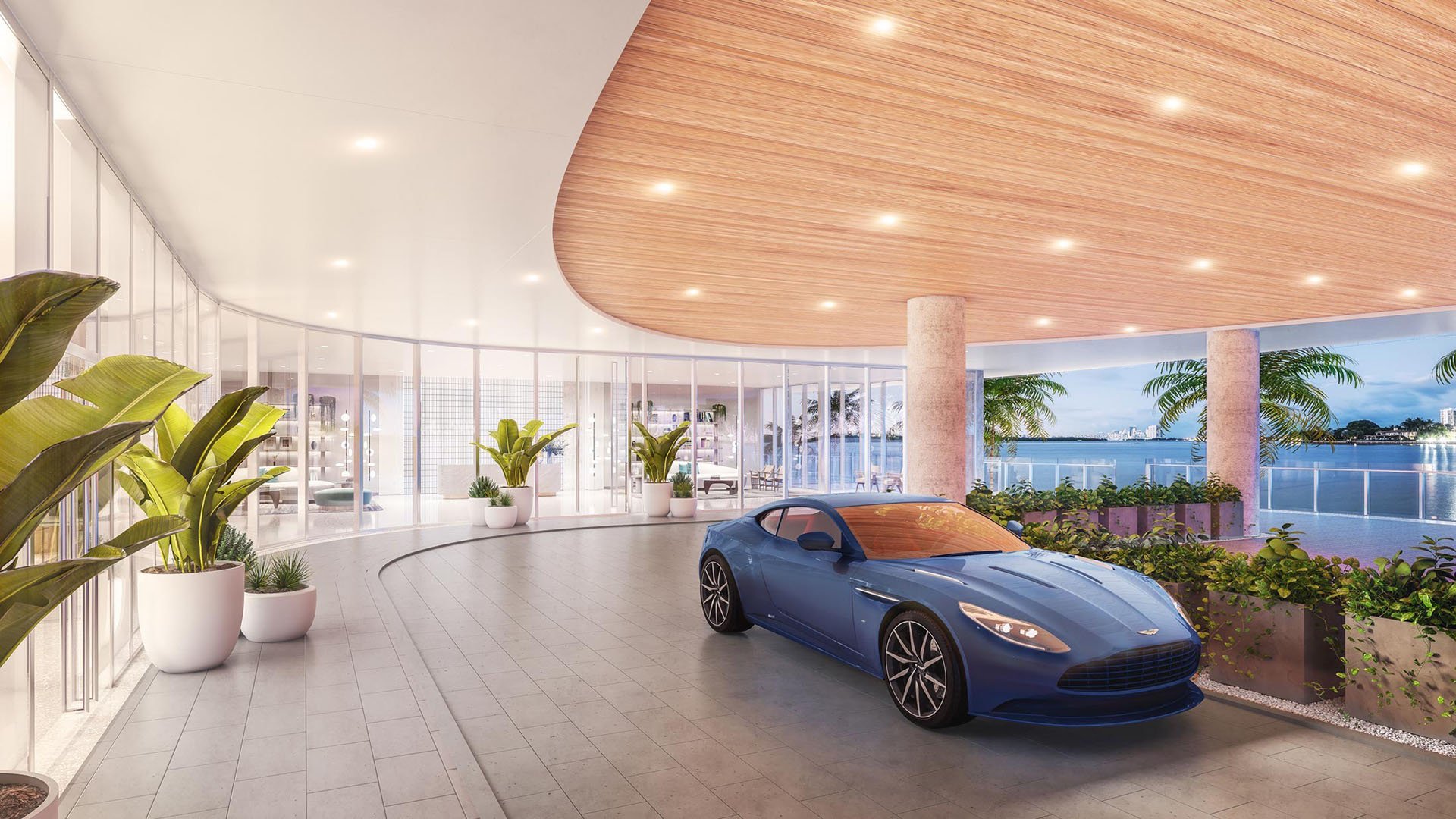
Onda Residences, at 1135 103rd Street, Bay Harbor Islands, Florida 33154, advertises a covered valet drop-off area, 24-hour valet parking, personal parking spaces in a fully enclosed garage, and electric-vehicle charging stations. Bicycle storage and secured individual residential storage are also advertised. These features define the amenity offering-not the legal status of a particular space or a guarantee of charging access.
The distinction is straightforward: establish what transfers with the residence, what depends on association rules, and what relies on an operator’s performance. The answers should be written, unit-specific, and reviewed before purchase.
Begin with the unit’s parking exhibit, condominium declaration, amendments, and current association rules. Ask whether the spaces are deeded, designated as limited common elements, separately purchased, or subject to association reassignment. These are questions to resolve, not established Onda policies.
Individual residence descriptions illustrate why a building-wide assumption is insufficient. Unit 307 is marketed with two tandem parking spaces. Unit 304 is described as including two assigned parking spaces and one private storage unit. Unit 703 is described with two attached-garage spaces, assigned parking, and valet parking. None of these descriptions, on its own, establishes another residence’s allocation or ownership structure.
Request the exact space numbers and a plan showing their locations. Confirm that the seller’s asserted rights match the documents and will transfer with the residence. Ask whether parking can be leased separately, whether household members may use both spaces, and whether the association can change the allocation.
For buyers also considering Bay Harbor Towers, apply the same documentary standard separately. A useful comparison rests on each residence’s actual parking rights, not assumptions drawn from an amenity description.
Two spaces do not necessarily mean independent access to two vehicles. In a tandem arrangement, one vehicle’s position may affect the other’s departure. At Onda, the Unit 307 description makes that configuration a specific point to investigate; it does not imply that every residence has tandem parking.
Measure the relevant spaces and confirm clearance, turning room, vehicle restrictions, and access to doors and the trunk. If the household keeps a larger vehicle alongside a daily driver, inspect the proposed arrangement with both vehicles’ dimensions in mind. Ask whether either vehicle must be moved to retrieve the other-and who is authorized to move it.
A garage walkthrough should also trace the route from the assigned spaces to the residence. Keep storage rights distinct from parking rights: an advertised storage amenity does not establish permission to keep belongings in a parking bay. Request the applicable restrictions rather than treating available floor area as usable storage.
Onda advertises 24-hour valet parking. That describes service availability, not documented retrieval times, staffing levels, or liability terms. It also does not establish whether valet is optional, mandatory, or necessary to access particular garage areas.
Ask for written self-parking and valet rules. Can an owner enter and leave independently? Must keys remain with staff? Can the operator relocate vehicles between assigned spaces and other bays? Clarify guest access, overnight procedures, any fees, and how requests are handled when several residents want their vehicles at once.
Peak occupancy is a useful operating scenario to discuss, not evidence of an existing service problem. Ask management for any available records of busy-period retrieval times and staffing arrangements. Without a performance commitment, continuous availability should not be treated as a promise of immediate departure.
When comparing Onda with Alana Bay Harbor Islands, keep valet convenience separate from parking autonomy. Request each property’s written arrangements before deciding which better suits the household’s routine.
A discreet service experience still requires a clear claims process. Ask who operates the valet, who receives a damage or theft claim, and whether the operator’s contract and insurance certificate are available for review. The advertised service does not answer those questions.
Request the procedures for documenting vehicle condition at handover and reporting a problem at retrieval. Identify notice deadlines, exclusions, any asserted limitations of liability, and the party responsible for responding. Have counsel and an insurance adviser assess how those documents interact with the buyer’s own coverage.
Clarify who may move a vehicle for tandem access or charging. If a car moves between an assigned space and a common charging bay, ask how key custody and responsibility are documented throughout. Do not assume that the association, operator, and insurer accept identical obligations.
Electric-vehicle charging stations are advertised at Onda, but that amenity description does not specify charger count, connector types, power levels, reservation arrangements, or separate electricity charges. Nor does it establish how access is prioritized when demand exceeds capacity or guarantee access at full occupancy.
The PH4 description includes assigned parking, two or more spaces, and an EV charging station among its parking features. That wording warrants a unit-specific inquiry-not a conclusion that the residence has an exclusive charger.
Request an inventory of operational chargers and their locations. Ask whether charging occurs at an assigned space or requires moving into a shared bay. Establish reservation rules, time limits, guest eligibility, queue management, and any available peak-demand operating data. For daily planning, these details matter more than charging’s inclusion in the amenity offering.
Then identify who pays for electricity, software, maintenance, repairs, replacement, and idle fees. If private installation matters, ask whether it is permitted and what approvals, electrical-capacity limits, costs, and restoration obligations would apply. Do not assume such permission exists.
Whether the wider search includes Bay Harbor Islands or Bal Harbour, the practical test remains personal: can the documented arrangements support the way you use your vehicles? Model a simultaneous household departure, a late return, visiting guests, and an evening when charging demand exceeds available stations.
Before purchase, assemble the parking allocation documents, current garage and valet rules, claims procedures, and charging policies. Reconcile any conflicts between those materials and the seller’s description with your advisers. Avoid relying on oral representations; review the condominium documents and statutory disclosures.
The objective is not to diminish the appeal of a serviced arrival. It is to know precisely which conveniences are secured, which are shared, and which remain subject to operating rules.
For a discreet conversation about your South Florida residential search, connect with MILLION.
If branded residences are on your mind — as a home or as an allocation — we would be glad to share what we are seeing, privately.
Begin a quiet conversationOnda Residences is located at 1135 103rd Street, Bay Harbor Islands, Florida 33154.
Onda advertises personal parking spaces in a fully enclosed garage, a covered valet drop-off area, and 24-hour valet parking. Those descriptions do not establish a particular unit’s legal parking rights.
A uniform building-wide configuration is not established. Unit 307 is marketed with two tandem parking spaces, so buyers should verify their own unit’s layout.
An assigned-parking description does not establish ownership. Review the unit’s parking exhibit, declaration, amendments, and association rules to determine the legal arrangement.
The advertised amenities do not establish whether valet is mandatory, optional, or required for particular garage areas. Request the written self-parking and valet rules.
No retrieval-time guarantee is established by the advertised 24-hour service. Ask about staffing, busy-period waits, and any written performance commitments.
The advertised amenities do not establish liability allocation. Request the operator’s contract, insurance certificate, and written claims procedures for adviser review.
The advertised charging amenity does not guarantee access at full occupancy or explain priority when demand exceeds capacity. Confirm allocation, reservation, and time-limit rules.
PH4’s description lists an EV charging station among its parking features, but that does not establish exclusive ownership or access. Request unit-specific documentation.
Permission for private installation is not established. Ask about approvals, electrical capacity, fees, and restoration obligations before relying on that option.