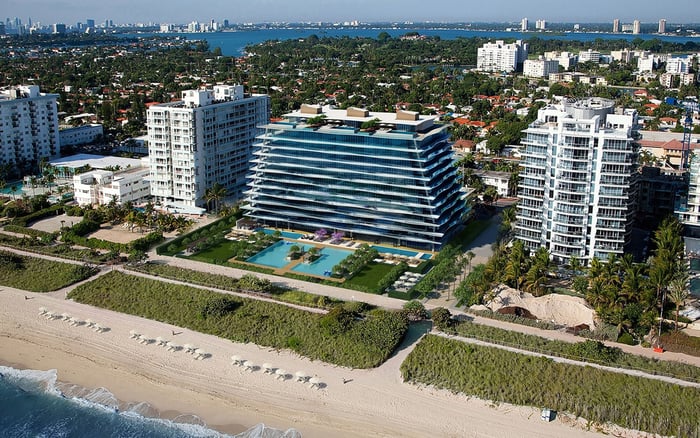
A discreet due-diligence framework for evaluating access, privacy, staffing, technology, emergency planning, and governance before buying a Surfside condominium.

For a luxury condominium buyer, security is not a single amenity. It is a living system shaped by architecture, staffing, access controls, resident behavior, vendor oversight, technology, and condominium governance. A refined lobby may inspire confidence, but the more revealing questions concern what happens at the garage, loading area, beach gate, service elevator, package room, and residence floor.
That distinction matters in Surfside, where buyers may be comparing oceanfront addresses, boutique buildings, resale opportunities, and new-construction offerings at the same time. For readers exploring MILLION Buyer's Guides, the central principle is simple: evaluate how the property operates on an ordinary day, not merely how it presents during a private showing.
Begin with a physical access map. Ask the listing agent or building representative to walk you through every legitimate route from the street, garage, beach, pool, amenity spaces, loading area, and service corridor to the unit. Identify where credentials are checked, where staff intervene, and where a guest could proceed without further verification.
Do not limit the exercise to the principal entrance. Ask whether elevators restrict floor access, where stairwells discharge, how garage visitors are handled, and whether shared amenity levels connect to residential zones. If a residence has a private elevator vestibule, clarify who can unlock it, who maintains the system, and what happens during an outage.
Apply the same questions consistently when reviewing Arte Surfside, Ocean House Surfside, or any other candidate. The objective is not to presume that one design is safer, but to understand each property's sequence of control.
Technology can support a protocol, but people execute it. Ask which posts are staffed, during what hours, and by whom. Clarify how responsibilities shift overnight, during staff breaks, at shift changes, and when a team member calls out. Also determine who supervises security personnel and how incidents are escalated.
Visitor handling warrants particular attention. Request a demonstration of the arrival process for a known guest, an unannounced guest, a household employee, a contractor, and a delivery. Ask whether residents receive notifications, whether identification is checked, and whether staff can override a denial. For frequent travelers, determine how temporary permissions are created and revoked.
Service access can be just as consequential as guest access. Establish how movers, maintenance technicians, pet-care providers, and private staff enter; where they wait; which elevators they use; and whether their access is time-limited. Buyers considering Fendi Château Residences Surfside can make this operational review part of a broader comparison rather than treating brand or presentation as a substitute for verification.
Privacy due diligence should follow the resident's data trail. Ask what information is collected through access cards, mobile credentials, license-plate systems, cameras, visitor logs, amenity reservations, package systems, and building applications. Then determine who owns that information, who can see it, how long it is retained, and how it is deleted.
The answers should distinguish among condominium employees, management, security contractors, technology vendors, and other third parties. Also ask whether administrators can export logs, whether access is audited, and what happens when a resident sells, a staff member leaves, or a vendor relationship ends.
Camera coverage requires nuance. Request a map or written description of monitored areas without seeking details that could compromise operations. Clarify whether recordings include audio, whether footage is monitored live or reviewed after an event, and who may authorize retrieval. Privacy is strongest when collection, access, retention, and deletion are addressed together.
A prudent buyer can assess preparedness without asking the building to reveal sensitive tactical information. Request an overview of emergency communications, resident accountability, medical-response coordination, backup access procedures, and protocols for power or connectivity loss. Ask how residents receive instructions and how guests or household staff are included.
Consider the household's practical needs. A buyer with children, older relatives, pets, medical equipment, or a large domestic team may require a different plan from a seasonal resident. Determine whom the building expects residents to contact, what information should remain current, and how management handles an owner who is abroad.
When considering The Delmore Surfside or another residence under development, ask which protocols are defined today, which remain subject to future operating decisions, and where those commitments are documented. Renderings and stated intentions should not be treated as proof of operations.
Security decisions are also governance decisions. Counsel should review relevant condominium documents, rules, meeting materials, contracts available for inspection, insurance information, and disclosures for provisions affecting access, surveillance, privacy, staffing, rentals, vendors, and owner obligations. The goal is to understand both the present system and the process for changing it.
Ask how residents raise concerns, who receives incident reports, and which confidentiality standards apply to board members, management, front-desk teams, and contractors. A high-profile buyer may want counsel to determine whether owner names, unit details, guest information, vehicle records, or travel patterns can appear in routine communications or records.
Before making an offer, convert broad assurances into written questions. Separate confirmed answers from matters that still require review, and leave any contractual protections to qualified legal counsel. The most useful conclusion is not simply that a building is secure. It is that its protocols are intelligible, consistently administered, appropriately private, and compatible with the buyer's life.
Should I request a security tour before making an offer? Yes. Ask to see legitimate resident, guest, garage, beach, amenity, and service routes without requesting sensitive tactical details.
Is a staffed lobby enough to establish strong security? No. Review the full chain of access, including secondary entrances, elevators, deliveries, vendors, and overnight operations.
What should I ask about visitor access? Ask how guests are identified, approved, announced, escorted when necessary, and removed from the system after authorization expires.
How should I evaluate building cameras? Ask about coverage categories, monitoring, retrieval authority, retention, audio capability, and access logs while respecting operational confidentiality.
Why do data-retention policies matter? Access and visitor systems may create sensitive household records. Buyers should understand who controls those records and when they are deleted.
What should frequent travelers ask? Clarify remote guest approvals, emergency contacts, unit-access permissions, package handling, and how temporary credentials are revoked.
Should household employees be included in the review? Yes. Determine how recurring staff are registered, restricted by time or area, supervised, and removed when employment ends.
How do I assess a condominium still under development? Distinguish documented commitments from future operating choices, and have counsel review the governing and purchase documents.
Can condominium rules affect privacy? Yes. Rules and governance practices may shape visitor records, communications, surveillance, rentals, vendors, and resident responsibilities.
Who should review the answers before I offer? Your attorney and relevant technical or security advisers should evaluate the documents, unresolved questions, and any proposed contractual protection.
For a confidential assessment and a building-by-building shortlist, connect with MILLION.
If branded residences are on your mind — as a home or as an allocation — we would be glad to share what we are seeing, privately.
Begin a quiet conversation