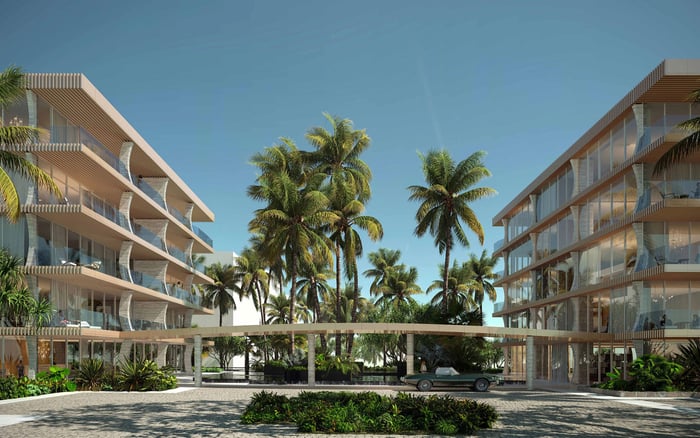
For multigenerational waterfront buyers in Palm Beach Gardens, parking deserves the same scrutiny as the floor plan. Request documented space assignments, household vehicle permissions, self-parking access, charger feasibility, and model-specific vehicle approvals before committing.

A waterfront residence should accommodate more than the family gathered around the dining table. For a multigenerational household in Palm Beach Gardens, it must also support overlapping routines: grandparents returning from appointments, adult children arriving independently, a caregiver beginning a shift, and an electric vehicle needing an overnight charge.
The luxury that matters is autonomy. Before committing, request written confirmation of where every vehicle may park, who may retrieve it, and which permissions attach to the residence. A generous floor plan cannot resolve a vehicle limit or an unsuitable garage entrance.
For buyers considering The Ritz-Carlton Residences® Palm Beach Gardens, these questions belong alongside the residence selection itself. They are due-diligence requests, not assumptions about the project’s parking, valet, or charging arrangements. Adapt the condominium-focused requests below to the property’s actual ownership and association structure.
Begin with the recorded declaration, amendments, parking exhibits, and assignment records. Ask counsel to identify each space’s legal status and confirm that the seller’s stated allocation matches the documents. Ask whether parking is treated as a limited common element assigned under condominium provisions rather than relying on a listing description to establish the buyer’s rights.
Request a plan identifying the actual spaces, then inspect them. Confirm whether assignments transfer with the residence, whether reassignment is permitted, and whether additional spaces can be leased or purchased. Check any proposed arrangement against the governing documents before making it part of the family’s purchase decision.
Ask for relevant board minutes and parking-related arbitration or litigation records. The aim is to identify disputes that could affect everyday access-not discover after closing that a convenient arrangement was informal or contested.
An assigned space and permission to bring another car onto the property are separate matters. Obtain written confirmation of the maximum number of vehicles allowed per residence, registration requirements, and the distinctions between assigned, unassigned, and guest parking.
Build the request around the household’s actual composition. Adult children living in the residence should not simply be treated as occasional visitors. Ask where a caregiver may park during a shift, whether overnight guests need passes, and whether a single household faces limits on occupying unassigned spaces.
For families extending their search to West Palm Beach, Alba West Palm Beach belongs in the same document-led comparison. Apply the same household scenario to every candidate rather than assuming that similarly sized residences come with similar parking permissions.
Request the duration, cost, availability, and termination provisions of any additional-space arrangement. An essential family vehicle should not depend on an unconfirmed vacancy.
Valet can be a welcome service, but first establish whether it is optional. Request the provisions governing direct access to assigned spaces and any areas where valet use is mandatory. A parking assignment is not proof of unrestricted self-parking access.
Obtain written answers covering:
Operating hours, fees, and any separate guest charges.
Overnight retrieval and emergency access procedures.
Key custody and permission for different household drivers.
EV handling, charging responsibilities, and vehicle movement.
Assistance for residents with mobility limitations.
Walk the route from the arrival area and assigned spaces to the residence with the family members who will use it. Ask about accessible spaces, caregiver entry, and temporary mobility accommodations. Have counsel assess applicable requirements rather than assuming that private residential parking is governed solely by ADA rules.
If Forté on Flagler West Palm Beach is another candidate, repeat the access review there. A consistent test makes the comparison useful without presuming any particular service model.
For an EV-owning household, request the private-charger approval policy before relying on an assigned space for charging. Have counsel verify current Florida statutory protections, their conditions, and whether the proposed space qualifies. Legal eligibility and a workable electrical installation are separate matters.
Ask for an electrical-capacity assessment and a written allocation of responsibility for installation, electricity, metering, and necessary upgrades. Establish the approval sequence and any installation requirements before treating private charging as a settled feature of the purchase.
Where shared charging is proposed, request the existing charger inventory, allocation rules, reservation procedures, and expansion plans. Ask how the system would accommodate multiple resident EVs and who bears the cost of additional capacity. A charger somewhere on the property is not the same as dependable overnight access for the household.
If public charging is part of the family’s backup plan, verify access hours, working equipment, availability, connector compatibility, and vehicle eligibility at each proposed Palm Beach Gardens location. Backup charging should support the home arrangement, not substitute for resolving its feasibility.
For a large pickup or Sprinter-style van, submit the vehicle’s actual dimensions, carrying capacity, signage, and equipment for assessment against the written rules. Request garage clearances and inspect the full access route, including entrances, ramps, turns, and the assigned space. Arrange a supervised fit test where permitted.
Physical fit does not establish permission. Ask how the association defines commercial vehicles and whether signage or installed equipment changes a vehicle’s treatment. Obtain separate rules for boat trailers, jet-ski trailers, travel trailers, utility trailers, and RVs, including any distinction between temporary access and storage.
Keep carrying capacity separate from vehicle weight. Ask counsel to confirm the applicable jurisdiction and current code before applying county residential-vehicle guidance to a Palm Beach Gardens address. Association restrictions require a separate review.
Run a realistic household scenario: resident cars are home, an EV needs charging, a caregiver arrives, visiting family stays overnight, and a boat-service provider needs access. Ask management to explain where each vehicle goes and what permissions are required.
Have counsel document essential parking and charging conditions in the purchase arrangements where appropriate. Clarify which answers are supported by governing documents and which depend on changeable operating practices. The objective is not simply enough spaces, but a residence that preserves independence across generations without daily negotiation.
For a discreet waterfront search centered on your family’s daily requirements, connect with MILLION.
If branded residences are on your mind — as a home or as an allocation — we would be glad to share what we are seeing, privately.
Begin a quiet conversationRequest the recorded declaration, amendments, parking exhibits, and assignment records. Have counsel confirm each space’s legal status and whether its assignment transfers with the residence.
No. Confirm the maximum vehicles permitted per residence separately from the number of assigned spaces and any access to guest or unassigned parking.
Obtain written confirmation rather than assuming they qualify as guests. Ask about resident registration, caregiver access, guest passes, and overnight limits.
Do not assume it does. Review the provisions governing direct access to assigned spaces and any mandatory valet areas.
Request operating hours, fees, overnight retrieval, emergency access, and key-custody procedures. Also confirm EV handling and assistance for residents with mobility limitations.
No. Have counsel verify current statutory protections and conditions, then obtain the association’s approval policy and an electrical-capacity assessment for the proposed space.
Establish responsibility for installation, electricity, metering, and necessary electrical upgrades. For shared charging, also request allocation rules and expansion plans.
Treat them as backup options rather than a resolution of home-charging feasibility. Verify access hours, working equipment, availability, connector compatibility, and vehicle eligibility before relying on a location.
Submit its actual dimensions, carrying capacity, signage, and equipment for written assessment. Check garage clearances and the full access route, not only the parking space.
Test resident cars at home alongside an EV needing charging, a caregiver arrival, overnight family visitors, and boat-service access. Have counsel document essential parking and charging conditions where appropriate.