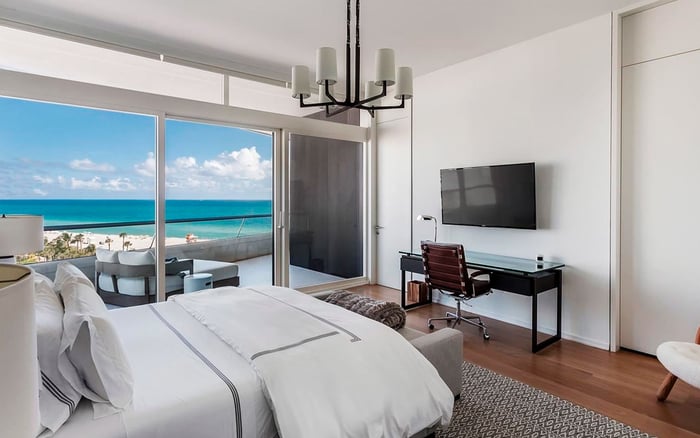
A staff-ready South of Fifth residence is less about size alone and more about disciplined planning, privacy, service flow, durable finishes and governance that can support a refined long-term household.

A serious South of Fifth purchase is not defined by square footage, water exposure or a recognizable address alone. For a household that expects private staff, visiting chefs, assistants, security, drivers, housekeepers, pet care or family office support, the real question is whether the residence can operate gracefully when daily life becomes active.
That is the distinction between a beautiful apartment and a staff-ready residence. The first may photograph well. The second performs well. In the South of Fifth pocket of Miami Beach, a buyer should look for a home that allows service to happen without disturbing the owner’s sense of calm. The best layouts feel effortless because the operational work has been absorbed into the architecture.
The most important staff-ready feature is circulation. Can groceries, flowers, luggage, wardrobe pieces and service providers move through the home without crossing the primary entertaining axis? Is there a sensible path from elevator or entry to kitchen, laundry, storage and service rooms? Can a housekeeper reset bedrooms while guests remain in the living room or on the terrace?
These are not minor questions. They determine whether the home will feel composed during a dinner, a family weekend or a season of full occupancy. In this context, buyers often study established South Beach references such as Apogee South Beach and Continuum on South Beach not simply as names, but as part of the broader conversation about privacy, arrival and long-term residential expectations at the southern tip of Miami Beach.
A practical plan should also separate public, private and support zones. The primary suite should not depend on the same path used for deliveries. Secondary bedrooms should be easy to service. Laundry should be properly placed, not treated as an afterthought. If a residence forces staff to improvise, the owner will eventually feel that friction.
A staff room or service bedroom can be valuable, but it is not enough by itself. A true staff-ready residence considers where people pause, store supplies, charge devices, manage uniforms, handle linens and stage the next task. Long-term ownership magnifies these details.
Storage is especially important. Seasonal wardrobes, beach equipment, luggage, entertaining pieces, pet accessories, art crates and household supplies need to live somewhere other than the main living areas. A residence with generous closets but no operational storage may still feel constrained once fully occupied.
Kitchen planning deserves equal scrutiny. A show kitchen can be beautiful, but a serious residence needs prep capacity, durable surfaces, sensible appliance placement and room for more than one person to work. If a private chef is part of the household rhythm, the kitchen should support performance without turning meal preparation into theater unless the owner wants that visibility.
Even the best interior plan can be weakened by building rules that do not align with the household. Before committing, buyers should understand how the building handles vendors, deliveries, elevators, valet procedures, package rooms, access permissions, insurance requirements and work-hour restrictions.
The question is not whether rules exist. In a serious building, they should. The question is whether those rules support discreet, predictable living. A staff-ready home needs a building culture that respects privacy, avoids unnecessary exposure and allows a high-functioning household to operate without daily negotiation.
For buyers considering newer or branded residential environments nearby, projects such as The Ritz-Carlton Residences® South Beach and Five Park Miami Beach can help frame the modern expectation: not just amenities, but a more complete residential ecosystem. The relevant issue is how a building’s services, staffing protocols and physical infrastructure support the private residence above them.
Staff-ready does not mean institutional. The best homes remain refined while acknowledging use. Floors, wall treatments, kitchen surfaces, millwork, terrace materials and bathroom finishes should be judged for beauty and endurance. A delicate finish may be appropriate in a powder room; it may be less sensible in a service corridor, children’s zone or heavily used kitchen.
Long-term purchasers should also think about replaceability. Can a stone slab, fixture, cabinet face or appliance be serviced without a design crisis? Are finishes too trend-dependent, or do they have the restraint to age well? South of Fifth ownership often attracts buyers who could renovate at any time, but the better purchase is the one that does not demand constant correction.
Flexibility is another form of durability. A media room may later become a staff office. A guest suite may need to accommodate an aide. A den may become a secure workspace. The strongest residences allow these changes without compromising the main living experience.
Staff-ready living depends on discretion. A private elevator entry can be valuable, but privacy is also created by thresholds, vestibules, door placement, acoustic separation and the ability to close off work zones. A residence that exposes every arrival to the living room may feel glamorous on day one and inconvenient by year three.
Acoustics are often overlooked. Laundry, kitchen work, elevator lobbies, mechanical systems and service doors can all affect the tone of a home. Buyers should listen as carefully as they look. A quiet residence allows staff to work without making the household feel busy.
Terraces require the same discipline. Outdoor space is a major emotional driver in Miami Beach, but it should integrate with service needs. If entertaining outside requires awkward movement through bedrooms or formal rooms, the plan may be less capable than it first appears.
A staff-ready residence is ultimately a risk-management purchase. It supports different life stages, visiting family, seasonal use, aging in place, expanded household support and higher expectations from future buyers. The market may change, but homes that solve real living problems tend to remain more compelling than homes that rely only on spectacle.
For the long-term buyer, the goal is not to chase every amenity or finish trend. It is to own a residence with composure. The home should welcome guests beautifully, protect private life, allow staff to operate invisibly and remain adaptable as the household changes. In South of Fifth, that quiet competence is one of the clearest markers of serious luxury.
What is a staff-ready residence? It is a home planned to support private staff, vendors and household operations without disrupting the owner’s daily life.
Does staff-ready always mean having a separate staff bedroom? No. A staff bedroom can help, but circulation, storage, kitchen function and building procedures are just as important.
Why does South of Fifth attract this type of buyer? South of Fifth appeals to buyers who value privacy, walkable coastal living and a more composed version of Miami Beach ownership.
What should buyers review before making an offer? They should review layout, service access, storage, elevator use, building rules, delivery procedures and renovation limitations.
Is a larger residence automatically better for staff support? Not necessarily. A smaller residence with excellent planning can function better than a larger home with poor circulation.
How important is kitchen design? Very important. A serious kitchen should support daily use, entertaining and private chef workflow without crowding the main living areas.
Should finishes be chosen differently in a staff-ready home? Yes. The best finishes balance elegance with durability, serviceability and the ability to age gracefully.
Can a staff-ready residence also feel warm and personal? Absolutely. Operational planning should be quiet and discreet, allowing the personal rooms to feel more relaxed and expressive.
What role does the building play? The building shapes access, privacy, deliveries, vendor management and daily convenience, all of which affect long-term livability.
Is this type of planning relevant for resale? Yes. Future buyers often recognize homes that function well, especially when privacy and household support are built into the plan.
When you're ready to tour or underwrite the options, connect with MILLION.
If branded residences are on your mind — as a home or as an allocation — we would be glad to share what we are seeing, privately.
Begin a quiet conversation