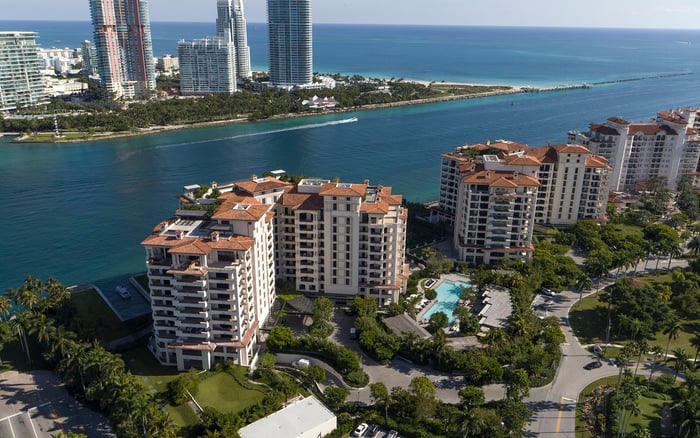
For full-time South Florida owners, contractor insurance is not an administrative formality. It is part of protecting a high-value residence, coordinating association rules, limiting lien exposure, and ensuring that the people entering the property have the proper licensing, coverage, and contract obligations before work begins.

For full-time owners in South Florida, choosing a contractor is rarely casual. A residence may be a primary home, a family base, a collectible asset, and a complex piece of private infrastructure at once. Whether the work involves a kitchen renovation, millwork installation, terrace repair, elevator modernization, landscape construction, or post-storm remediation, contractor insurance should be resolved before anyone is allowed through the gate, lobby, service elevator, or garage.
The mistake is treating insurance as a paperwork exchange. In luxury ownership, it is a risk-allocation exercise. Who is licensed to perform the work? Who employs the crew? Who is covered if a worker is injured? Who pays if a pipe is damaged, a neighbor’s unit is affected, a mold issue emerges, or a supplier claims nonpayment? The answers should be established in the contract and verified through active coverage, not assumed from a polished proposal.
This is especially true for owners living full time in Brickell, Miami Beach, Sunny Isles, Fisher Island, and other high-value coastal settings, where residences often combine shared building systems, waterfront exposure, strict association rules, and expensive finishes. Oceanfront and new-construction properties may feel turnkey, but even small modifications can create insurance questions if the contractor’s coverage is incomplete.
Before discussing insurance limits, owners should verify that the contractor is properly licensed for the type of work proposed. This step is basic, but it is not optional. The name on the license should match the contracting party or be clearly tied to the business performing the work.
Scope matters as well. A contractor suited to cosmetic finish work may not be appropriate for structural, electrical, plumbing, roofing, or mechanical work. When a residence is staffed or managed by a property manager, the owner should still ensure that verification happens before signing or access approval.
For full-time owners, the practical question is simple: if something goes wrong, can the responsible party be identified, licensed, insured, and contractually bound? A strong proposal without proper licensing leaves too much ambiguity.
Workers’ compensation deserves particular attention because injuries on a project can quickly become complicated. Owners should request proof of workers’ compensation coverage before work begins and should not rely only on a paper certificate handed over by email.
Exemptions require care. Some individual contractors may claim an exemption, but an exemption is not the same as a broad safety net for everyone on the property. If a crew arrives with helpers, subcontractors, or temporary labor, the owner should know who covers them. For projects inside a condominium, association management may also require specific workers’ compensation documentation before approving vendor access.
This is not about mistrusting a contractor. It is about preventing the owner’s residence from becoming the unresolved venue for an injury dispute.
A certificate of insurance is evidence that coverage exists, but it does not create coverage, amend a policy, or guarantee that a claim will be paid. Many owners stop at the certificate because it looks official. Sophisticated owners go further.
For liability protection, the owner may need to be named as an additional insured on the contractor’s policy for relevant operations. That status can provide protection under the contractor’s liability policy for certain contractor-caused claims, but it should be confirmed by endorsement, not merely referenced in a contract line or certificate note.
A waiver of subrogation may also be important. Properly included in both contract and policy, it can help prevent an insurer from pursuing the owner after paying a loss connected to the contractor’s work. The exact wording matters, and owners should have their insurance adviser and counsel review requirements before work starts.
Commercial general liability is the core contractor liability policy, but it is not a promise that every loss connected to defective work will be covered. These policies contain exclusions, and owners should be alert to the difference between damage caused by the work and the cost of repairing the contractor’s own faulty work.
Large remodels raise another issue: builders risk. Builders risk coverage is designed to insure property during construction or renovation and may be important for high-value projects. If a primary residence is undergoing extensive work, the owner’s homeowners policy, umbrella policy, any builders risk coverage, and the contractor’s insurance should be reviewed together to identify gaps.
Specialty exposures should not be ignored. Contractor pollution liability may matter for projects involving mold, remediation, dust, chemicals, fuel, or other environmental conditions. Flood insurance is separate from contractor liability, so owners in flood-prone South Florida should understand how their own policies interact with renovation activity.
Condominium owners should coordinate contractor insurance with association requirements before signing. Associations often impose vendor rules involving certificates, indemnity language, access hours, elevator protection, license documentation, and insurance limits. In a tower residence, contractor risk is not confined to the unit. Water intrusion, dust migration, fire protection impairment, or elevator damage can affect neighbors and common areas.
Lien exposure is separate but related. Construction payment disputes can involve contractors, subcontractors, and suppliers. Insurance does not replace lien releases, payment controls, sworn statements, or carefully staged draws. A contractor can be properly insured and still create a lien problem if the payment chain is not managed.
For owners who live in the residence full time, these controls should be built into the rhythm of the project: no access without approval, no payment without required releases, no expansion of scope without updated insurance review, and no final payment until closeout documents are delivered.
Insurance requirements belong in the written contractor agreement. The contract should identify required coverage types, minimum limits, additional-insured status, waiver of subrogation, and the duty to maintain coverage for the full duration of the work. It should also require updated proof if policies renew or change during the project.
Owners should ask who the subcontractors are, whether they carry their own coverage, and whether the prime contractor’s policy responds to their work. For complex projects, the agreement should address indemnity, property protection, cleanup, safety procedures, change orders, permits, association rules, and lien releases. The insurance section should not be isolated from the rest of the risk plan.
For a full-time owner, the goal is not to turn a home project into litigation. It is to create a clear, calm framework so the residence remains protected while work proceeds.
Before work begins, confirm the contractor’s license, request general liability and workers’ compensation proof, and clarify any exemption claims. Ask for endorsements where additional-insured status or waiver of subrogation is required. For large renovations, review builders risk needs and coordinate with the owner’s homeowners and umbrella policies.
For specialty work, ask whether pollution liability or other coverage is relevant. For condominium work, secure association approval before access. For any meaningful project, align payments with lien releases and written scope documentation.
The most refined residences in South Florida often succeed because the visible finish is supported by invisible discipline. Contractor insurance is part of that discipline.
Should I verify a contractor’s license before hiring? Yes. License verification should happen before signing and before granting access to the residence.
Is a certificate of insurance enough protection? No. A certificate is evidence of coverage, but it does not create or amend insurance rights.
Why does additional-insured status matter? It may give the owner protection under the contractor’s liability policy for certain contractor-caused claims.
Should I ask about workers’ compensation coverage? Yes. Owners should request proof and understand who is covered before work begins.
What if a contractor says they are exempt from workers’ compensation? Ask for confirmation and understand who is actually performing the work on the property.
When should builders risk insurance be considered? It may be important for large renovations or high-value work where property is exposed during construction.
Does contractor liability insurance cover every defective-work issue? No. General liability policies contain exclusions and should be reviewed with the project risks in mind.
Do condo owners need association approval for contractor insurance? Usually, yes. Associations often impose insurance, access, and documentation requirements for vendors.
Can insurance prevent construction lien problems? No. Lien releases, payment controls, and contract procedures are separate safeguards.
Who should review the insurance requirements? The owner’s insurance adviser and counsel should review coverage, endorsements, and contract language.
When you're ready to tour or underwrite the options, connect with MILLION.
If branded residences are on your mind — as a home or as an allocation — we would be glad to share what we are seeing, privately.
Begin a quiet conversation.jpg&width=700&height=438&fit=cover)