A practical guide for South Florida full-time owners on placing cameras for security while preserving privacy, building integrity, household comfort, and digital control.
.jpg)
For full-time owners, camera placement is not simply a matter of adding more lenses. A primary residence has daily rhythms that a vacation property does not: children moving through hallways, overnight guests, domestic staff arriving before breakfast, contractors entering service areas, and family conversations never meant to become part of a security archive. The most sophisticated camera plan begins with restraint.
The goal is to separate access monitoring from intimate household life. Cameras at a gate, garage, dock, front door, or service entrance can help document movement around the property without turning the home into a place of constant observation. Cameras pointed toward bedroom corridors, guest suites, dressing areas, bathroom approaches, or private family rooms can create avoidable discomfort. In a luxury residence, privacy is not the opposite of security. It is part of the security brief.
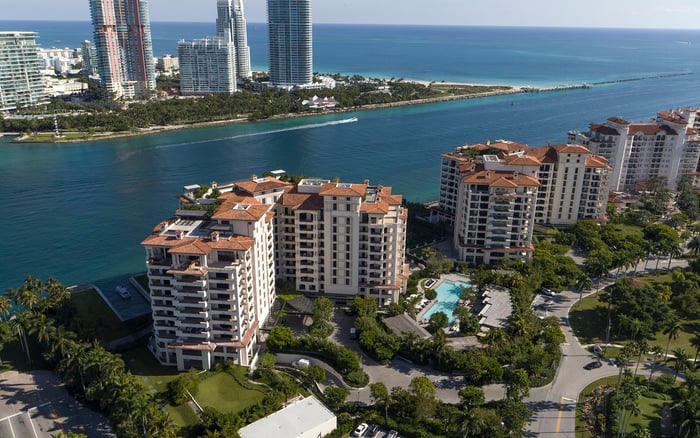
This is especially important in South Florida, where residences often combine public-facing architecture with deeply private interior life. Placement logic changes by setting: Miami Beach and Sunny Isles apartments, Brickell towers, Fisher Island estates, oceanfront homes, and gated-community residences may all require different sightlines, permissions, and hardware decisions.
A useful planning exercise is to ask your integrator for a camera map before anything is installed. The map should show every proposed camera, its field of view, whether audio is enabled, who can access the feed, and how long video will be retained. This allows the owner, estate manager, counsel, and design team to review the system before walls are penetrated or accounts are activated.
Security zones usually include the front entry, motor court, driveway, garage, pedestrian gate, package area, dock, pool equipment path, service alley, and detached structures. These are locations where the owner may have a practical interest in access control and incident documentation. Privacy zones should include bedrooms, bathrooms, dressing rooms, guest suites, staff sleeping quarters, and intimate interior spaces. Cameras should not be placed where people reasonably expect privacy, particularly where changing, bathing, sleeping, or private family activity occurs.
The distinction also matters for camera direction. A device mounted on your property can still create concern if it is aimed toward a neighbor’s windows, private yard, or interior living spaces. The more defensible camera is the one that observes your own access points, not someone else’s private life.
Many consumer and professional cameras include microphones by default. For a full-time owner, that default setting deserves deliberate review. Recording conversations can raise sensitive privacy and legal questions, especially in a home with family members, guests, staff, and vendors moving through different spaces.
This is not only a family issue. Cameras may capture housekeepers, chefs, nannies, estate managers, drivers, vendors, trainers, contractors, and guests. Written disclosure can be appropriate when people working in or around the home may be recorded on video. Audio should be approached more cautiously than video and reviewed with counsel when the household plans to use it.
In practice, most private residences can achieve strong security without recording conversations. Motion alerts, doorbell views, gate cameras, garage coverage, dock monitoring, and perimeter lighting can provide meaningful protection while leaving private speech alone.
South Florida’s climate changes the camera conversation. Exterior devices are exposed to heat, rain, wind, salt air, and humidity. Oceanfront, bayfront, and canal-front properties should prioritize durable housings, protected connections, and mounts selected for harsh outdoor conditions.
Placement under eaves, soffits, architectural overhangs, or protected façade elements can reduce direct sun and rain while preserving sightlines. This is often preferable to placing equipment in a visually prominent location or on an exposed surface. For estates with docks, seawalls, outdoor kitchens, pool pavilions, and detached garages, the camera plan should be tailored to the property rather than copied from a generic package.
Penetrations are equally important. Camera brackets, conduit, junction boxes, and low-voltage runs should not create water-intrusion points in stucco, roof, balcony, gate, or seawall assemblies. A small bracket installed casually can become expensive if it interrupts waterproofing, exterior finishes, or façade systems.
Condo and tower owners should be particularly careful about where their private residence ends and association-controlled common elements begin. Corridors, elevator lobbies, parking areas, amenity floors, service halls, and shared entries may involve building rules or approvals. Even a discreet camera outside a private elevator vestibule can raise questions if it captures other residents, staff, or common areas.
The issue is not limited to legality. In a high-service building, camera placement can affect relationships with neighbors, management, and staff. A full-time owner should confirm permissions before installing devices in semi-private or shared locations, then keep the system narrowly focused. Inside the residence, the same privacy-zone logic still applies. Exterior views from terraces should be angled toward the owner’s own doors, railings, and access points, not into adjacent homes.
A camera system is also a digital doorway into household life. Remote viewing should be treated as a cybersecurity issue, not just a convenience feature. Unique passwords, secure configuration, regular software updates, and careful account management are essential. Default passwords should not remain in use after installation.
The home Wi-Fi network should be secured with a strong router password, current encryption, firmware updates, and a separate guest network where appropriate. Wireless cameras are only as private as the network that carries them. If footage is stored remotely, retention should be limited because video can reveal household routines, travel patterns, staff schedules, guests, children’s activities, and vacant periods.
Access should follow a least-privilege approach. A family member may need door and gate views. An estate manager may need service entrances and vendor routes. A pool contractor should not have access to interior cameras. A temporary vendor should not retain access after the work ends. The fewer people who can see the feeds, the less risk the system creates.
Before approving installation, request a simple schedule for each device: location, field of view, audio status, retention period, account owner, access permissions, and maintenance responsibility. Mark no-camera zones in writing. Confirm whether each exterior device requires association, architectural, or building-envelope review. Ask how corrosion, water intrusion, power backup, and software updates will be handled.
A strong camera plan for a full-time residence is discreet, documented, and specific. It protects entries, vehicles, packages, docks, garages, service routes, and perimeter conditions. It avoids intimate spaces, private speech, and neighboring interiors. It respects the building and the people who live and work inside it.
Should full-time owners place cameras inside the home? Only in carefully selected security zones, such as main entries or specific access points. Bedrooms, bathrooms, dressing rooms, guest suites, and intimate areas should remain no-camera zones.
Should camera microphones be enabled in a primary residence? Microphones should be treated as a separate decision, not a default feature. Owners should review audio use carefully because conversations raise different privacy concerns than silent video.
Where are cameras most defensible? Gates, driveways, garages, doors, docks, package areas, and service entrances are typically stronger choices. Avoid aiming cameras at neighbors’ windows, private yards, or interior spaces.
What should owners disclose to household staff? If staff, vendors, nannies, or contractors may be captured, written disclosure can be appropriate. The disclosure should match the actual camera locations and system settings.
Can condo owners install cameras outside their unit? They should first confirm where association-controlled common elements begin. Corridors, elevator lobbies, parking areas, and shared amenities may require building approval.
Why does exterior installation require extra care in South Florida? Camera mounts and wiring can create water-intrusion points if poorly planned. Salt air, rain, humidity, and wind exposure also call for suitable housings and protected connections.
Are remote camera systems safe for luxury homes? They can be useful, but retention and access should be tightly controlled. Stored footage can reveal routines, visitors, staff schedules, and travel patterns.
Who should have access to camera feeds? Access should be limited to the views each person genuinely needs. Estate managers, vendors, staff, and family members should not automatically receive the same permissions.
What should be included in a camera map? Include each camera location, field of view, audio status, retention period, and user access. This makes privacy, legal, and design review easier before installation begins.
What is the best way to shortlist comparable options for touring? Start with location fit, delivery status, and daily lifestyle priorities, then compare stacks and elevations to validate views and privacy.
If you'd like a private walkthrough and a curated shortlist, connect with MILLION.
If branded residences are on your mind — as a home or as an allocation — we would be glad to share what we are seeing, privately.
Begin a quiet conversation