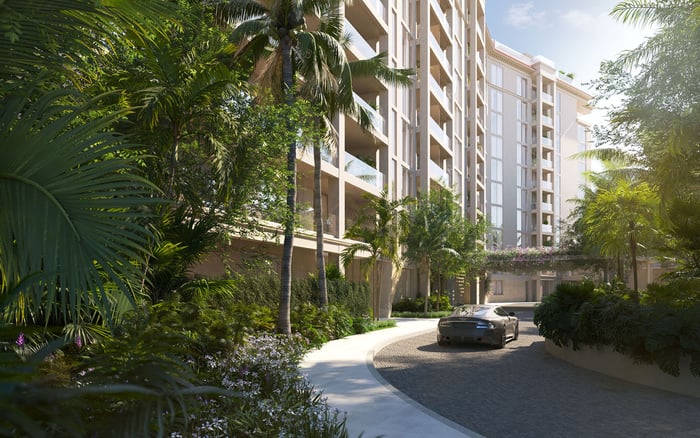
On Fisher Island, elevator privacy is a unit-specific condition, not a uniform amenity. Buyers should test the full arrival sequence and document how owners, guests, staff, vehicles and deliveries move through it.
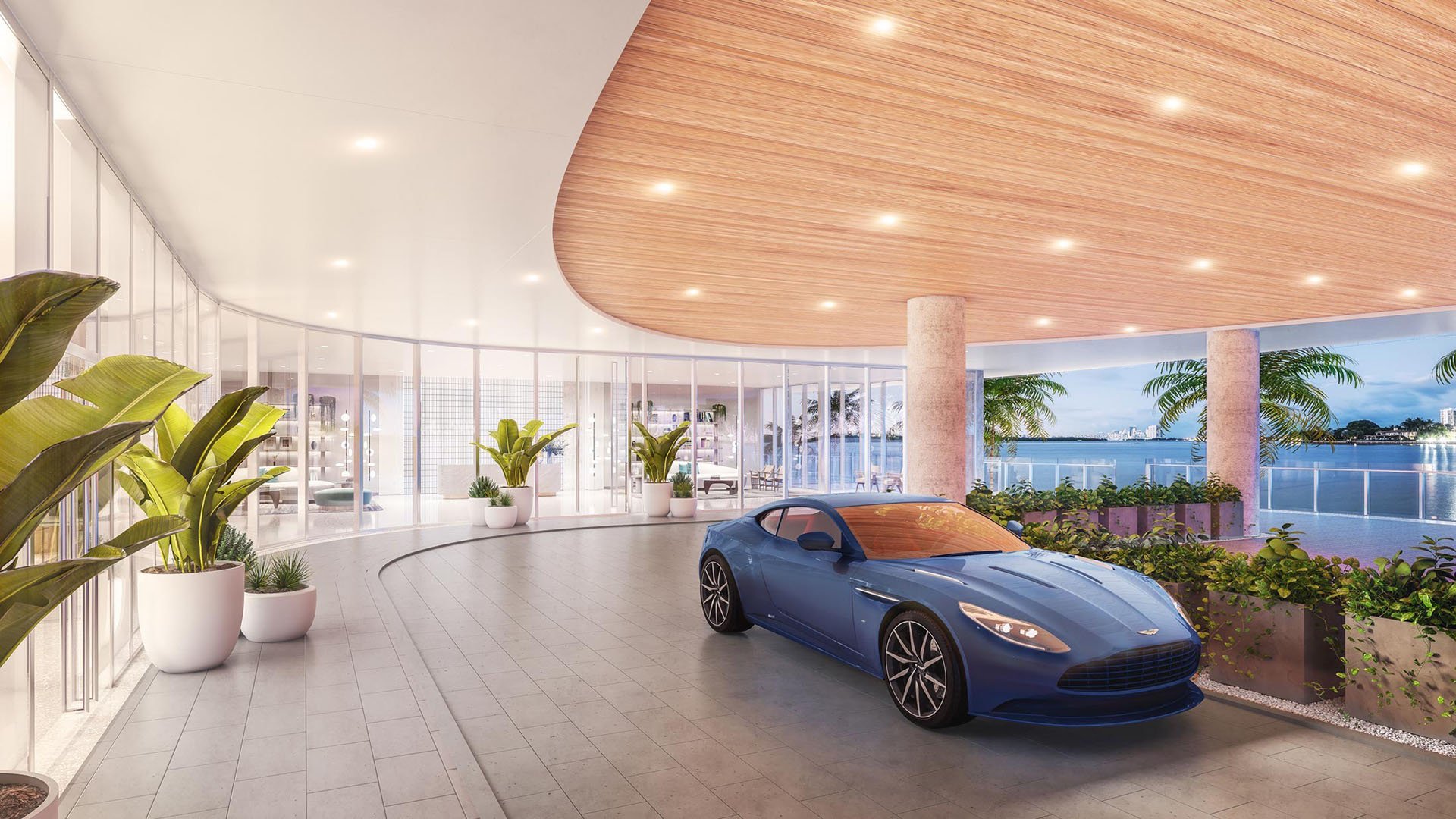
On Fisher Island, privacy begins well before the front door. The island can be reached by private ferry, yacht or helicopter, making a condominium lobby only one stage in a longer, controlled sequence. For a buyer, the material question is not simply whether a listing advertises a private elevator. It is how the owner moves from island arrival to vehicle handoff, lobby entry, elevator authorization and the final residential threshold.
That distinction matters across Miami Beach luxury property. Waterfront living may be visually defined by views and terraces, but operational privacy is shaped by circulation. Lifestyle value can shift when owners, guests, household staff and vendors converge in spaces that appeared private during a quiet showing. Resale buyers should therefore inspect the unit’s actual configuration, while investment decisions should account for how effectively the arrival experience will serve future occupants.
“Private elevator access” is not a standardized specification. It can describe a cab that opens directly inside a residence, one that opens into a dedicated foyer or an elevator that reaches another controlled vestibule. Each layout creates a different boundary between common and private space.
At The Residences at Six Fisher Island, the offering includes direct residence entry, as well as three lobbies with concierge and security functions connected to private elevators. A buyer should still stand inside the specific cab, ride from the relevant lobby and observe precisely where the doors open. Ask whether another unit, service corridor or common landing intersects that route.
At Palazzo del Sol, every home features a private elevator entrance, though individual arrangements can differ. A residence with dual private elevators, for example, warrants a clear explanation of whether both are intended for owner arrival or whether one also accommodates staff, service or deliveries.
Valet should be evaluated as circulation infrastructure, not merely as an amenity. Ask where an automobile is handed over, where residents wait during retrieval and whether that point is visible from or shared with guest arrivals. Determine how luggage, shopping bags and larger deliveries move from the vehicle to the residence.
Clarify whether valet service handles automobiles, golf carts or both. If an owner chooses self-parking, test whether the route back to the residence preserves the privacy and convenience of the valet path. Ask which parking area, lobby and elevator actually apply to the unit under consideration rather than relying on a building-wide description.
Timing also matters. Request demonstrations during a busier arrival window and after normal staffed hours. A seamless daytime tour does not establish how credential checks, vehicle retrieval or elevator calls function when concierge coverage changes.
The owner’s route is only one part of the system. Buyers should request a clear circulation map for family members, invited guests, household employees, contractors, delivery personnel, maintenance teams and emergency responders. The objective is not absolute separation at every moment, but a clear understanding of where interaction occurs and who controls it.
At Palazzo della Luna, residences feature private elevator entry, yet the landing and foyer should still be inspected for the specific home. Ask whether guest credentials activate a floor, a unit or a particular elevator. Confirm who can issue or revoke credentials and whether staff can override restrictions.
Security and concierge personnel may mediate access during staffed periods. Buyers should ask what replaces that human layer after hours, how unexpected vendors are held or escorted and whether a resident can view or authorize access remotely. The most refined system is not necessarily the most complicated. It is the one whose rules are intelligible, consistent and suited to the household.
Before the contract deadline, review condominium documents, house rules, parking assignments, valet policies and access-control procedures. Confirm in writing which elevator routes apply to residents, guests, staff, deliveries and maintenance. If a representation about direct entry or exclusive use is important to the offer, verify it for that residence rather than inferring it from broader language.
Request one live demonstration that begins with island arrival and ends inside the home. Repeat the exercise using valet and self-parking if both are relevant. Bring the people who will use the system regularly, including a household manager or security adviser when appropriate.
Fisher Island combines the discretion of a gated-community setting with highly managed residential service. The strongest offer is informed by both architecture and operations. A beautiful foyer may establish the tone, but the underlying value lies in controlled transitions that work predictably on an ordinary day, during entertaining and when staffing patterns change.
A buyer’s checklist should identify the elevator serving the unit, its opening point, authorized credential types and any shared or service functions. It should also establish the assigned parking arrangement, exact valet handoff, golf-cart procedures, luggage routing and after-hours protocol.
Then test the complete journey without shortcuts. Start where the household ordinarily arrives, follow the expected vehicle procedure, enter through the assigned lobby, call the correct elevator and cross the final threshold. Note every point where identity is checked, assistance is required or another user group joins the route. This is the practical difference between an advertised feature and a genuinely private arrival.
Does a private elevator always open inside the residence? No. It may open inside the home, into a dedicated foyer or at another controlled threshold, depending on the unit.
Should buyers inspect the elevator route for the specific condo? Yes. Building-wide descriptions do not establish the exact landing, sharing arrangement or access controls for an individual residence.
What should a buyer ask about dual private elevators? Confirm whether both cabs are for owner arrivals or whether one also serves staff, deliveries or other service functions.
Why should valet flow be tested in person? A live test reveals the handoff point, waiting area, luggage route and relationship among parking, lobby and elevator access.
Should the test include self-parking? Yes. Confirm whether self-parking preserves the same secure and convenient route offered through valet service.
Can valet procedures include golf carts? They may, so buyers should clarify whether automobiles, golf carts or both are handled and where each handoff occurs.
How should guest elevator access work? Ask whether guest credentials are programmed by resident, unit, floor or credential type, and how access is revoked.
What changes after concierge hours? Buyers should confirm how identity checks, guest authorization, vendor access and elevator controls operate after hours.
Which documents should be reviewed? Review condominium documents, house rules, parking assignments, valet policies and written access-control procedures.
When should these issues be resolved? Verify them before the contract deadline, with important unit-specific representations confirmed in writing.
For a tailored shortlist and next-step guidance, connect with MILLION.
If branded residences are on your mind — as a home or as an allocation — we would be glad to share what we are seeing, privately.
Begin a quiet conversation