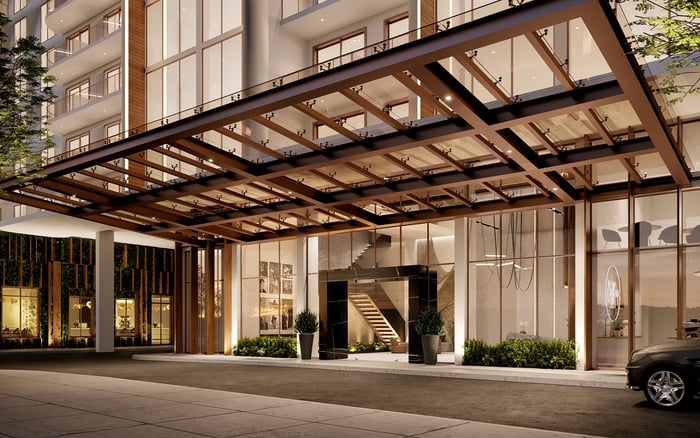
In North Bay Village, private elevator access and valet flow warrant careful review. Cash buyers should clarify how elevators, parking, guests, deliveries and vehicle retrieval would work before closing.

For a cash buyer, a streamlined purchase should not replace scrutiny of the daily arrival experience. The route between the garage entrance and the residence door can raise important questions: who handles the vehicle, how retrieval is requested, which elevator guests use and what the term “private elevator” means for a specific home.
These questions can affect privacy, convenience, accessibility and reliance on building staff. They are especially relevant for second-home owners who may need clear procedures for guests, household staff, deliveries and contractors while they are away.
Buyers comparing local options may include Continuum Club & Residences North Bay Village, Shoma Bay North Bay Village and Tula Residences North Bay Village in their review. Regardless of the property, due diligence should focus on the actual access arrangement documented for the residence and building.
Private-elevator terminology can refer to different arrival configurations. A buyer should determine whether the elevator opens directly into the residence, opens into a separate private foyer or uses another controlled landing arrangement.
The distinction matters because the elevator cab, landing and residence entrance are separate parts of the access sequence. Ask who can select the floor, how guest access is authorized and whether service personnel follow a different route. Buyers should also clarify how permissions are created, changed or revoked.
Request the documents available for the specific property, including relevant plans, access-control procedures and elevator service information. Ask what residents are expected to do if the usual elevator is unavailable and whether an alternate accessible route exists.
A parking right does not, by itself, explain how a vehicle moves through the property. Buyers should establish whether a space is assigned or unassigned, self-parked or valet-managed, and subject to any stated vehicle limitations. Questions about guest parking, additional vehicles, access devices and electric-vehicle charging should be answered for the specific residence rather than assumed.
Where valet service forms part of the arrival sequence, review how drop-off and retrieval requests are handled. Ask about operating procedures, fees, staffing, insurance and what happens during maintenance or service interruptions. If any parking equipment is involved, request information about its operation and maintenance without assuming that the system will suit every vehicle.
Cash buyers should also identify which parking and valet terms appear in governing documents, purchase materials or separate service agreements. Verbal descriptions should be reconciled with the documents that apply to the transaction.
A polished entrance does not reveal how the property functions at a busy moment. Schedule a visit at a time that reflects how the residence would actually be used, then follow the complete path from vehicle arrival to the front door.
Observe where vehicles queue, how pedestrians move through the entrance and whether guests can understand the check-in process. Time the elevator wait and vehicle retrieval as practical observations, recognizing that a single visit cannot establish long-term performance.
Waterfront settings can introduce additional movement around an entrance. Rather than assuming how that traffic is managed, ask which routes apply to residents, guests, service providers and any other users of the property.
Private residential access depends on more than a fob. Buyers should understand how guests are announced, how temporary permissions work and whether residents can authorize entry remotely. The same review should cover household staff, delivery personnel and contractors.
Ask whether service access uses the same elevator or a separate route. Confirm where packages are received, how larger deliveries are scheduled and what happens when a resident is not present. A second-home buyer may also want to identify who can update permissions during an extended absence.
A practical test can reveal questions that plans and marketing materials do not answer. Complete one arrival as a resident and, if permitted, another using the guest process. Test vehicle drop-off, retrieval instructions, lobby access, elevator dispatch and the route to the residence.
Review the property-specific materials available for elevators, parking, valet and access control. Ask management or the appropriate transaction representatives to explain outage procedures, service routes and recurring charges. Record unresolved questions and seek written clarification before waiving concerns or closing.
The objective is not to select the most elaborate arrival promise. It is to determine whether the documented operating sequence fits the buyer’s vehicles, household, schedule and preferred level of privacy.
Does private elevator access mean the cab serves only one residence? Not necessarily. Buyers should verify whether the arrangement involves a dedicated cab, a shared cab with controlled floor access or a separate private foyer.
Which elevator materials should a cash buyer request? Ask for the relevant plans, access procedures, available service information and instructions for periods when the usual elevator is unavailable.
Why does a private foyer matter? A foyer can create separation between the elevator landing and living space, but buyers still need to review who can access it and how permissions are managed.
Can assigned parking still require valet interaction? The operating arrangement may differ from the parking designation. Confirm in writing whether the space is self-parked, valet-managed or accessed through another procedure.
What should buyers ask about valet service? Clarify drop-off and retrieval procedures, fees, staffing, insurance, operating arrangements and plans for service interruptions.
When should a buyer test the arrival experience? Visit at a time that resembles expected use and evaluate the complete route from vehicle arrival to the residence.
How should guest elevator access work? The property should be able to explain how guests are announced, authorized and directed without relying on assumptions about floor access.
What should second-home owners verify? They should review remote guest authorization, staff access, package handling and procedures for changing permissions while away.
Why review delivery and contractor routes? These routes show how service access interacts with residential privacy and whether advance scheduling or separate authorization is needed.
Does a cash purchase eliminate the need for access diligence? No. Paying cash does not answer property-specific questions about elevators, parking, valet operations or guest entry.
If you'd like a private walkthrough and a curated shortlist, connect with MILLION.
If branded residences are on your mind — as a home or as an allocation — we would be glad to share what we are seeing, privately.
Begin a quiet conversation