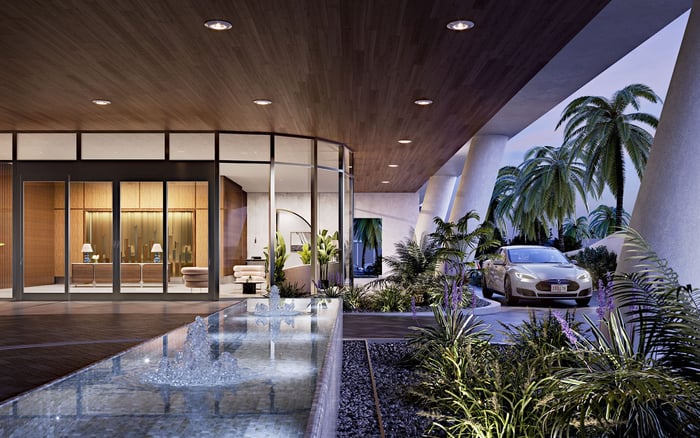
For an absentee buyer, storm readiness is not a generic amenity. It is an operating protocol that should define responsibility, access, documentation, costs, backup systems and post-event care before closing.

For a second-home buyer, the appeal of Mr. C Tigertail Coconut Grove is inseparable from the promise of effortless arrival and departure. The residence at 2678 Tigertail Avenue was completed by Terra in 2024 in partnership with Maggio Cipriani's Mr. C brand. Yet lock-and-leave ownership demands a precise storm protocol, particularly when the owner may be abroad as weather conditions change.
Within MILLION's Buyer's Guides, the essential principle is simple: service expectations should become written duties. A polished residential experience does not, by itself, establish who protects a unit, when access is permitted or what happens after a storm.
Mr. C Residences comprises two Coconut Grove towers, at 2655 South Bayshore Drive and 2678 Tigertail Avenue. Buyers should request the current emergency plan, declaration, bylaws, rules, insurance documents and management agreement specifically applicable to Tigertail. Procedures or services associated with the South Bayshore tower should not be presumed to apply at Tigertail.
Ask for a responsibility matrix distinguishing association obligations from owner obligations before, during and after a named storm. Buyers comparing nearby Four Seasons Residences Coconut Grove should make the same distinction rather than treating branded service as a substitute for governing documents.
Loose outdoor objects can become windborne hazards, making balcony and terrace clearance a building-safety matter. Other South Florida condominium plans impose tight removal deadlines after a hurricane watch, but Tigertail's exact trigger and deadline must be obtained in writing.
Ask who moves furniture, planters and decorative objects when the owner is absent; where those items may be stored; and whether staff, a private manager or another designated person may perform the work. The plan should also identify the residence's approved opening-protection method, who activates it, how fasteners or components are checked and how completion is documented. A dated photographic record carries more authority than an informal assurance.
This question is equally relevant when evaluating terrace-oriented alternatives such as Park Grove Coconut Grove. The meaningful comparison is not simply outdoor space, but the operational framework for securing it.
Emergency entry should never be ambiguous. Confirm whether the association requires keys, credentials or another access method on file, who may retrieve them, how their use is logged and whether locksmith entry can be authorized at the owner's expense. Also determine how smart locks, alarms, household staff and private management arrangements interact with building access rules.
A written authorization should name the person permitted to enter, activate protection, shut off utilities, inspect interiors and approve temporary work. It should also establish spending limits and escalation contacts. Buyers considering The Well Coconut Grove can apply the same framework when comparing lock-and-leave operations across the neighborhood.
Tigertail's generator coverage, fuel runtime, flood protections, garage procedures and storm staffing are not established here. Request written answers identifying which elevators, pumps, security systems, communications, life-safety systems and common areas remain operational on backup power. Ask separately whether any unit-level circuits are supported.
Know the property's evacuation zone and the building's departure procedures. A high floor does not override an official evacuation order. The plan should explain resident notifications, vehicle procedures, building closure, re-entry authority and the treatment of pets, guests and household staff.
A private management agreement should state whether hurricane preparation, emergency visits, repairs, payments and financial reporting are included. It should name who may authorize vendors, how expenses are approved and when receipts, photographs and written status reports will be delivered.
Before leaving for an extended period, request a departure checklist covering exterior items, doors and windows, opening protection, the main water valve, water-heater breaker and other unit-specific systems. These steps should be confirmed for Tigertail rather than copied from another condominium's plan.
The post-storm sequence deserves the same precision as preparation. Establish who may enter, which conditions could delay access and which areas of the residence will be inspected. The scope should include glazing, ceilings, walls, floors, mechanical systems, water intrusion and terrace conditions.
Require time-stamped photographs, a written damage summary and a protocol for temporary repairs. Confirm who contacts insurers, preserves damaged materials, engages vendors and reports costs. If access remains restricted, the manager should explain how the owner will receive verified updates without encouraging a premature return.
Before funds are released, ask management to walk through one complete storm scenario, from the first notice through final documentation. The strongest answer will identify names, deadlines, authority and records-not merely promise assistance. For a lock-and-leave owner, that operational clarity is part of the residence's luxury value.
Which emergency plan should a Tigertail buyer request? Request the current plan specifically governing the tower at 2678 Tigertail Avenue, together with all relevant rules and amendments.
Can procedures from the South Bayshore tower be assumed at Tigertail? No. Obtain written confirmation of the services and rules that apply to the Tigertail tower.
Who should clear outdoor furniture before a storm? The documents should identify whether the owner, building staff or an authorized private manager is responsible.
What opening-protection questions matter most? Ask which system applies, who activates it, when installation must be completed and how secure installation is verified.
Should the building keep a unit key? Confirm the tower's key-storage policy, retrieval controls, access log and emergency-entry authority before consenting.
What should a private manager's agreement cover? It should define preparation, inspections, repair authority, spending limits, documentation and expense reporting.
Is backup power inside the residence guaranteed? That is not established here. Request a written schedule of supported common-area and unit-level systems.
Does living on a high floor change evacuation duties? No. Owners should know their evacuation zone and leave when officials order that zone evacuated.
What should a post-storm report include? Request time-stamped photographs, observed damage, access conditions, temporary measures, vendor activity and costs.
When should these questions be resolved? Resolve them before closing, while responsibilities, authorizations and management terms can still be documented.
To compare the best-fit options with clarity, connect with MILLION.
If branded residences are on your mind — as a home or as an allocation — we would be glad to share what we are seeing, privately.
Begin a quiet conversation