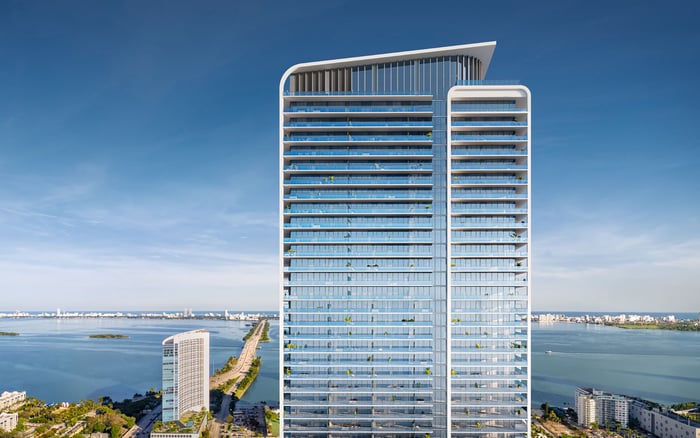
Establishing a permanent Wynwood home calls for two coordinated reviews: residency evidence and a discreet security plan. Buyers should verify building responsibilities, private-provider permissions, staffing coverage and surveillance policies before committing to overlapping systems.
For a buyer making Wynwood a permanent home, security should support daily life without turning the residence into a second checkpoint. Establishing Florida domicile and arranging full-time protection belong in the same acquisition conversation, but require different evidence. Ownership alone does not settle permanent-residency questions, and controlled building entry does not establish continuous staffing or a defined emergency response.
The objective is a coordinated plan: consistent residency documentation, clear building responsibilities and a private security assignment limited to genuine gaps. Whether evaluating Frida Kahlo Wynwood Residences or another Wynwood address, buyers should request operating details rather than infer security arrangements from the property’s presentation.
For Miami-Dade homestead-exemption eligibility, the property must be the applicant’s permanent residence as of January 1. The regular application deadline is March 1 of the relevant tax year. Treat these as separate checkpoints: the residence requirement and the filing deadline are not interchangeable.
Relevant permanent-residency indicators include a Florida driver’s license or identification card, vehicle registration, voter registration and a recorded Declaration of Domicile. Voter-registration records matching the claimed residence and relinquishment of out-of-state driver’s licenses are also relevant evidence under Florida’s homestead-residency framework.
The practical test is consistency. Ask counsel to examine whether the documents support the claimed Florida residence; neither a closing nor a single filing should be assumed to answer every question. Homestead eligibility, voting residence and domicile are related but distinct. Voting residence involves an intention to maintain a permanent residence, supported by evidence of that intention.
Privacy belongs in this review. A Declaration of Domicile used as homestead evidence is recorded in county public records; do not assume it is confidential. Discuss that exposure with counsel before filing, without treating privacy concerns as a substitute for accurate documentation.
When reviewing descriptions of secured elevator and front-door entry, digital access control or partially attended service, treat them as a starting point for diligence rather than a guarantee of operating conditions. Partially attended service, in particular, should not be read as a continuously staffed security desk.
Ask management to identify staffing hours, personnel duties and procedures for an unattended post. Confirm which advertised controls will be delivered, who operates them and how failures are handled. A secured elevator and a staffed response serve different functions; purchasing one should not be mistaken for obtaining the other.
Apply the same questions when extending a search into the Design District, including Kempinski Residences Miami Design District. Compare documented responsibilities, not service expectations attached to a project name. Do not presume a Wynwood-wide staffing standard or a building-specific response time.
Before commissioning equipment or personnel, request a written inventory of lobby, garage, elevator, corridor, visitor and service-entry controls. Establish who issues credentials, who can revoke them and who authorizes exceptions. Then prepare a security responsibility matrix identifying building-controlled areas, resident-controlled areas, responsible operators and emergency escalation paths.
A useful matrix should address four practical questions:
Which entrances and shared areas remain under building management’s control?
What may the resident’s provider monitor or operate within the residence?
Who approves visitor, household-staff and contractor access after hours?
Who receives an alert, contacts emergency services and coordinates the handoff?
Complete this exercise before seeking proposals for additional readers, locks or monitoring subscriptions. Where existing controls perform the required function, ask the provider to explain what an additional system would solve. More equipment does not automatically produce a more coherent plan.
Seek written association approval where required before modifying locks, installing cameras or placing guards in shared areas. A private contract should not assume authority over spaces or systems the resident does not control.
Specify whether the proposed arrangement involves an on-site guard, remote monitoring, an available responder or a combination. These are distinct assignments, not interchangeable descriptions of full-time protection. Ask each operator to document its role and any periods when another party must take over.
The written plan should cover guard-post approval, after-hours access, staffing gaps, credential revocation and emergency handoffs. Confirm how a replacement guard is admitted, how a departing employee’s access is removed and whom the household contacts when the usual building representative is unavailable.
For a buyer also considering Edgewater and Aria Reserve Miami, the same written brief supports a disciplined comparison without implying that either property offers a particular staffing model. The question is whether the proposed private assignment fits the building’s confirmed rules.
Alarm-verification procedures should never delay an immediate emergency-services call when danger is apparent. Make that priority explicit so coordination does not become an unnecessary approval chain.
Request policies covering camera coverage, audio, footage access, retention, biometrics, vendor sharing and deletion. These are diligence questions, not automatic resident entitlements. Do not assume ownership provides unrestricted access to surveillance footage or entry logs.
Ask management to confirm how long recordings remain retrievable, which retention policy applies at the building and how a preservation request would be handled. Have counsel review applicable legal requirements rather than assuming a standard retention period applies to every condominium.
For private cameras, review the field of view before installation. Avoid capturing neighboring private spaces or intimate activities, and obtain required approvals rather than assuming a doorway installation is unrestricted. Ask counsel to review any placement that could intrude on a reasonable expectation of privacy.
Audio deserves separate scrutiny: recording conversations can implicate Florida’s interception law and all-party-consent requirements. Use video-only monitoring unless counsel confirms a lawful audio arrangement. Ask the installer to document the settings, then clarify who can change them and who can access stored recordings.
Before committing, bring the residency review, responsibility matrix, staffing schedule, required approvals and privacy policies into one closing discussion. Resolve disagreements between management and the private provider in writing, particularly where credentials, shared areas or emergency handoffs overlap.
The most useful security plan is not the most conspicuous. It is one in which each operator knows the assignment, unnecessary duplication has been removed and the household understands both the protection provided and its privacy implications. For a permanent Wynwood residence, that clarity deserves the same attention as the home itself.
Explore your South Florida residential options with MILLION.
If branded residences are on your mind — as a home or as an allocation — we would be glad to share what we are seeing, privately.
Begin a quiet conversationA purchase alone should not be treated as conclusive evidence of permanent residence. Review the consistency of your residency documents with counsel, recognizing that domicile, homestead eligibility and voting residence are distinct questions.
The property must be the applicant’s permanent residence as of January 1. The regular homestead-exemption application deadline is March 1 of the relevant tax year.
Relevant indicators include a Florida driver’s license or ID, vehicle registration, voter registration and a recorded Declaration of Domicile. No single document should be assumed to resolve every residency question.
A Declaration of Domicile used as homestead evidence is recorded in county public records. Buyers should discuss the privacy implications with counsel before filing.
No; buyers should confirm actual staffing hours, duties and coverage gaps rather than assume a continuously staffed desk.
Obtain a written inventory of existing entry controls and prepare a responsibility matrix. Define the private provider’s assignment around confirmed gaps and permissions.
Do not assume that permission exists. Seek written association approval where required before placing guards, installing cameras or modifying locks.
Ask management how long recordings remain retrievable and how preservation requests are handled. Have counsel review applicable legal requirements rather than assuming a standard period applies.
Use video-only monitoring unless counsel confirms a lawful audio arrangement. Recording conversations can implicate Florida’s interception law and all-party-consent requirements.
It should identify responsible operators, after-hours contacts and escalation paths. Alarm verification should not delay an immediate emergency-services call when danger is apparent.