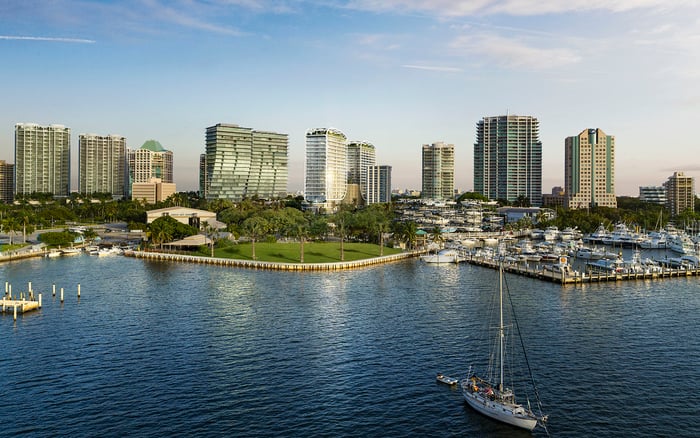
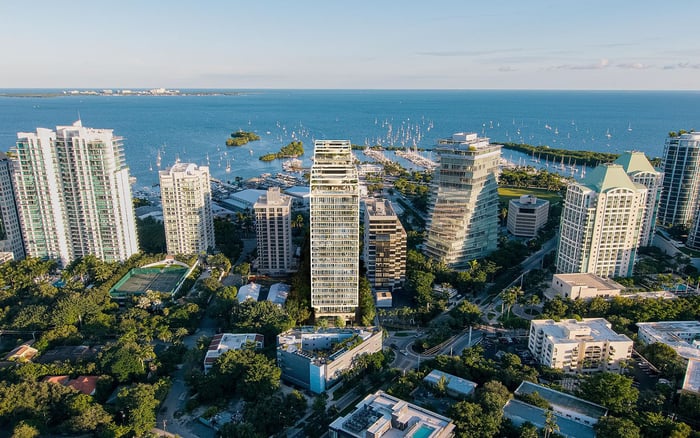
A discreet buyer’s guide to evaluating coastal insurance, hurricane deductibles, flood exposure, waterfront records, and construction documentation at OPUS Coconut Grove.

OPUS Coconut Grove is marketed as a boutique luxury development comprising 14 residences in Coconut Grove, Miami. Its low-density proposition may appeal to buyers seeking privacy and a more intimate ownership experience, but it does not eliminate the insurance, wind, or flood considerations inherent in coastal condominium ownership.
For purchasers evaluating Opus Coconut Grove, the essential question is not simply whether coverage exists. The more consequential inquiry is how the association’s policy, the unit-owner’s policy, applicable deductibles, physical exposure, and governing documents operate together after a serious loss.
This discipline belongs in any sophisticated buyer’s guide to a waterfront acquisition. It is particularly relevant when comparing new-construction opportunities, where polished presentations alone cannot establish the scope of insurance or structural protections.
A condominium association’s master policy and an individual unit-owner policy serve distinct purposes. Buyers should request the complete master policy, declarations, schedules, endorsements, exclusions, limits, deductibles, replacement-cost valuation, and ordinance-or-law coverage. They should also examine the association’s loss history and unit-owner insurance requirements.
The personal policy generally addresses specified interior property, personal possessions, liability, and other exposures not insured by the association. Its language should be compared directly with the declaration and master policy to prevent gaps between what the association insures and what the owner assumes.
This review is equally valuable when weighing other Coconut Grove residences, including Four Seasons Residences Coconut Grove and Park Grove Coconut Grove. The relevant comparison is not a project’s positioning, but the actual policy language, limits, deductibles, and allocation of responsibility for each property.
Florida residential property policies generally must provide windstorm coverage, subject to statutory exceptions. Wind coverage can nevertheless be excluded following the required written election, making verification more reliable than assumption. If a primary policy excludes wind, separate windstorm coverage may be necessary through a specialty insurer or the state’s insurer of last resort.
Flood is a separate concern. Standard homeowners insurance generally does not cover flooding, including storm-surge flooding, even when a hurricane causes the event. A policy may respond to hurricane wind damage while excluding or limiting losses caused by rising water or surge. Buyers should therefore obtain written confirmation of property, windstorm, hurricane, and flood coverage, together with every exclusion and sublimit.
Insurance availability should be tested during the contract period. A lender may require acceptable property, windstorm, and flood coverage before funding, and a late underwriting issue can affect both financing and the ownership budget.
Wind and hurricane deductibles may differ materially from ordinary all-perils deductibles. Percentage-based deductibles can create far greater out-of-pocket obligations than fixed-dollar amounts, particularly when insured values are substantial.
A buyer should determine which value the percentage applies to, whether the deductible is charged per event or on another basis stated in the policy, and how the condominium documents allow the association to allocate an uninsured loss or deductible. The practical question is whether a major storm could generate both personal-policy costs and an association assessment.
Association renewals can also be influenced by replacement-cost valuations, wind deductibles, claims history, roof age, flood exposure, and ordinance-or-law protection. Premium alone is therefore an incomplete measure. Scope, exclusions, deductibles, and potential assessment liability merit equal scrutiny.
Insurer underwriting can distinguish properties by geography, construction year, replacement cost, and the inclusion or exclusion of wind coverage. Qualifying windstorm construction features may also support rating credits, but those features should be documented-not inferred from renderings or sales language.
Buyers should request structural specifications, applicable code information, relevant product approvals, wind-mitigation documentation, inspection records, and descriptions of the roof, openings, glazing, exterior envelope, waterproofing, emergency power, and drainage systems. The objective is not to accept a broad claim of resilience, but to identify the tested assemblies, installed systems, and professional records that support it.
Public-facing project materials do not establish OPUS Coconut Grove’s complete master insurance program, deductibles, claims history, reserves, or exact structural code package. Those matters belong in formal diligence with qualified insurance, legal, engineering, survey, and lending advisers.
Open-bay parcels along North and South Bayshore Drive can face greater exposure to wind, waves, and storm surge than inland properties. The degree of exposure depends on the specific site, so buyers should establish the parcel’s flood-zone determination and physical relationship to Biscayne Bay rather than rely on a neighborhood label.
Where waterfront improvements or obligations are involved, buyers should review seawall condition, dock permits, and any rights or duties concerning submerged land. A current survey should identify the mean high-water line, seawall, dock footprint, property boundaries, and applicable setbacks. Open-bay exposure can also intensify scrutiny of insurance availability and potential post-storm repairs.
The same site-specific approach applies when considering an island setting such as Vita at Grove Isle. Proximity does not make two properties equivalent. Each association, parcel, policy program, survey, and waterfront structure warrants its own review.
Before the diligence deadline, assemble the declaration, bylaws, budgets, reserve information, master policy, unit-owner requirements, flood determination, current survey, structural specifications, wind-mitigation records, and any seawall or dock documents applicable to the property. Then obtain insurance indications based on the intended use, financing, interior value, and liability profile.
The strongest purchase decision aligns four elements: insurable risk, contractual responsibility, physical condition, and available liquidity for deductibles or assessments. At OPUS, the intimate scale may define the residential experience. The governing and insurance documents determine how risk is shared among 14 owners.
How many residences are planned at OPUS Coconut Grove? OPUS Coconut Grove is marketed as a boutique development with 14 residences.
Does a low-density condominium eliminate coastal insurance risk? No. A limited residence count does not remove wind, flood, storm-surge, or assessment exposure.
Is windstorm coverage automatically included in every policy? Not necessarily. Florida law generally requires it, subject to exceptions, and coverage may be excluded following the required written election.
Does homeowners insurance cover storm-surge flooding? Standard homeowners coverage generally excludes flooding, including storm surge, even when associated with a hurricane.
Why review both the master policy and unit-owner policy? They insure different interests, and comparing them can reveal gaps involving interiors, personal property, liability, and assessments.
Why do hurricane deductibles require special attention? They can differ from all-perils deductibles, and a percentage-based amount may create a substantial cash obligation.
What waterfront records should a buyer request? Request a current survey, along with applicable seawall, dock-permit, submerged-land, boundary, setback, and mean high-water-line records.
Which building documents matter for wind diligence? Review structural specifications, applicable code information, product documentation, inspection records, and wind-mitigation materials.
When should insurance availability be investigated? Investigate it during the contract period, particularly because a lender may require property, windstorm, and flood coverage before funding.
Who should review the diligence package? Qualified insurance, legal, engineering, survey, and lending advisers should evaluate the documents within their respective disciplines.
When you're ready to tour or underwrite the options, connect with MILLION.
If branded residences are on your mind — as a home or as an allocation — we would be glad to share what we are seeing, privately.
Begin a quiet conversation