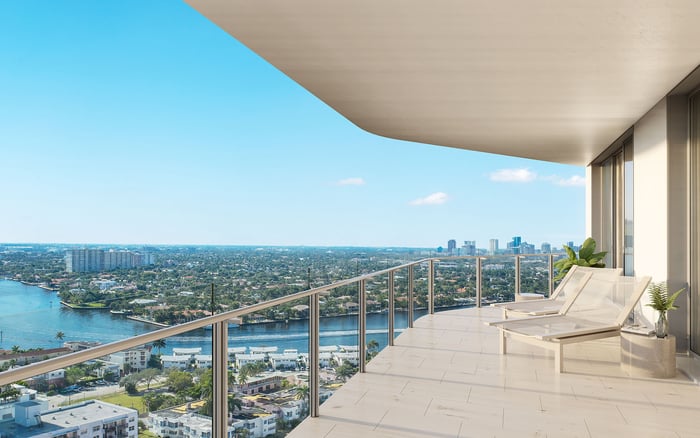
A disciplined pre-closing walkthrough should test the residence, building systems, service model, documents, arrival sequence, and waterfront setting before defects or ambiguities become an owner's responsibility.

At Four Seasons Residences Coconut Grove, a pre-closing walkthrough should go well beyond stone alignment, cabinetry, fixtures, and the composition of the bay view. The more consequential questions are how the residence performs, how the building operates, and which obligations transfer to the owner after closing.
That distinction matters in Branded Residences, where private living, hospitality service, management policy, and shared infrastructure converge. For readers of MILLION Buyer's Guides, the essential strategy is to divide the review into five layers: enclosure, mechanical systems, life safety, daily circulation, and legal or operational commitments. An independent inspector or engineer experienced in coastal high-rise construction should lead the technical review. Sales and brand personnel are no substitute for that expertise.
Begin with every exterior opening. Operate doors and floor-to-ceiling windows repeatedly, noting resistance, alignment, locking, gasket contact, and visible gaps. Examine terrace thresholds, seals, and drainage points for conditions that could permit air or water intrusion. A glass façade is not proof of storm resilience. Request the applicable glazing and hurricane-protection specifications, then have them evaluated against the residence as delivered.
On the terrace, inspect railings, frames, exterior hardware, fasteners, and exposed metalwork. Look for incomplete installation, movement, staining, or early vulnerability to salt-air corrosion. Confirm that water flows toward drainage points rather than collecting at thresholds. These checks are especially important in a Waterfront setting, whether evaluating this building or nearby alternatives such as Park Grove Coconut Grove.
A quiet visit can conceal performance problems. Operate the HVAC under realistic conditions long enough to assess airflow, room-to-room temperature consistency, humidity control, condensate drainage, and equipment noise. Listen from bedrooms as well as living spaces. Note whether mechanical sound changes when doors are closed or as the system cycles.
Run water at every kitchen, bathroom, and utility connection. Verify pressure, hot-water delivery, drainage speed, accessible shutoffs, and any evidence of leakage beneath sinks or around connections. Where practical, test simultaneous demand rather than checking one fixture at a time. New-construction presentation may be immaculate, but reliable performance is what matters after occupancy.
Evaluate acoustics with windows both closed and open. Pause conversation and listen for South Bayshore Drive traffic, marina and bay activity, mechanical equipment, elevators, corridors, and adjoining residences. Repeat the exercise in bedrooms and at different points on the terrace. The objective is not absolute silence, but a clear understanding of the sound environment under ordinary conditions.
The life-safety review should cover smoke detection, sprinklers, emergency lighting, stair access, evacuation routes, and the extent of backup-power coverage. Do not assume that every residential function or common-area system receives emergency power. Request written clarification and compare it with the governing documents.
The residence begins at the property line, not the front door. Follow the complete arrival sequence from the street and garage through security, elevators, corridors, and the private entry. Observe congestion points, sightlines, privacy, elevator transitions, and the relationship between resident and service circulation.
Then inspect landscaping, setbacks, pedestrian access, loading areas, drainage, and the building's street interface. These elements shape daily convenience and the quality of arrival. Buyers comparing Coconut Grove options, including Mr. C Tigertail Coconut Grove or Vita at Grove Isle, can apply the same route-based test rather than comparing only lobbies and amenity imagery.
Return at different times. Daylight, evening conditions, nearby events, traffic, bay and marina activity, nighttime lighting, and shifting privacy conditions can materially alter the experience. A single scheduled appointment captures only one frame of a living environment.
Confirm which Four Seasons services are included, separately charged, subject to availability, or dependent on staffing and operating policy. Request clear written distinctions among an offered service, an included service, and one available for an additional fee. Brand recognition should sharpen scrutiny, not replace it.
Review the condominium and management documents alongside the executed purchase agreement and disclosures. Focus on assessments, service fees, brand-related charges, maintenance standards, reserve obligations, and restrictions on owner use. Responsibility for terrace components, glazing, equipment, and other boundary conditions should also be clear before closing. The practical question is not simply what the building offers, but who pays, who maintains, who approves, and what can change.
Create a room-by-room defect log with dated photographs, exact locations, measurements where useful, and concise written descriptions. Avoid vague entries such as “window issue.” Identify the room, opening, observed condition, and circumstances in which it occurred.
Before closing, require written confirmation of responsibility and a correction timeline for every accepted item. Separate cosmetic touchups from water, mechanical, safety, and operational concerns so the most consequential issues remain visible. Retain the final record, correspondence, and supporting documents as part of the residence file.
The most successful walkthrough is not a ceremonial last look. It is a controlled test of coastal performance, daily use, management clarity, and accountability, calibrated to the expectations of Four Seasons Residences Coconut Grove and the wider Coconut Grove luxury market.
Should a buyer bring an independent inspector to the walkthrough? Yes. An inspector or engineer with coastal high-rise experience can evaluate technical conditions independently of sales and brand representatives.
What should be checked around floor-to-ceiling windows? Test operation, locks, alignment, seals, thresholds, and visible gaps while watching for indications of air or water intrusion.
Is a glass façade enough evidence of hurricane protection? No. Request the glazing and hurricane-protection specifications rather than relying on appearance or assumptions.
How should terrace drainage be evaluated? Examine slopes, thresholds, and drainage points for obstructions or areas where water could collect near the residence.
What matters most when testing the HVAC? Check airflow, temperature consistency, humidity control, condensate drainage, cycling behavior, and equipment noise under realistic operating conditions.
Which plumbing checks belong in the walkthrough? Verify pressure, hot-water delivery, drainage speed, shutoff access, and leaks at every kitchen, bathroom, and utility connection.
How can a buyer assess noise accurately? Listen with windows open and closed, in multiple rooms, and during visits at different times of day.
Which building areas should be included beyond the residence? Walk street and garage access, security, elevators, corridors, stairs, loading areas, landscaping, and pedestrian approaches.
What should be confirmed about branded services? Determine what is included, separately charged, dependent on availability, or controlled by staffing and operating policies.
How should defects be documented before closing? Use dated photographs, precise locations, measurements, and written descriptions, then obtain responsibility and correction deadlines in writing.
For a tailored shortlist and next-step guidance, connect with MILLION.
If branded residences are on your mind — as a home or as an allocation — we would be glad to share what we are seeing, privately.
Begin a quiet conversation