Waldorf Astoria’s planned Downtown Miami hotel-and-residence tower offers a compelling hosting proposition: visitors could stay in the same building while owners preserve their private space. The distinction depends on hotel availability, residential access rules, and clearly documented service arrangements.
The most comfortable way to host is not always to offer another bedroom. For an owner who values quiet mornings, an uninterrupted workday, or simply the freedom to close the front door, proximity can matter more than a shared living room. A hotel within the same tower offers a different possibility: visitors remain nearby while the apartment stays distinctly private.
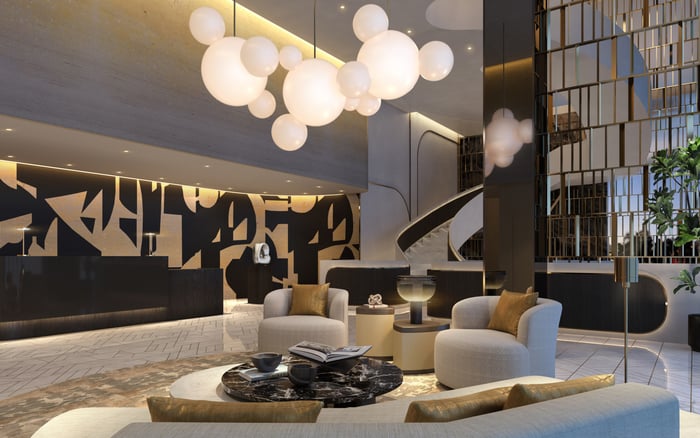
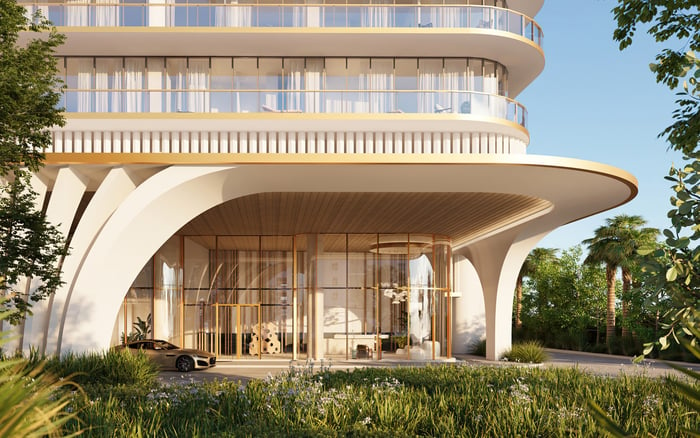
That is the appeal of Waldorf Astoria Residences Downtown Miami for this buyer. The planned 100-story tower combines 360 fully finished and furnished residences with a 205-room Waldorf Astoria hotel. Hotel rooms and private homes are distinct accommodations-a mixed-use arrangement suited to owners who enjoy company but prefer not to host every overnight stay in their apartment.
The proposition is compelling, but conditional. A hotel in the building is a potential lodging option, not a guaranteed guest-room entitlement attached to ownership.
Advertised residential layouts range from junior suites to four-bedroom homes. That breadth makes the hosting question less about selecting the largest possible apartment and more about deciding how much overnight accommodation belongs inside the home.
One buyer might devote a room to daily use rather than reserve it principally for visitors. Another might want relatives nearby while preserving separate sleeping arrangements and morning routines. In either case, the integrated hotel could support that preference without requiring guests to share the owner’s apartment.
The essential distinction is between physical proximity and reservation rights. Ownership should not be treated as evidence of guaranteed booking priority, fixed visitor rates, or assured availability on particular dates. Before making the hotel part of a hosting plan, establish how reservations would work and whether any owner-related arrangements would apply.
For second-home buyers, this is a useful planning exercise: choose the residence for how you intend to live, then assess visitor accommodation separately.
The planned private residential porte cochère and separate residential entrance are designed to distinguish owner arrivals from hotel circulation. Advertised staffing includes 24-hour doormen, lobby attendants, valet parking, security, and a live-in resident manager, alongside a planned 24-hour concierge.
Privacy extends beyond the apartment door. The arrival sequence, visitor registration, and movement between hotel and residential areas all affect how comfortably the two uses can coexist within one building.
A separate entrance does not, by itself, establish every access rule. Buyers should request a clear explanation of how hotel guests would visit a residence, which elevators they could use, and whether an owner must accompany them through particular areas. The objective is not unrestricted circulation, but a predictable arrangement that makes visiting easy without weakening the residential boundary.
An ideal walkthrough would trace both journeys: the owner returning home and the visitor arriving for dinner.
The planned dining program includes a signature restaurant, an all-day brasserie, and a private bar and wine-tasting room. These venues could offer alternatives to entertaining exclusively at home, subject to applicable reservation and access arrangements.
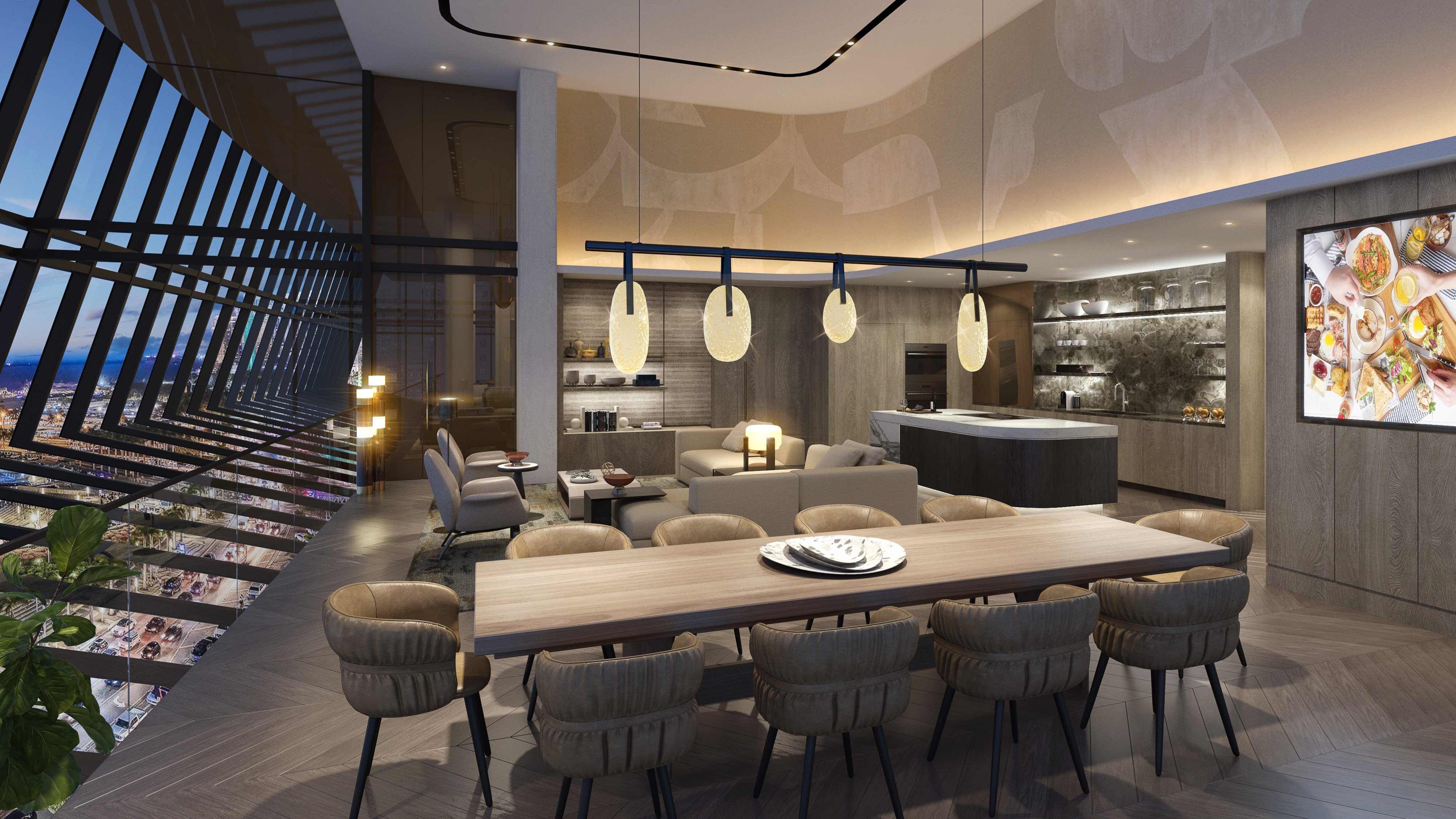
The Owners Lounge is planned with billiards, entertainment space, panoramic bay views, and an adjacent catering kitchen. It offers another potential setting for gatherings, but visiting hotel guests should not be assumed to have access. Confirm guest limits, reservation procedures, catering requirements, and any charges before treating it as an extension of the apartment.
The planned offering includes à-la-carte room service and housekeeping for purchase. Their appeal is practical: hosting need not mean personally managing every meal or the cleanup afterward. Still, service scope, scheduling, and billing deserve the same attention as the residence’s finishes.
Meeting rooms, boardrooms, and function spaces are also included in the planned amenity program. For owners receiving business visitors, their usefulness depends on booking terms, not their presence alone.
The hotel amenity program includes a resort-style pool with an outdoor café and private cabanas. A separate private residential pool deck is also planned. That separation is central to the proposition: a hotel stay should not be confused with full resident amenity privileges.
Before imagining a shared afternoon by the residential pool, establish whether visitors may enter, whether accompaniment is required, and what limits apply. Ask the same questions about the advertised spa and fitness facilities.
Preferred spa and restaurant rates are advertised for residents, but specific discounts are not established here. Nor should any resident benefit be presumed to extend to visiting friends or family. A Waldorf Astoria Kids Club is included in the advertised amenities, but visiting children’s eligibility requires confirmation.
These are not minor administrative details. They determine whether the building supports the kind of visit an owner wants to offer.
A useful purchase comparison begins with the owner’s habits rather than a brand name. Someone also considering Aston Martin Residences Downtown Miami should apply the same questions about visitor arrival, overnight arrangements, and the boundary between private living and entertaining.
Likewise, a buyer reviewing Casa Bella by B&B Italia Downtown Miami can use those hosting priorities as a consistent basis for evaluation. How often will guests come? Must they sleep under the same roof? Is an additional bedroom valuable every day, or mainly during occasional visits?
These are comparison questions, not assumptions that the projects share hotel accommodation or access policies. Waldorf Astoria’s particular appeal here is its planned combination of distinct hotel rooms and residences within one tower. The purchase decision should turn on whether that arrangement fits the household’s daily routines.
Because the services and amenities discussed here are planned or advertised, buyers should seek written confirmation of the arrangements they intend to rely on. Begin with hotel booking procedures, any owner preferences, cancellation terms, and how charges for visiting guests would be handled.
Then address residential access, service fees, extended-stay restrictions, and rules affecting children or pets. Distinguish an included residential service from an à-la-carte purchase, and a resident privilege from permission granted to a visitor.
The strongest version of this ownership proposition is straightforward: enjoy meaningful time together without making every visit a houseguest stay. Its value rests on both the physical separation of hotel and residential spaces and the operating rules that support it.
For a residence search shaped around privacy and thoughtful hosting, connect with MILLION.
If branded residences are on your mind — as a home or as an allocation — we would be glad to share what we are seeing, privately.
Begin a quiet conversationThe planned 205-room hotel offers a potential accommodation option within the same tower. Stays would depend on availability and applicable booking terms.
Guaranteed room availability, owner booking priority, and fixed visitor rates are not established. Buyers should request written confirmation of any reservation benefits.
Plans call for 360 fully finished and furnished residences in a 100-story tower combining homes and a Waldorf Astoria hotel.
Advertised layouts range from junior suites to four-bedroom homes. Buyers can evaluate their everyday space needs separately from occasional visitor accommodation.
A private residential porte cochère and separate residential entrance are planned to distinguish owner arrivals from hotel circulation.
A separate private residential pool deck is planned, but hotel guests’ access is not established. Confirm visitor permissions and accompaniment requirements.
Advertised à-la-carte services include room service and housekeeping for purchase. Confirm service scope, scheduling, and charges before relying on them.
Plans include dining venues and an Owners Lounge with billiards, entertainment space, and an adjacent catering kitchen. Visitor access and reservation terms require confirmation.
A Waldorf Astoria Kids Club is advertised, but visiting children’s eligibility is not established. Confirm participation rules before planning around it.
Request written details on hotel reservations, visitor access, service charges, and guest billing. Also clarify restrictions affecting extended stays, children, and pets.