A discreetly run residence depends on more than a private arrival. At Waldorf Astoria Residences Downtown Miami, buyers should distinguish advertised residential services from the unit-specific routes, staff permissions, and delivery procedures that require confirmation before occupancy.
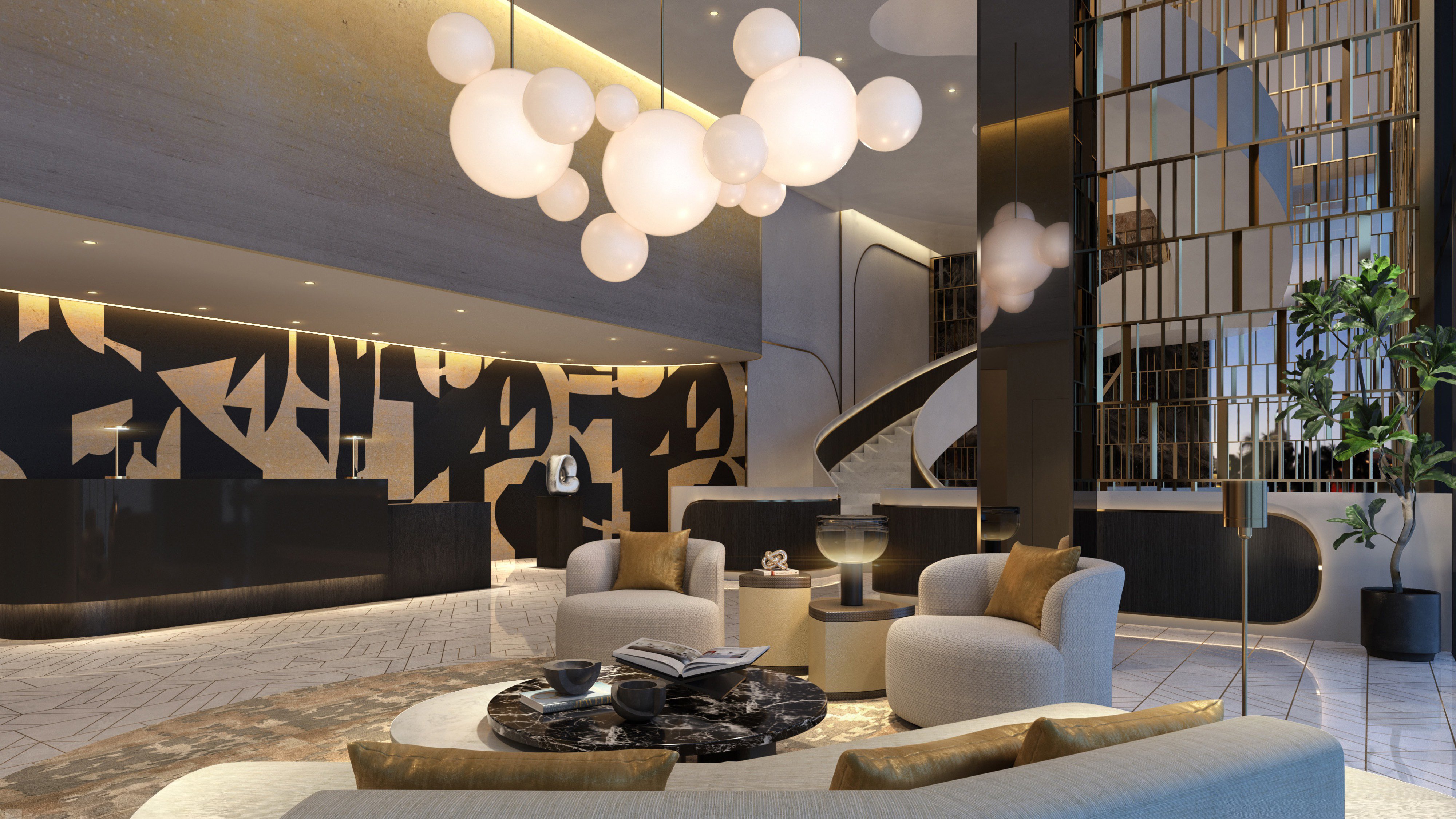
The most convincing luxury is often what a guest never notices: a household running smoothly, without deliveries interrupting lunch or maintenance crossing an evening arrival. At Waldorf Astoria Residences Downtown Miami, that experience begins with a clear distinction between residential privacy and household-service separation. They are related, but not interchangeable.
The development is planned as a 100-story tower combining a Waldorf Astoria hotel and private residences at 300 N Biscayne Boulevard, Miami, FL 33132. Its advertised private residential arrival and extensive service program provide a basis for household planning. They do not, however, establish a dedicated back-of-house corridor, separate staff vestibule, or private service entrance for every residence.
For an owner employing housekeepers, chefs, personal assistants, or specialist vendors, the objective is precise: confirm how each person reaches the home, who authorizes entry, and where responsibility passes from building personnel to the household.
The planned layout places the hotel main lobby at ground level and the condominium main lobby on Level 3, with hotel guest rooms on Levels 7-16 and hotel function spaces on Level 17. These distinct zones clarify the tower's organization, but do not resolve every question about shared service areas or staff movement.
A private residential lobby and residential elevators are advertised, as are private and semiprivate elevators. Neither elevator term should be read as a promise of a separate staff elevator serving a particular home.
The advertised residential porte-cochère, 24-hour valet, doormen, and lobby desk attendants concern the arrival experience. Before occupancy, ask management to distinguish those arrangements from the approved routes for employees, contractors, furniture installers, and couriers. A residential entrance can be private without providing a fully independent service path.
Request the applicable residence plan and management's explanation of circulation from the approved entry point to the apartment door. Review the route, not just the room dimensions. Establish whether service arrivals use the same landing as residents, whether intermediate doors require authorization, and whether deliveries cross entertaining spaces inside the home.
Loading routes, freight-elevator availability and dimensions, and any hotel-shared service areas require confirmation. For large furnishings or crated art, ask the delivery team to assess the entire approved route-including turns and door clearances-before scheduling transport.
A buyer also considering One Thousand Museum Downtown Miami should ask the same unit-specific questions rather than assume private arrival terminology establishes equivalent service circulation. The relevant comparison is the household's actual route through each property, not the prestige of the address.
Treat a household access plan as a proposal to agree with management, not as an existing building policy. Start by separating recurring employees from occasional vendors and invited guests. Each category may require a different authorization process; the final building procedures must determine what is permitted.
Ask whether management accepts an employee access list, recurring credentials, advance visit authorization, and identification checks. Clarify who in the household may approve access, how substitutions are handled, and whether permissions can be restricted to an agreed schedule. A familiar face should not be assumed to constitute authorization.
Staff turnover deserves equal attention. Establish how to request immediate credential revocation, recover household-controlled keys, and confirm that the change has been acknowledged. Designate a household contact for unexpected arrivals so the front desk is not left interpreting informal instructions.
Discretion should simplify the process, not make it ambiguous. Employees need clear directions on where to arrive and whom to contact. Owners need a reliable way to change those directions.
The advertised program includes 24-hour concierge service with dedicated on-site professionals, a dedicated on-site Director of Residences, and 24-hour security and reception. Doorman and bellman services are also advertised separately. These roles offer potential points of coordination, but their precise responsibilities for household employees and outside vendors should be established directly.
A custom Waldorf Astoria Residences app is advertised as connecting residents with concierge services and building amenities. That connectivity does not establish vendor screening, staff credentialing, or access-permission management. Ask which requests can be submitted digitally and which require another approved channel.
An effective household plan identifies a primary contact, a backup contact, and an escalation path. It should also distinguish permission to enter the building from permission to enter the residence. Concierge assistance is not, by itself, unrestricted household authorization.
Parcel receiving and delivery to the residence are included in the advertised service program. A valuable shipment warrants a separate conversation before dispatch. Confirm the approved receiving route, appointment window, named recipient, and any restrictions on unattended placement.
For art, antiques, or specialist equipment, agree on signature or chain-of-custody requirements with management and the delivery provider. Establish who will accept the item at each handover and whether the household's representative must be present. Do not assume ordinary parcel handling includes condition inspection, installation, storage, or specialist care.
Contractors raise additional questions. Request the applicable insurance requirements, renovation rules, access hours, and elevator-booking procedures before committing to an installation date. The same checklist is useful when evaluating Aston Martin Residences Downtown Miami, without presuming that its procedures match Waldorf Astoria's.
Before occupancy, obtain the final condominium rules, move-in and delivery procedures, contractor requirements, renovation rules, and emergency procedures. Treat advertised services as marketing commitments subject to the final governing documents and operating procedures.
Although 24-hour emergency maintenance is advertised, a guaranteed response time is not established. Ask how urgent requests are triaged, who may authorize entry when the owner is absent, and how the household is notified afterward.
Keep the agreed instructions in a concise household operating file. An assistant or property manager should be able to use it without relying on the owner's memory or a series of informal messages.
Before settling into a regular schedule, request a coordinated review of several ordinary scenarios: a housekeeper arriving before the owner, a vendor replacing equipment, a valuable delivery, and an urgent maintenance call during an absence. Any walkthrough or test should follow management's approved procedures.
The goal is not an elaborate protocol for its own sake. It is a home where service remains discreet because routes, permissions, and responsibilities are understood in advance.
For a considered approach to selecting and preparing a South Florida residence, explore MILLION.
If branded residences are on your mind — as a home or as an allocation — we would be glad to share what we are seeing, privately.
Begin a quiet conversationThe development is listed at 300 N Biscayne Boulevard, Miami, FL 33132, in Downtown Miami.
Published layouts place the hotel main lobby at ground level and the condominium main lobby on Level 3. That separation does not establish fully independent service routes.
A separate staff entrance, staff vestibule, or back-of-house corridor is not established for every residence. Confirm the arrangement for the specific home before planning household operations.
No. Private and semiprivate elevators are advertised, but that wording does not establish a separate staff elevator for each residence.
The advertised program includes a private residential porte-cochère with 24-hour valet, along with 24-hour doormen and lobby desk attendants.
Ask management about employee access lists, recurring credentials, identification checks, and permitted schedules. Agree on a process for promptly revoking access when employment ends.
The app is advertised as connecting residents with concierge services and amenities. Vendor screening and access-permission management are not established capabilities.
Confirm the approved route, appointment window, named recipient, and signature or chain-of-custody requirements before dispatch. Clarify restrictions on unattended placement and who accepts each handover.
Twenty-four-hour emergency maintenance is advertised, but a guaranteed response time is not established. Confirm escalation and residence-entry procedures with management.
Request final condominium rules, move-in and delivery procedures, contractor requirements, renovation rules, and emergency procedures. Use those documents to align household instructions with building operations.