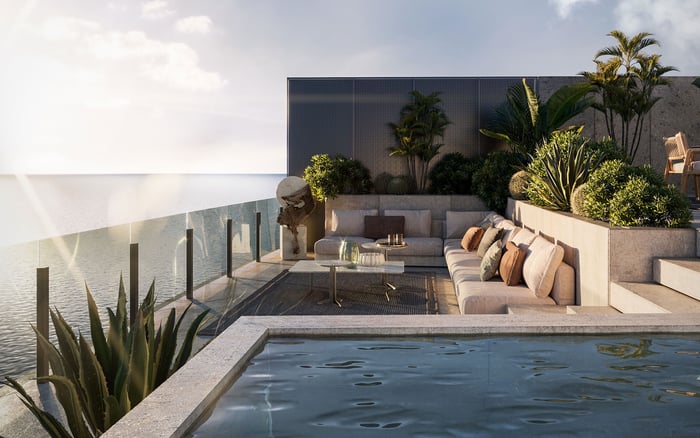
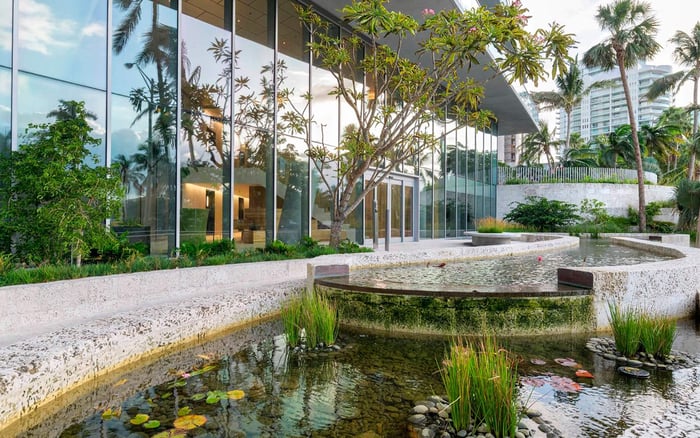
A buyer-focused comparison of Vita at Grove Isle and Park Grove Coconut Grove through the lenses of waterfront access, exposure, scale, and seasonal resident flow.
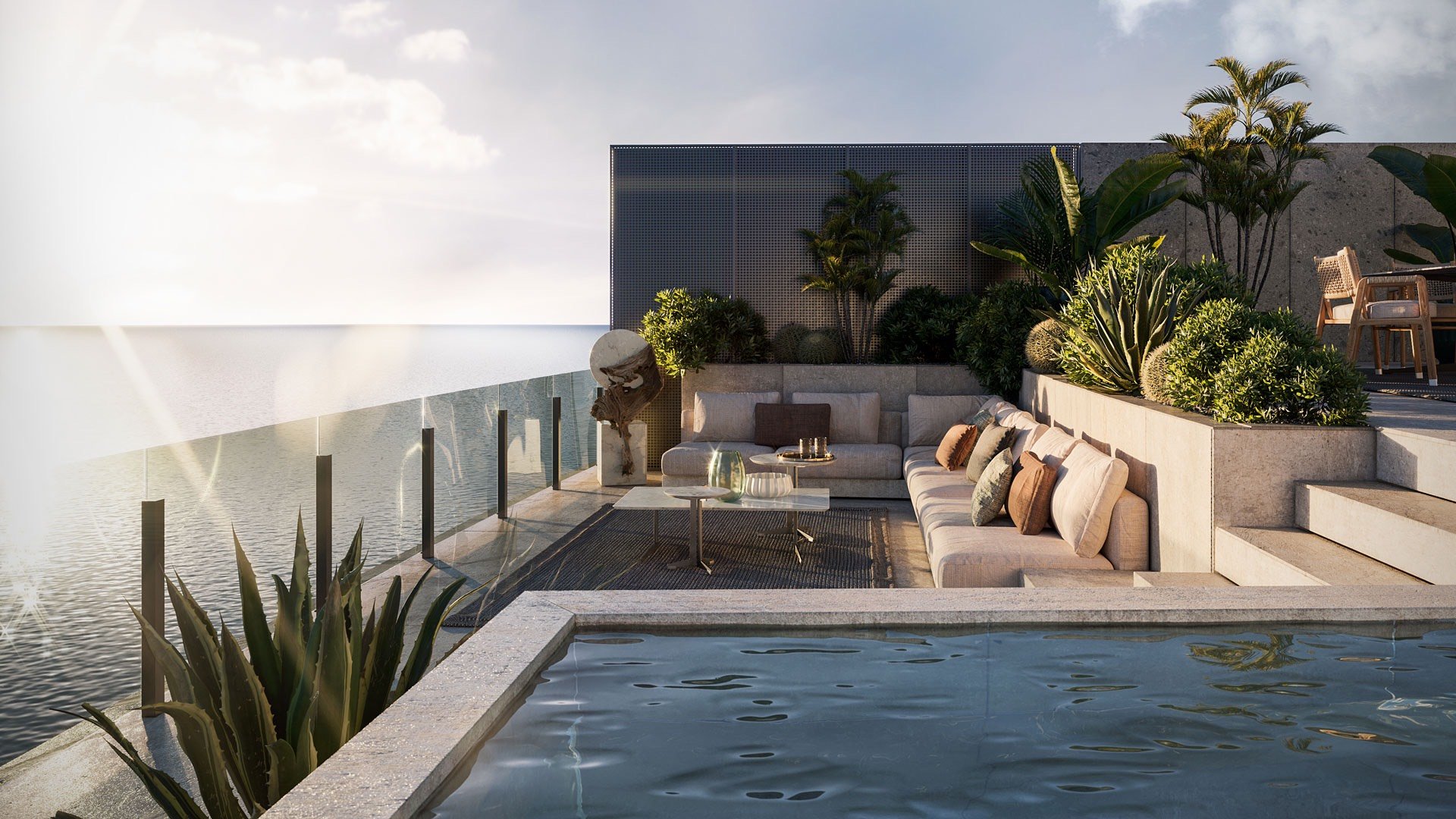
In Coconut Grove, the meaningful comparison between Vita at Grove Isle and Park Grove Coconut Grove is not simply island versus mainland. It is how each setting asks residents to live with access, exposure, privacy, and the seasonal rhythm of one of Miami’s most established waterfront neighborhoods.
Park Grove Coconut Grove is a larger, three-tower bayfront luxury condominium project. Its identity is tied to scale, waterfront siting, amenity programming, and the resident dynamics that come with a more expansive residential environment. Vita at Grove Isle, by contrast, is best understood through its more isolated island setting, where arrival, movement, and daily privacy feel naturally different from a mainland bayfront complex.
For a serious buyer, this is where the phrase building culture becomes useful. Architecture may frame the view, but building culture determines how the property feels during a January weekend, a holiday arrival window, a breezy afternoon on the bay, or a peak-season dinner hour when residents and guests move through the same social spaces.
The word beach-access appears frequently in South Florida searches, but in this comparison it requires precision. The relevant discussion is waterfront access and controlled residential access, not a promise of true public beach access or direct sand-front living. That distinction matters.
A buyer accustomed to Miami Beach or oceanfront addresses may hear “waterfront” and imagine the choreography of sand, umbrellas, and tidal shoreline. Coconut Grove’s bayfront lifestyle is different. It is more about views, protected water, boating atmosphere, breezes, and the texture of a residential waterfront neighborhood. At Park Grove, that experience is shaped by its position as a bayfront condominium environment with substantial building scale. At Vita at Grove Isle, the more isolated island context suggests a different kind of remove from the mainland pace.
The practical question is not whether one is more “beachy” than the other. It is whether the buyer wants a bayfront residential setting with a larger mainland condominium culture, or a more insulated island feeling where access itself becomes part of the privacy proposition.
Peak season in Coconut Grove is not only about traffic outside the property. It is also about how many households are circulating through lobbies, elevators, amenity areas, arrival courts, and waterfront spaces at the same time. Park Grove’s larger three-tower format gives it a more complex internal rhythm than a smaller or more isolated residential setting.
That is not inherently better or worse. Larger buildings can support more robust amenity programming, broader social energy, and a more active sense of residential life. They can also feel more animated during high-demand weeks. For owners who enjoy a cultivated waterfront community with visible service, amenities, and neighborly movement, that activity may be part of the appeal.
Vita at Grove Isle’s more isolated island setting points to a different buyer psychology. The appeal is less about being woven into a larger mainland condominium ecosystem and more about the feeling of separation before one even reaches the residence. For some buyers, that physical and emotional pause is the luxury.
Wind exposure is often discussed too casually in waterfront real estate. It is not only about whether a terrace is breezy. It affects how often outdoor areas feel usable, how doors and sliders behave, how outdoor dining works, and whether a residence feels serene or invigorating on a given day.
In this comparison, the safest buyer lens is situational rather than absolute. Bayfront siting can create highly desirable light, air, and water-view experiences, but it can also make orientation and elevation more important. An island setting can feel beautifully removed, yet that same sense of exposure may invite closer attention to terrace comfort, prevailing breezes, and the buyer’s tolerance for open-water conditions.
This is why a single daytime showing is rarely enough. A sophisticated buyer should experience the property at different hours, paying attention to terrace usability, lobby arrivals, outdoor amenity comfort, and the sensory quality of the waterfront. In Coconut Grove, the difference between a postcard view and livable daily exposure can be subtle, but it is consequential.
Amenity programming is one of Park Grove’s defining comparison points because the resident experience is framed around scale, waterfront siting, and shared spaces. In a larger luxury condominium, the pool, wellness areas, lounges, and arrival sequences are not just amenities. They are the social infrastructure of the building.
That infrastructure can create elegance and convenience. It can also create recognizable patterns. Certain hours feel more active. Certain seasons bring more guests. Certain spaces become informal social centers. The question for buyers is whether they prefer a building where amenity life is part of the daily energy, or a setting where privacy and separation are more central to the emotional value.
This is where building culture becomes more predictive than a brochure. Two waterfront properties can both feel luxurious, yet one may feel club-like and animated while another feels quieter and more residential. The best choice depends on whether the owner wants to participate in the building’s social rhythm or retreat from it.
Luxury buyers often focus on views first, then floor plan, then amenities. Arrival should be higher on the list. The daily sequence of entering the property, greeting staff, moving through shared spaces, waiting for elevators, meeting guests, and transitioning from car to residence shapes the experience more than most buyers expect.
At Park Grove Coconut Grove, the larger three-tower identity implies a more layered arrival culture, with the benefits and activity that come from a substantial bayfront address. At Vita at Grove Isle, the more isolated island setting places greater emphasis on the approach itself, the psychological distance from the mainland, and the sense of being removed before reaching home.
For a primary resident, arrival is a daily ritual. For a seasonal owner, it is the first impression after every return to Miami. In both cases, it should be tested during real-life conditions, not only during a quiet appointment window.
The buyer drawn to Park Grove is likely prioritizing a larger Coconut Grove bayfront environment with meaningful amenity life, a visible residential community, and the energy that comes with a multi-tower luxury setting. The buyer drawn to Vita at Grove Isle is more likely to value separation, island character, and the feeling of being slightly apart from the mainland neighborhood.
Neither profile is inherently more refined. The distinction is personal. Some owners want the waterfront to feel social, serviced, and architecturally significant. Others want the water to feel like a buffer, a privacy layer, and a quieter frame around daily life.
The most disciplined approach is to tour for culture, not just inventory. Watch how residents use common areas. Notice whether the building feels calm or animated. Ask how the waterfront spaces behave in season. Stand on terraces long enough to understand wind, sound, and privacy. In this segment of the market, the best residence is not only the one with the strongest view. It is the one whose culture matches the owner’s life.
Is Park Grove Coconut Grove a bayfront condominium? Yes. Park Grove Coconut Grove is identified as a bayfront luxury condominium project in Coconut Grove.
Is Park Grove a large project? Yes. It is described as a larger, three-tower bayfront complex.
Is Vita at Grove Isle more isolated than Park Grove? The comparison frames Vita at Grove Isle around a more isolated island setting versus Park Grove’s mainland Coconut Grove position.
Do these properties offer true public beach access? The better reading is waterfront access, not a verified promise of public beach access or direct sand-front living.
Why does building culture matter for buyers? Building culture shapes how amenities, arrivals, shared spaces, and peak-season activity feel in daily life.
Which property is better for a social buyer? A buyer seeking a larger, more active bayfront condominium culture may find Park Grove’s scale more aligned with that preference.
Which property is better for privacy-minded buyers? A buyer prioritizing separation and a more removed setting may focus closely on Vita at Grove Isle’s island context.
How should buyers evaluate wind exposure? They should tour at different times and pay attention to terrace comfort, breezes, sound, and outdoor usability.
Does a water view guarantee livability? No. A strong water view can be beautiful, but orientation, exposure, and daily comfort still need careful evaluation.
What is the best way to shortlist comparable options for touring? Start with location fit, delivery status, and daily lifestyle priorities, then compare stacks and elevations to validate views and privacy.
For a confidential assessment and a building-by-building shortlist, connect with MILLION.
If branded residences are on your mind — as a home or as an allocation — we would be glad to share what we are seeing, privately.
Begin a quiet conversation