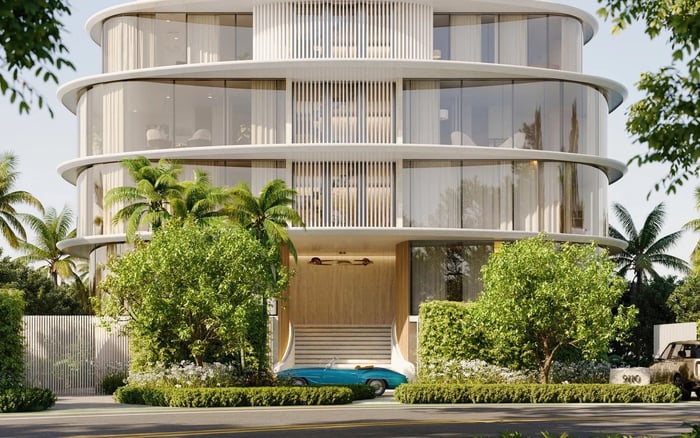
Villa Miami’s advertised rooftop helipad deserves a separate layer of due diligence. Before incorporating it into a travel plan, clarify operational status, landing authorization, aircraft compatibility, passenger logistics and the arrangements if a flight cannot proceed.

For a buyer whose calendar moves between residences, airports and business commitments, a rooftop arrival has obvious appeal. At Villa Miami, a private rooftop helipad is advertised as a planned amenity. The essential distinction is between a feature presented as part of a residential offering and a landing authorized for your aircraft, passengers and arrival time.
Treat the helipad as a potential access feature, not a guaranteed transport connection. Before making it part of a travel plan, obtain written confirmation from both the property and the charter operator. Neither the amenity description nor a residential opening target establishes the conditions for an individual flight.
Villa Miami is an ultra-luxury waterfront development by the team behind One Thousand Museum Downtown Miami. That connection provides development context; it does not establish Villa Miami’s landing permissions, operating procedures or availability for a particular journey.
The anticipated opening timeframe is 2027. That is not confirmation that helicopter arrivals will begin at the same time. Ask for separate answers on residential completion, helipad readiness and the date from which eligible users may request flights.
Operating hours, daily landing allowances, aircraft limits, weather minimums and passenger-handling procedures remain matters to confirm. These are questions to resolve, not gaps to fill with assumptions. A buyer expecting to use the amenity regularly should request the current written operating policy and ask which provisions remain subject to change.
Helipad approval involves several distinct steps. The process begins with FAA Form 7480-1, the Notice of Landing Area Proposal. Following the FAA determination, proponents must check local zoning restrictions and seek Florida Department of Transportation site approval. Miami-Dade Aviation Department does not itself approve heliport or helipad locations.
The process includes a 45-day opportunity for opposition before registration proceeds if no opposition is offered. Site approval must be followed by registration, with re-registration every two years. These are general procedural requirements, not evidence that Villa Miami has completed any particular stage.
Ask the property to identify the approvals and registrations applicable to its landing area, their current status and any attached operating conditions. Separately, ask whether the pad is operational for the proposed date. An approval document and a confirmed landing reservation answer different questions; neither substitutes for the other.
Private-use landing sites require owner permission, which charter operators coordinate during flight planning. Owning a residence should therefore not be treated as automatic clearance to arrive by helicopter.
Ask who controls landing authorization and whether access extends to owners, guests or other permitted passengers. Clarify booking lead times, how competing requests are handled and whether operational conditions can prompt the withdrawal of a reservation. These are questions for the property, not established Villa Miami policies.
For someone comparing Edgewater residences, including Aria Reserve Miami, the useful distinction is between an amenity’s appeal and its practical role in everyday life. This does not suggest that the properties offer equivalent aviation access. Rather, it is a reason to assess each residence against the travel arrangements you can confirm.
Property permission is only one part of a workable itinerary. Aircraft capability, pilot and operator requirements, airspace, weather and site suitability also determine whether a flight can proceed. A rooftop amenity description does not resolve those variables.
Give the operator your intended date, preferred arrival window, passenger count and luggage requirements. Ask it to confirm aircraft compatibility with the landing area and any applicable passenger or baggage limits. Request a clear explanation of the conditions that could delay, divert or cancel the flight, rather than relying on a general assurance that the trip is feasible.
Helicopter operations must comply with applicable FAA air-traffic-control requirements and directions. They must also avoid interference with airport activity or the creation of an airport hazard. A confirmed property booking does not remove airspace or operational constraints.
Weather warrants the same precision. Ask which restrictions apply to the proposed operation and when the operator expects to make its departure decision. Do not infer rooftop-specific weather limits from general helicopter guidance or rules for water landings.
The residential experience does not end at the landing surface. Ask how passengers move from the rooftop to the residence, who accompanies them and how luggage is transferred. Clarify security checks, guest identification and whether assistance must be arranged in advance.
Local helistop provisions address flight frequency, equipment, surrounding-area effects, controlled access, landing-surface debris and downwash protection. Those provisions illustrate why passenger movement and site management matter. They do not establish Villa Miami’s particular operating permissions or handling procedures.
For a buyer, the practical test is straightforward: can the property explain the complete arrival sequence without relying on assumptions? Request the same clarity for departure, including where passengers wait, when luggage must be ready and whom to contact if the flight time changes.
Ask for an itemized estimate covering the proposed flight and any applicable landing fees, repositioning charges, pilot waiting time or passenger-handling costs. These are categories to clarify, not confirmed Villa Miami charges. Establish which party invoices each component and what changes if the aircraft cannot use the rooftop.
Review cancellation arrangements before payment. Ask what happens if the property cannot accept the landing, weather prevents the flight or the itinerary changes. Distinguish refund or credit terms from the separate cost of replacement transportation.
Keep a ground-transfer alternative for the same journey. If helicopter access is unavailable, the aim is to preserve the appointment or connection rather than improvise after cancellation. Avoid making a time-sensitive commitment depend entirely on an unconfirmed rooftop arrival.
The strongest approach separates three confirmations: the property’s operational status, permission for the intended landing and the operator’s acceptance of the specific flight. Keep the written details together with the booking, cost terms and fallback arrangements.
A rooftop helipad can be compelling without being treated as an unconditional promise. Its value to an individual buyer rests on whether the permitted operation fits that buyer’s actual travel pattern.
For a considered approach to South Florida residences and the amenities that support your lifestyle, explore MILLION.
If branded residences are on your mind — as a home or as an allocation — we would be glad to share what we are seeing, privately.
Begin a quiet conversationA private rooftop helipad is advertised as a planned amenity. That description does not establish operational availability for a particular trip.
No. The anticipated residential opening timeframe should not be treated as confirmation that helicopter arrivals will be available then.
Request written confirmation of operational status, applicable approvals, landing authorization, user eligibility and booking requirements for your intended date.
Ownership should not be treated as automatic landing permission. Private-use landing sites require owner authorization, which charter operators coordinate during flight planning.
The general process involves the FAA, Florida Department of Transportation and local zoning review. Miami-Dade Aviation Department does not itself approve helipad locations.
It begins with FAA Form 7480-1, the Notice of Landing Area Proposal. This procedural requirement does not establish Villa Miami’s approval status.
Ask the operator to confirm aircraft compatibility, passenger and luggage limits, applicable operating restrictions and cancellation arrangements for the specific flight.
The public project descriptions do not establish operating hours, daily landing allowances, aircraft limits or weather minimums. Request those details directly from the property and operator.
Ask about any applicable landing fees, repositioning charges, pilot waiting time and handling costs. These are potential cost categories, not confirmed Villa Miami charges.
Yes. Keep a ground alternative in case property access, weather or other operational conditions prevent the helicopter transfer.