A buyer-focused MILLION Luxury editorial on what can and cannot be responsibly said about open-concept customization at Villa Miami and Shoma Bay North Bay Village, with a disciplined framework for evaluating flexibility, disclosure, and next-step due diligence.
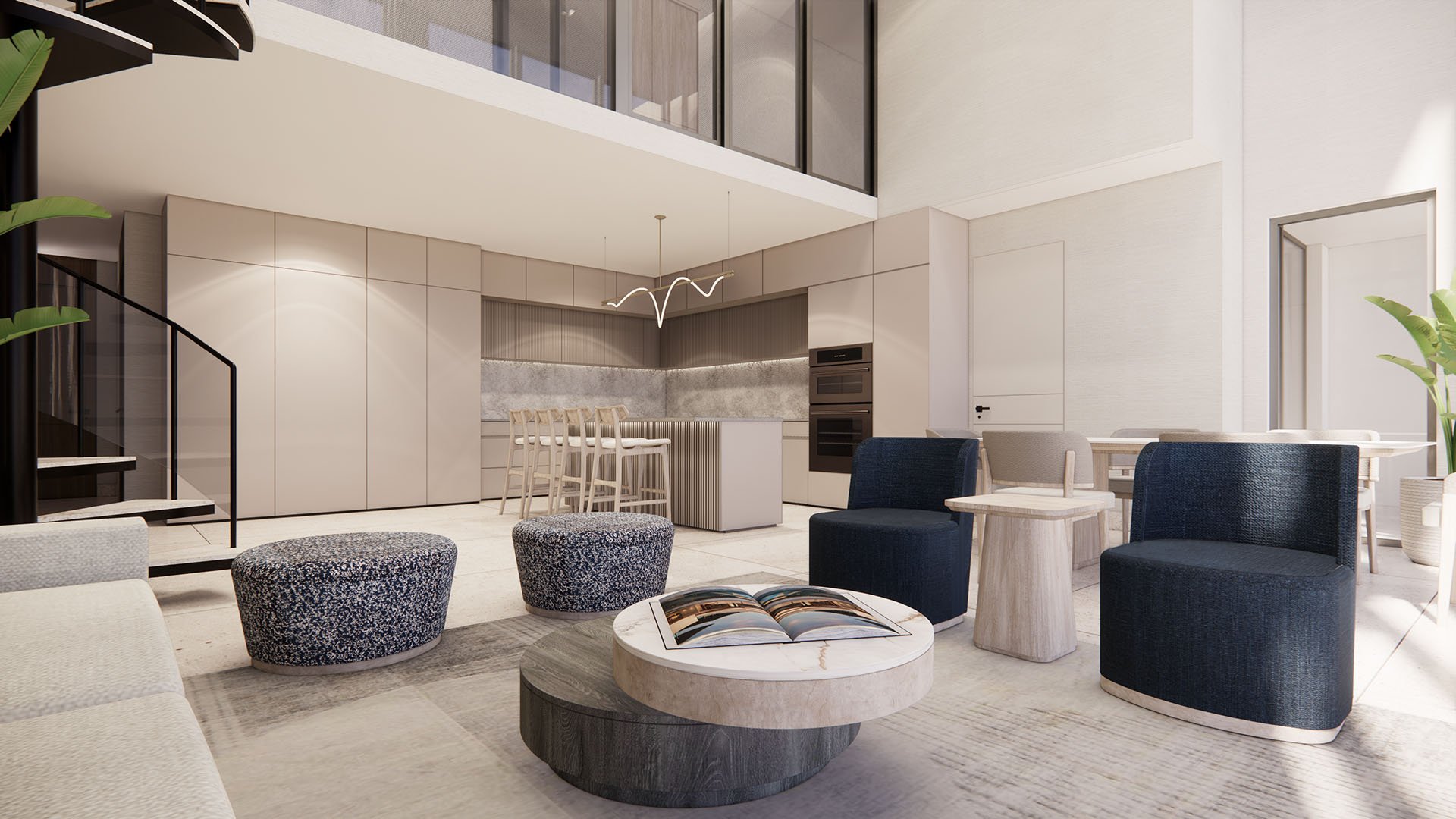
For a South Florida purchaser focused on design latitude, the phrase open-concept living carries more weight than visual continuity alone. In the upper tier of the market, it implies sightlines that move cleanly from kitchen to salon, entertaining spaces that feel architectural rather than compartmentalized, and the potential to shape daily living around scale, light, and privacy. In that context, Villa Miami and Shoma Bay North Bay Village prompt an obvious question: which appears more compelling for customization of open-concept living spaces?
At present, the most disciplined answer is also the most useful. Publicly disclosed information remains limited for both projects, and specific customization programs for open-concept living have not been confirmed in accessible public materials. That does not diminish their appeal. It simply means any serious comparison must be framed around what sophisticated buyers should verify before assigning value to flexibility.
For readers, that distinction matters. In a market where private launches, rebranding, and selective disclosure are common, a lack of detail is not the same as a lack of quality. It does, however, change how a prudent buyer should assess the opportunity.
Villa Miami has not been broadly located under that exact name in the major public channels buyers typically expect when a development is fully exposed to the market. The project may be newly introduced, pre-launch, highly private, or presented under a broader umbrella. Similarly, Shoma Bay North Bay Village has not been widely verified under that exact phrasing across the usual public-facing records that typically clarify plan types, finish packages, and purchaser modification allowances.
What follows is straightforward: neither project can yet be presented as having confirmed open-plan customization options, published structural flexibility, disclosed pricing for upgrades, or verified delivery timelines tied to owner selections. Just as importantly, no responsible comparison can claim a definitive advantage in amenity-linked entertaining space, partition strategies, kitchen reconfiguration, or bespoke millwork programs.
That may sound conservative, but in luxury property evaluation, restraint is a form of precision.
When official detail is sparse, experienced buyers shift from feature shopping to framework analysis. The key question is not whether a residence is marketed as open concept. Nearly every new luxury building uses some version of that language. The real question is whether the developer and design team permit meaningful owner influence within the envelope.
In practical terms, customization of open-concept living spaces usually turns on five issues: whether non-structural partitions can be revised, whether kitchen footprints can be refined, whether integrated storage can be personalized, whether lighting and smart-home infrastructure can be layered early in the build cycle, and whether finish selections support a cohesive great-room expression.
Comparable South Florida projects can still help frame expectations without serving as proof about these two developments. In Edgewater, Aria Reserve Miami and EDITION Edgewater reflect the broader neighborhood appetite for expansive waterfront living volumes. In North-bay-village, Continuum Club & Residences North Bay Village and Pagani North Bay Village illustrate how design-forward branding can elevate expectations around layout fluidity and finish sophistication. These references help calibrate buyer expectations for the submarkets, even though they do not verify features at Villa Miami or Shoma Bay North Bay Village.
From a lifestyle standpoint, Edgewater and North-bay-village often speak to different interpretations of open-concept living. Edgewater buyers frequently prioritize broad bay views, dramatic glazing, and entertaining rooms that read as gallery-like, with public areas organized around horizon lines and formal arrival. That makes the neighborhood a natural fit for purchasers who want an open plan to feel cinematic and urban.
North-bay-village, by contrast, often appeals to buyers seeking water-oriented living with a more intimate, island-linked rhythm. There, open-concept space can carry a softer brief: less grand salon, more relaxed indoor-outdoor continuity, greater emphasis on day-to-day comfort, and sometimes a stronger preference for family use over pure showpiece effect.
These are market tendencies rather than confirmed attributes of either featured project. Still, they help clarify likely buyer psychology. A purchaser drawn to Villa Miami may be seeking Edgewater presence and a sharper metropolitan profile. A purchaser drawn to Shoma Bay North Bay Village may be responding to North-bay-village’s evolving waterfront identity and more contained, residential cadence.
Because open-concept floor plan specifics have not been publicly verified for either development, the fairest editorial conclusion is that neither currently leads on confirmed customization. Instead, each sits in a category luxury buyers know well: potentially compelling, not yet fully disclosed.
Villa Miami’s intrigue lies partly in its opacity. If it is indeed a pre-launch or ultra-private offering, that can sometimes align with higher-touch sales engagement and more direct dialogue around purchaser preferences before broad-market standardization sets in. Yet until a buyer sees verified plans and written modification policies, that possibility should remain exactly that: a possibility.
Shoma Bay North Bay Village occupies a similar position. Without confirmed public disclosure of floor plan flexibility, finish schedules, or purchaser upgrade structures, it cannot be credited with a documented edge in tailoring open living zones. For design-conscious buyers, that means the project should be evaluated through direct inquiry rather than assumption.
If customization is central to your purchase decision, ask for precise documents rather than interpretive sales language. The most important items are current floor plans, any design option menus, a list of permitted versus prohibited alterations, and a written explanation of when owner selections must be finalized.
A buyer should also clarify whether changes are cosmetic, semi-custom, or architectural in impact. There is a meaningful difference between choosing stone, expanding an island, altering cabinetry internals, and removing or relocating partitions. The first is standard luxury merchandising. The last begins to define true customization.
It is equally important to understand approval authority. In some developments, the developer controls every change. In others, the architect of record, interior design consultant, construction manager, or condominium documents may determine what is actually feasible. If the residence is being acquired in pre-construction, timing matters enormously because early decisions generally preserve the widest latitude.
For those evaluating either property alongside the wider market, area context is useful. In Edgewater, the benchmark conversation often centers on view corridors and entertaining scale. In North-bay-village, buyers may focus more on waterfront intimacy, evolving neighborhood prestige, and the balance between statement design and ease of use. Both lenses are valid. Neither replaces project-specific verification.
Today, Villa Miami and Shoma Bay North Bay Village are best understood as intriguing but not fully transparent options for purchasers who care deeply about customizing open-concept living spaces. No confirmed public record establishes specific layout flexibility, upgrade pricing, amenity superiority, or developer-backed customization programs for either project.
That does not make the comparison irrelevant. On the contrary, it sharpens it. The discerning buyer should treat both as invitation-only style opportunities until proven otherwise, and proceed by securing the documents that reveal whether the home can truly be shaped to a personal standard.
For a buyer deciding between Villa Miami, Shoma Bay North Bay Village, Edgewater, and North-bay-village, the most elegant posture is simple: admire the concept, but purchase the proof.
Can Villa Miami currently be credited with superior open-concept customization? Not on publicly confirmed information. Specific customization options have not been verified.
Does Shoma Bay North Bay Village publish confirmed open-plan flexibility? No verified public detail currently confirms that. Buyers should request current plans and written policies directly.
Are floor plan specifics available for either project? Open-concept floor plan specifics have not been publicly verified for either development.
Is pricing for customization known at either property? No confirmed public pricing for owner customization has been established for either project.
Can either project be described as more amenity-rich for entertaining? A verified amenity comparison is not established. That conclusion should wait for documented disclosures.
Why might Villa Miami have limited public detail? It may be in pre-launch, privately marketed, or positioned under a broader or revised identity.
Why is careful verification so important in pre-construction purchases? Because design flexibility often depends on timing, approval pathways, and written developer allowances.
Does neighborhood context still matter if project details are limited? Yes. Area character often shapes buyer expectations around scale, privacy, and lifestyle use.
What should a buyer request first from the sales team? Ask for floor plans, finish options, modification rules, and the schedule for owner selections.
What is the smartest next step for a serious purchaser? Move from concept to documentation and compare both opportunities only after receiving verified materials.
To compare the best-fit options with clarity, connect with MILLION Luxury.
If branded residences are on your mind — as a home or as an allocation — we would be glad to share what we are seeing, privately.
Begin a quiet conversation