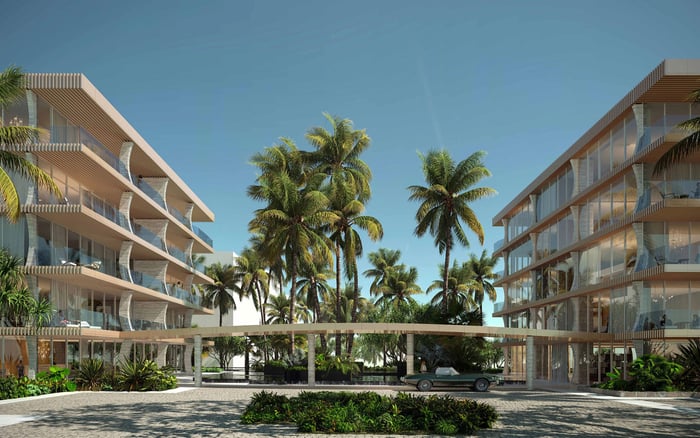
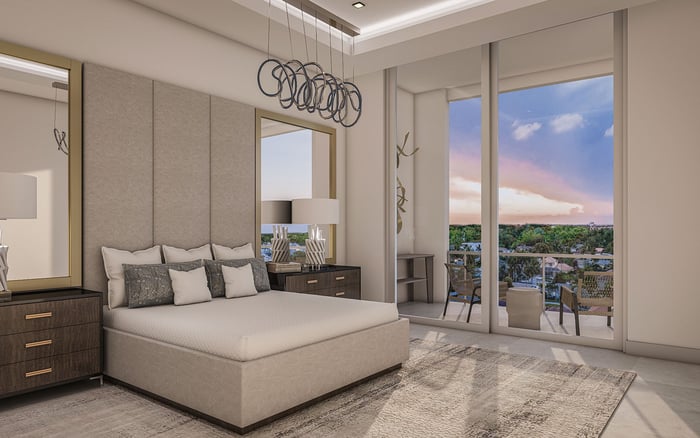
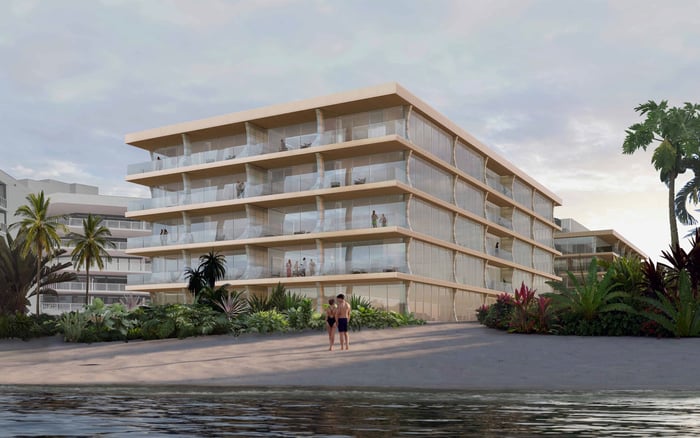
At The Residences at Mandarin Oriental Boca Raton, line selection should account for privacy, daylight, terrace exposure, elevation, surrounding conditions, and the possibility that sightlines may change over time.

At The Residences at Mandarin Oriental Boca Raton, buyers evaluating different residence lines should look beyond a simple view description. The more useful comparison considers how orientation, elevation, neighboring structures, terrace geometry, and room placement may influence everyday comfort.
There is no universally superior line. The right choice depends on the buyer’s preferred light, desired level of privacy, outdoor-living habits, and tolerance for activity in the surrounding environment.
A view should be evaluated across the near, middle, and far distance. A dramatic horizon may attract immediate attention, but nearby roofs, streets, terraces, landscaping, or opposing windows can have a greater effect on privacy and the experience from inside the home.
Buyers comparing Alina Residences Boca Raton or Glass House Boca Raton can use the same approach: assess the exact residence rather than assuming that two homes with similar directional descriptions will feel alike.
View studies and renderings can help frame the analysis, but they should be considered alongside current plans and direct due diligence. Buyers should confirm what is visible from the principal rooms, the terrace, and typical seated positions.
Orientation can affect when individual rooms feel brightest. Instead of judging the home only from its principal living area, review the bedrooms, kitchen, dining area, bathrooms, and circulation spaces separately.
Window placement, interior partitions, terrace coverage, structural elements, and nearby buildings may alter how light reaches each space. Elevation should therefore be considered together with the floor plan and surrounding context rather than treated as a guarantee of better light.
A useful review compares likely morning, midday, and late-day conditions. Buyers should also consider whether their preferred brightness is compatible with how they plan to use each room.
Visual privacy is not a single condition. A residence may feel open in one direction while being exposed to opposing windows, terraces, streets, or shared areas in another.
Daytime and nighttime reviews can produce different impressions. Interior lighting may change visibility after dark, so buyers should consider whether window treatments would be needed and how those treatments could affect daylight or the view.
The analysis should include standing and seated sightlines from both indoor and outdoor areas. It should also account for the rooms where privacy matters most to the prospective owner.
Terrace orientation can shape when and how an outdoor area is used. Sun exposure, shade, wind, overhead coverage, columns, door placement, neighboring terraces, and usable depth all deserve review.
A buyer who prefers quiet mornings may prioritize different conditions from one who expects to entertain later in the day. The most suitable terrace is the one that supports the owner’s routine rather than the one that appears largest or most dramatic on a plan.
This framework can also be applied when comparing other branded residences in South Florida, including Mandarin Oriental Residences, West Palm Beach. Branding does not replace the need to assess the exact orientation, floor plan, and outdoor exposure of a prospective home.
A current outlook should not automatically be assumed to remain unchanged. Buyers should investigate neighboring parcels, applicable development conditions, and other matters that may affect future sightlines with qualified advisers.
Long-term appeal also depends on the residence’s overall livability. A balanced home may combine comfortable light, practical outdoor space, suitable privacy, and a coherent relationship between its rooms and principal exposure.
Before making a selection, request the current materials applicable to the exact residence under consideration. Confirm its designation, dimensions, orientation, openings, terrace layout, and relationship to surrounding elements rather than relying only on a broad view category.
Begin by identifying true compass orientation and then place the floor plan within the broader site context. Note where the principal rooms face, what sits directly outside them, and whether architectural elements may affect light or visibility.
Next, compare nearby structures, streets, rooftops, shared areas, and opposing outdoor spaces. When possible, evaluate expected conditions at different times and separate personal preferences from assumptions about resale.
The strongest selection is generally the residence that best reconciles the buyer’s priorities. A memorable view can be valuable, but it should be weighed alongside privacy, interior brightness, terrace practicality, and well-supported expectations about future sightlines.
Is the broadest view automatically the best choice? No. A broader outlook may be less suitable if it introduces privacy, exposure, or terrace-use concerns.
Does a higher floor always provide better light? Not necessarily. Orientation, nearby structures, window placement, and architectural elements should be reviewed with elevation.
How should buyers assess visual privacy? Compare indoor and terrace sightlines with nearby windows, outdoor areas, streets, rooftops, and shared spaces.
Why does compass orientation matter? It helps buyers evaluate when individual rooms and outdoor areas may receive their preferred light conditions.
Should view labels determine the decision? No. The exact sightline, surrounding context, and relationship between the view and principal rooms are more informative.
What terrace details deserve attention? Review usable depth, exposure, shade, wind, columns, door placement, overhead coverage, and neighboring sightlines.
Can window treatments address privacy concerns? They may improve privacy, but buyers should also consider how they could affect daylight and the intended outlook.
How can buyers evaluate possible changes to a view? They should investigate surrounding conditions and potential development matters with appropriately qualified advisers.
What should be reviewed besides the living-room exposure? Examine bedrooms, kitchens, dining areas, bathrooms, circulation spaces, and terraces individually.
Which materials are useful when comparing residence lines? Current floor plans, site information, orientation details, terrace layouts, and available sightline materials can support a more disciplined review.
To compare the best-fit options with clarity, connect with MILLION.
If branded residences are on your mind — as a home or as an allocation — we would be glad to share what we are seeing, privately.
Begin a quiet conversation