Four Seasons Coconut Grove and The Setai offer two distinct models of luxury access. One pairs condominium ownership with an approval-based invitation to an off-site club; the other integrates beach and hospitality privileges into its hotel-condominium structure.

At the highest tier of South Florida real estate, access can be as consequential as architecture. Yet “club” can describe markedly different legal and financial arrangements. Four Seasons Residences Coconut Grove pairs an extensive residential service program with an invitation to apply for membership at an off-site private club. Setai Residences Miami Beach integrates its beach, pool, spa, and hospitality experience into the property’s hotel-condominium amenity structure.
That distinction shapes what an owner pays, which costs may continue after the first year, and what a future purchaser can reasonably expect to inherit. It also explains why buyers should evaluate condominium assessments, private-club dues, resort charges, and consumption-based services separately rather than treating them as a single lifestyle expense.
Access has enduring value only when its cost, approval process, and transfer rights are understood.
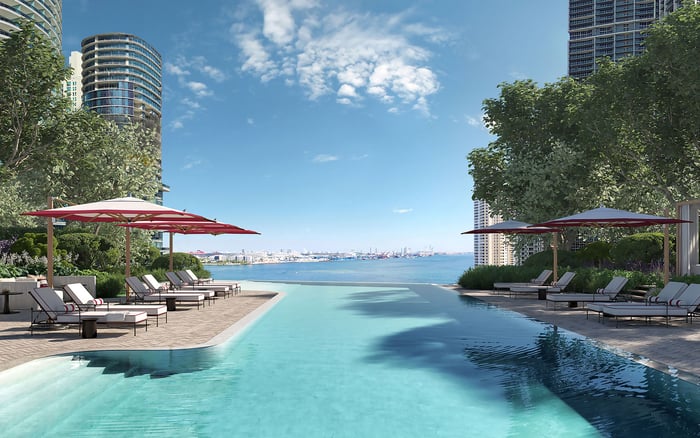
Located at 2699 S Bayshore Drive, Four Seasons Private Residences Coconut Grove offers a substantial on-site program. It includes a serviced pool deck, restaurant, gym and yoga room, spa with hammam and cold plunge, children’s area, private event room, and residents’ lounge and bar. These elements are part of the residential experience and should be evaluated through the condominium’s governing documents, budgets, and service framework.
Separately, owners receive an invitation to apply for private membership at The Surf Club Four Seasons Surfside. Admission remains subject to approval, so the opportunity is not equivalent to an automatic ownership right. For approved Four Seasons Coconut Grove buyers, the initiation fee and first-year membership dues are waived.
The distinction is material. The Surf Club is in Surfside, separate from the Coconut Grove residence, and represents another layer of access. Benefits for approved members include 900 feet of beachfront, historic cabanas, pools, a kids club, restaurants, spa facilities, members’ locker rooms, events, and concierge services. These privileges expand an owner’s lifestyle geography, but they do not replace the residence’s on-site amenities.
The first-year waiver is attractive, but it should not be mistaken for a perpetual inclusion. The Surf Club’s dues after the complimentary period are not specified. A prudent buyer should request the current membership agreement and written fee schedule before projecting annual carrying costs.
The key questions extend beyond headline dues. Buyers should confirm renewal procedures, payment timing, family or household privileges, guest policies, use limitations, and the consequences of resignation or nonpayment. Any applicable taxes, food-and-beverage commitments, service charges, or event expenses should also be identified in the current club documents.
Regular condominium assessments are a separate obligation. They support on-site operations and common elements at the residence, while any subsequent Surf Club dues would apply to the external membership. Four Seasons offers extensive services and amenities, but a definitive building-wide monthly association-fee schedule is not provided. The controlling budget and unit-specific documents are therefore essential.
A club benefit can influence a purchase decision, but its resale value depends on whether it follows the real estate. Surf Club membership is not stated to be deeded to a Four Seasons Coconut Grove residence or to transfer automatically when the unit is sold.
A seller should not promise club membership to a buyer without documentary support. A resale purchaser may need a new invitation, a fresh application, club approval, and potentially different financial terms. Even if the original owner was approved, a successor’s continued privileges are not established.
Before contract execution, counsel should determine whether the invitation is personal to the original purchaser, tied to a particular closing, available to later buyers, or subject to amendment or withdrawal. The answer should come from operative club and condominium documents, not an amenity summary.
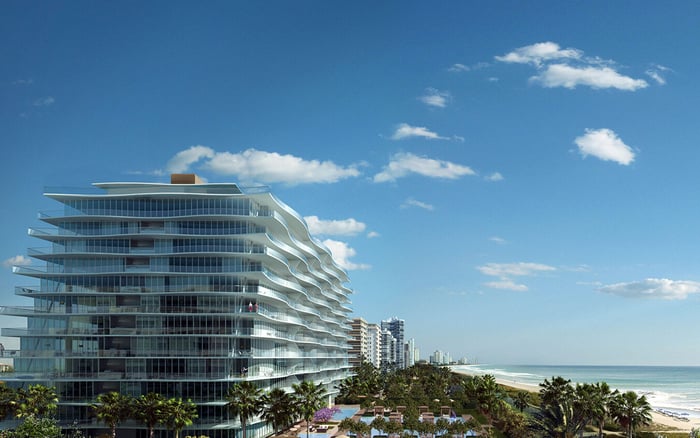
The Setai is an oceanfront hotel-condominium complex at 101 20th Street in Miami Beach. Residents have access to the Setai Beach Club, beach butlers, three temperature-controlled oceanfront pools, the Valmont Spa, and fitness facilities. The broader service environment includes a residents’ lounge, concierge, 24-hour doorman, valet, on-site dining, in-residence dining, and room service.
These privileges are integrated property amenities rather than a separate private-club membership. One residence carried a monthly HOA fee of $5,815 and explicitly indicated that membership was not required. Monthly HOA amounts across the building have ranged from approximately $2,620 to $17,509, underscoring how residence size and allocation can materially affect carrying costs.
Those figures are reference points, not universal pricing. Buyers should examine the current estoppel, annual budget, recent financial statements, reserve position, pending assessments, and exact expense allocation for the residence under consideration. For readers comparing established oceanfront ownership with the newer Shore Club Private Collections Miami Beach, the same discipline applies: branded-service language must be reconciled with binding documents and unit-specific charges.
A short-term Setai rental has carried a resort fee of about $250 per person per stay for beach, pool, spa, fitness, internet, concierge, and valet access. That guest charge should not be used as a proxy for an owner’s HOA obligation. Guest fees and owner assessments can cover overlapping experiences while arising from different occupancy and operating structures.
The same caution applies to optional consumption. Dining, room service, spa treatments, private events, gratuities, and other personalized services may carry separate charges even when access to the underlying venue is part of the residential program. “Bundled” describes the access structure, not necessarily unlimited use without incremental expense.
For Four Seasons, request the current condominium budget, projected or adopted assessments, offering documents, service inclusions, Surf Club application, approval standards, post-waiver dues, renewal terms, and transfer provisions. Confirm in writing which benefits belong to the residence and which depend on a separate membership relationship.
For The Setai, focus on the unit’s current HOA amount, what the assessment covers, hotel-program arrangements if relevant, owner and guest access rules, valet and beach-service terms, and any additional resort or usage charges. Ask whether contemplated rental use changes the fee structure or access protocol.
Within MILLION Buyer's Guides, this review is especially important for Branded Residences, where a familiar hospitality name can encompass several distinct contracts. The correct comparison is not merely Coconut Grove versus Miami Beach. It is approval-based external membership versus integrated on-site access, with each model carrying different implications for certainty, recurring expense, and resale presentation.
Four Seasons Coconut Grove offers the broader two-location proposition: a serviced residence in Coconut Grove plus an approval-based path to The Surf Club in Surfside. Its first-year waiver has immediate value, but subsequent dues and resale transfer rights require direct confirmation. The Setai presents a more integrated Miami Beach model, with beach-club and hospitality access embedded in the hotel-condominium environment and reflected in unit-specific assessments and other applicable charges.
For a private review of South Florida residences and their service structures, connect with MILLION.
If branded residences are on your mind — as a home or as an allocation — we would be glad to share what we are seeing, privately.
Begin a quiet conversationNo. Owners receive an invitation to apply, and membership remains subject to approval.
The initiation fee and first-year membership dues are waived for approved Four Seasons Coconut Grove buyers.
Definitive post-waiver dues are not specified. Buyers should obtain the current fee schedule and membership agreement.
Membership is not stated to be deeded or automatically transferable. A resale buyer should verify eligibility and approval requirements.
No. It is an off-site private club in Surfside, separate from the residence’s on-site amenities.
Beach-club and hospitality access are presented as part of the hotel-condominium amenity structure rather than a separate required membership.
They include beach-club access, beach butlers, three temperature-controlled pools, spa and fitness facilities, concierge, valet, and dining services.
Referenced figures range from approximately $2,620 to $17,509 monthly, depending on the residence. Current unit-specific documents should control any purchase analysis.
No. A guest resort fee is not a substitute for an owner’s condominium assessment, even if some covered services overlap.
Review current budgets, assessments, governing documents, service inclusions, club agreements where applicable, transfer provisions, and unit-specific charges.