A buyer-focused guide to replacement-cost valuation, storm deductibles, and loss-assessment protection, with a practical framework for evaluating insurance at Fendi Château and Eighty Seven Park without assuming building-specific coverage terms.
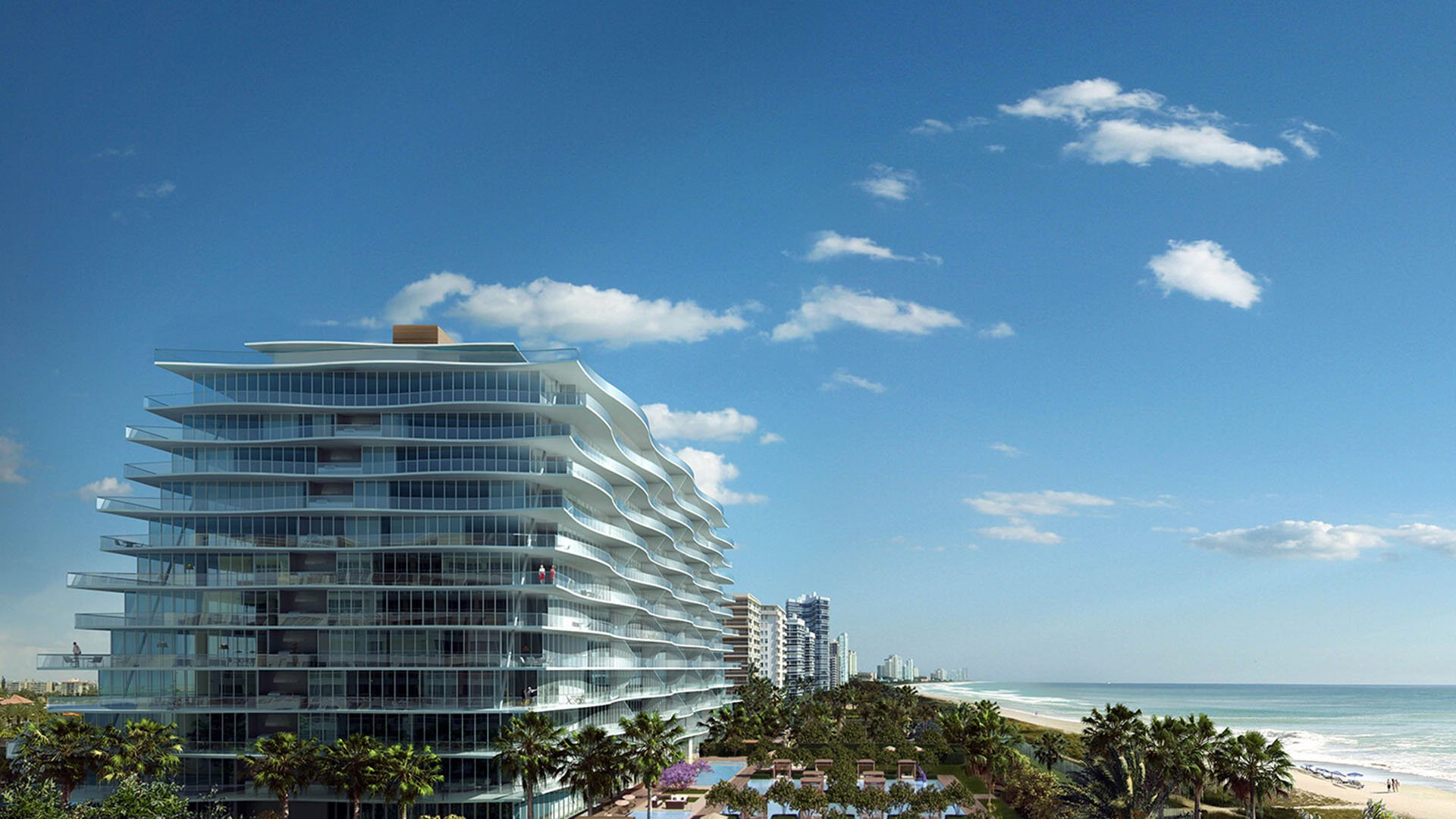
The pleasure of choosing a residence is immediate. The insurance framework behind ownership deserves equally deliberate attention. For buyers considering Fendi Château Residences Surfside and Eighty Seven Park Surfside, the essential questions extend beyond amenities: what would it cost to rebuild the insured property, how much of a loss must the association absorb, and what portion could reach an individual owner?
Those questions connect three distinct layers: replacement-cost valuation, the master policy's storm deductible, and the owner's loss-assessment protection. A strong answer to one does not resolve the others. A substantial insured value can coexist with a substantial deductible, while a personal policy may cover only part of a qualifying assessment.
Neither building should be credited with a particular limit, insurer, deductible, or level of protection without a review of its current documents. This is a framework for evaluating ownership exposure, not a ranking of either property's insurance.
Replacement cost measures the expense of rebuilding the insured structure at current labor and material prices. It is not the value of the land, the aggregate resale value of the residences, or the price paid for a particular apartment. A buyer's acquisition budget cannot substitute for an association's insurance valuation.
The master policy generally addresses the building structure and shared property, including roofs, exterior walls, hallways, elevators, and common elements. Its insured value should reflect current rebuilding costs. An inadequate limit can leave the association with a funding gap after a major loss, even when the event itself is covered.
Request the valuation appraisal alongside the policy declarations. Compare the property being valued with the property actually insured-not the insurance limit with sales prices.
Replacement-cost valuation does not establish that code upgrades, demolition, debris removal, flood, or every common element is covered without exclusions or sublimits. Valuation answers the cost question; policy wording answers the coverage question.
Wind deductibles may be fixed dollar amounts or percentages of insured building value. Percentage deductibles are common in condominium master policies, but the percentage alone does not define the obligation. Buyers need to identify both the value to which it applies and the event that activates it.
“Windstorm,” “named storm,” and “hurricane” are not interchangeable descriptions. Their deductible triggers can differ. A general assurance that a building has storm coverage should prompt a closer reading of the declarations and endorsements, not end the inquiry.
The same discipline applies when a Miami Beach search includes 57 Ocean Miami Beach. Compare the actual policy language for each property rather than treating similar marketing language as evidence of equivalent protection.
Ask the association's insurance adviser to identify the relevant trigger, calculation base, and applicable deductible in writing. A useful comparison translates those provisions into a financial obligation rather than leaving them as percentages on a summary page.
When a deductible applies to total insured building value, the calculation is straightforward: insured value multiplied by the deductible percentage. The dollar obligation can be far larger than a single-digit percentage suggests.
For illustration only, a 5% deductible applied to $300 million of insured value equals $15 million. Neither figure represents a documented term for Fendi Château or Eighty Seven Park. The example shows why the dollar amount matters as much as the percentage.
That amount is an association-level deductible, not automatically an owner assessment. The next question is how the association plans to fund it. If available funds cannot absorb the obligation, the expense may be passed to owners through assessments.
An individual owner's exposure depends on the applicable allocation provisions and common-element interest. Dividing the deductible equally by the number of residences may produce the wrong answer. Obtain the governing allocation formula and ask how it applies to the residence under consideration.
An HO-6 policy complements the association's master policy; it does not replace it. It generally addresses unit-interior exposures, personal belongings, liability, and additional living expenses, subject to its terms. Establish the boundary between association and owner responsibility before selecting personal coverage.
Loss-assessment protection can help pay an owner's share of an association assessment arising from a covered property loss. Qualifying master-policy deductible obligations or coverage shortfalls may be included, but an assessment alone does not guarantee reimbursement.
The owner's coverage limit, applicable deductible, policy terms, and covered cause of loss all matter. Each assessment must be evaluated against those conditions. Routine maintenance assessments and reserve shortfalls unrelated to a covered insured loss should not be assumed reimbursable.
Florida's statutory requirements establish baseline loss-assessment protection for qualifying condominium unit-owner policies. They do not guarantee that available coverage matches a particular owner's exposure. Evaluate the appropriate limit against the building's insured value, catastrophe deductible, and owner-allocation formula rather than simply accepting the default amount in a quote.
Before closing, assemble a focused set of documents for review with the association, insurance adviser, and counsel. Each should clarify a different part of the exposure:
Current master-policy declarations and endorsements, to identify limits, deductible provisions, exclusions, and coverage responsibilities.
The valuation appraisal, to understand the rebuilding-cost basis behind the insured value.
Assessment-allocation provisions, to establish how an association obligation could be assigned to the specific residence.
The association's deductible-funding plan, to distinguish available funding from potential owner assessments.
Proposed HO-6 terms and loss-assessment provisions, to evaluate how personal protection responds to qualifying obligations.
Read these documents together. A valuation cannot establish coverage for an excluded cause of loss, and a generous personal limit cannot make an otherwise ineligible assessment payable.
For a Surfside buyer, the objective is not to eliminate every uncertainty. It is to understand where the association's protection ends, how any remaining obligation would be funded, and which portion personal insurance may address. That clarity belongs alongside every other consideration in an informed purchase.
For a considered approach to South Florida residential ownership, explore MILLION.
If branded residences are on your mind — as a home or as an allocation — we would be glad to share what we are seeing, privately.
Begin a quiet conversationIt is the cost of rebuilding the insured structure at current labor and material prices. It is not the land's market value or the residences' resale value.
It generally insures the building structure and shared property, including roofs, exterior walls, hallways, elevators, and common elements. Actual responsibilities and exclusions depend on the policy.
No. Replacement-cost valuation does not itself establish coverage for flood, code upgrades, demolition, debris removal, or every common element without exclusions or sublimits.
Not necessarily. Their triggers can differ, so the actual policy wording is essential to understanding which deductible applies.
When it applies to total insured building value, multiply that value by the deductible percentage. The article's $300 million and 5% example is illustrative, not a documented term for either building.
Yes, an association unable to absorb the deductible from available funds may pass the expense to owners through assessments. Its funding plan helps clarify that potential exposure.
No. An owner's share depends on the applicable allocation formula and common-element interest, rather than necessarily an equal amount for every unit.
An HO-6 policy complements the master policy by generally addressing unit-interior exposures, belongings, liability, and additional living expenses. Coverage remains subject to its terms.
No. Protection depends on policy terms, limits, deductibles, and a covered cause of loss; routine maintenance assessments and unrelated reserve shortfalls should not be assumed covered.
Review the master-policy declarations and endorsements, valuation appraisal, assessment-allocation provisions, and deductible-funding plan. Coordinate the proposed HO-6 protection with those documents rather than relying on a default quote limit.