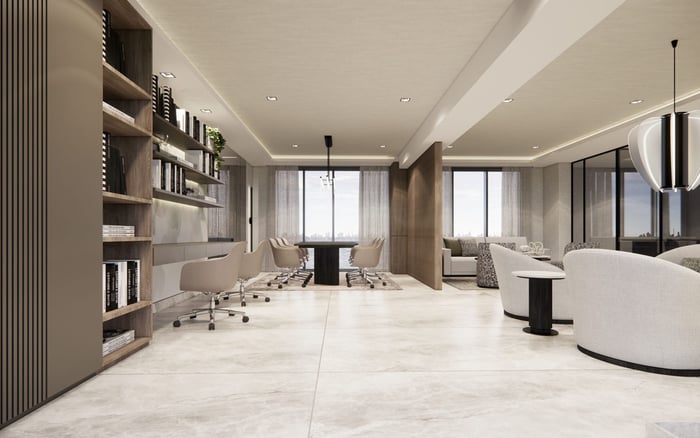
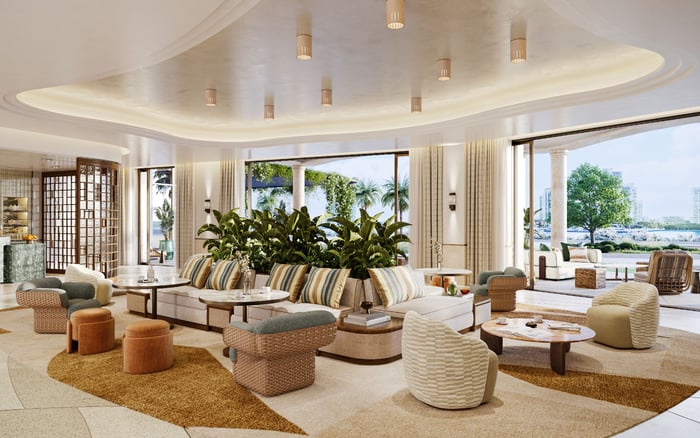
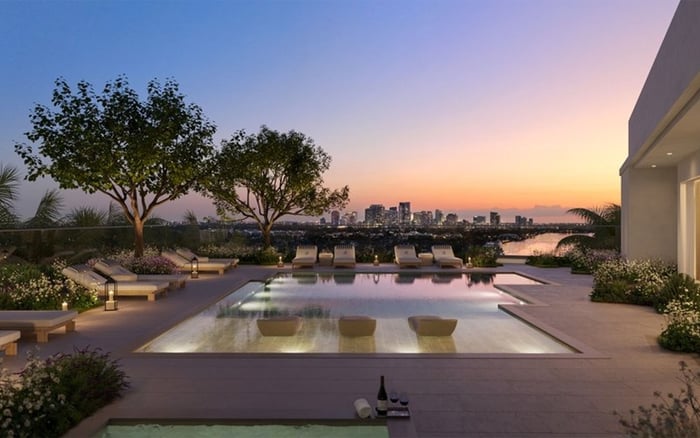
ORA and The Setai offer two distinct approaches to privacy within hospitality-oriented residential environments. For buyers, the decisive issues are arrival routes, elevator controls, amenity access, service circulation, and the governing documents behind each promise.
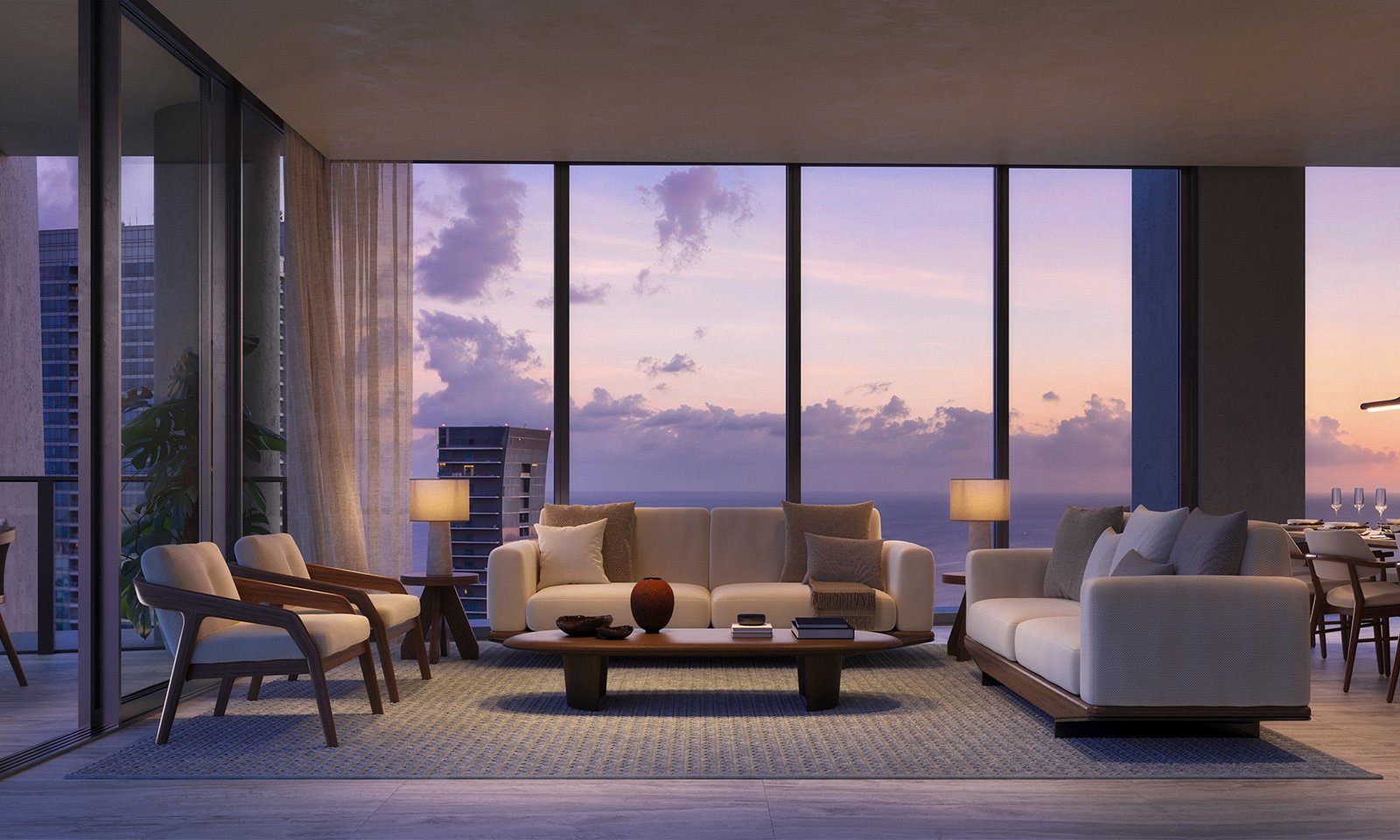
In a hospitality-oriented condominium, privacy is not simply a matter of a guarded lobby. It is the cumulative result of how owners, short-term occupants, diners, staff, delivery personnel, and event guests move from curb to destination. That choreography becomes especially important when a property combines private residences with restaurants, wellness spaces, pools, and active social venues.
ORA by Casa Tua Brickell and Setai Residences Miami Beach illustrate two distinct models. ORA is marketed as furnished condominium ownership with an optional hospitality program, supported by a planned circulation strategy that separates several user groups. The Setai is an established oceanfront condo-hotel where secured residential access operates within a resort environment shared more broadly with hotel guests.
The true measure of privacy is how many unrelated journeys intersect with an owner's daily route.
At ORA, the privacy proposition begins at the curb. The project promotes a dedicated owner motor court and a concierge-staffed residential lobby, creating an owner arrival sequence apart from hospitality and dining traffic. Dedicated high-speed smart elevators are planned with separate access for owners, short-term guests, and restaurant patrons. Employee elevators are also intended to direct housekeeping and operational movement away from owner and visitor routes.
This is a circulation-led approach. Restaurant guests are intended to reach dining venues without passing through owner areas-an important distinction in a building planned around four Casa Tua dining and social destinations. Public-facing and social components are expected to include signature dining concepts, a rooftop lounge, a sky garden, and a 24-hour gourmet market. Vento is planned as a rooftop concept with private dining and event space, while a separate club room is expected to feature a bar, lounge, chef's kitchen, and indoor-outdoor seating.
The architectural intent is clear: lively hospitality can coexist with residential discretion when each audience has an intelligible route. Yet ORA also permits flexible or short-term stays within its residential inventory. Owners and registered transient occupants may therefore share residential floors, making elevator credentials, destination controls, and daily enforcement as consequential as the lobby plan.
The Setai at 101 20th Street operates from a different premise. Its residential component includes secure-lobby and secure-elevator features, while residence occupants may access an expansive resort program encompassing direct beach access, spa and fitness facilities, pools, bars, and restaurants. Four high-speed elevators serve the residences and shared facilities.
Outside secured residential areas, overlap is intrinsic to the experience. Residents and hotel guests may encounter one another around dining venues, spa facilities, cabanas, concierge services, water sports, and ground transportation. The privacy model is therefore less about eliminating hospitality contact than controlling entry into the residential realm.
Privately owned Setai residences are also offered for short stays, allowing transient occupants within the residential component. Access to a residence does not necessarily confer identical access to every resort venue, so buyers should verify how amenity privileges are governed.
Public circulation at The Setai includes elevators, wheelchair-accessible paths and parking, an accessible concierge desk, and accessible public washrooms. These provisions support movement through common areas, but do not independently define who may enter secured residential floors or use specific amenities.
ORA's strategy is primarily architectural and route-based. It proposes separate pathways for owners, restaurant patrons, short-term guests, and employees to reduce unnecessary intersections. The Setai's established model places greater emphasis on secure residential access while preserving the social energy and convenience of a shared resort environment.
Neither approach makes hospitality invisible. At ORA, registered short-term occupants use residences rather than a separate, conventional hotel-room stack. At The Setai, owners and hotel guests share much of the amenity setting, even as residential areas remain controlled. In both cases, the central buyer question is not whether other guests exist, but where their routes intersect with an owner's-and which credentials govern each threshold.
This distinction applies across Brickell and Miami Beach. A buyer considering branded or hospitality-inflected living might also examine how arrival, amenity, and service routes are documented at Shore Club Private Collections Miami Beach and Four Seasons Hotel & Private Residences Fort Lauderdale. The purpose of comparison is not to assume equivalent operations, but to identify the circulation model best aligned with the buyer's preferred degree of social exposure.
Marketing descriptions of a private lobby or owner area should be tested against the final condominium documents and operating rules. Buyers should identify the formal definitions of owner-only, hospitality-guest, member, restaurant, event, and public access. They should also determine whether privileges attach to the unit, the registered occupant, a club membership, or a particular reservation channel.
Elevator controls warrant equally close attention. Relevant questions include whether credentials are destination-specific, whether short-term occupants can reach all residential floors, how guest access expires, and how restaurant or event traffic is kept from entering owner routes. Buyers should also understand how deliveries, housekeeping, vendors, and emergency access are managed when dedicated service circulation is unavailable or temporarily interrupted.
Amenity rights require separate scrutiny. A residence key may open a residential elevator while conferring a different level of access to pools, restaurants, spa facilities, private dining rooms, or club spaces. Operating hours, reservation requirements, guest limits, conduct rules, and the authority to suspend privileges can materially shape the lived experience.
For buyers evaluating short-term rentals, enforcement is particularly important. Credential issuance, identity verification, front-desk procedures, and the treatment of visitors can determine whether a thoughtfully designed plan performs discreetly in practice. Owners should also ask who controls changes to access protocols and how those changes are communicated.
ORA offers the more explicitly segmented circulation concept, with planned routes for owners, short-term guests, restaurant patrons, and employees. The Setai offers a mature resort-residential setting where secure residential access coexists with substantial shared amenity life. The more suitable model depends on whether an owner values architectural separation from public activity or prefers immersion in an established hotel environment with protected residential thresholds.
In either case, privacy is an operating system rather than a decorative promise. The most sophisticated purchase review traces every journey through the building-from motor court and lobby to elevator, residence, pool, restaurant, and service corridor-then confirms who controls each door.
For confidential guidance on South Florida's most distinguished residences, connect with MILLION.
If branded residences are on your mind — as a home or as an allocation — we would be glad to share what we are seeing, privately.
Begin a quiet conversationNo. ORA is marketed as furnished condominium ownership with an optional hospitality program rather than a conventional hotel-room stack.
Yes. Flexible or short-term stays occur within ORA's residential inventory, so owners and registered transient occupants may share residential floors.
ORA plans a dedicated owner arrival sequence and separate smart-elevator access for owners, short-term guests, and restaurant patrons.
Dedicated employee elevators are intended to keep housekeeping and operational traffic apart from owner and visitor routes.
The residential component is described as having secure-lobby and secure-elevator features.
Residents and hotel guests share much of the resort environment, including dining, spa, pool, and beach-oriented areas, while residential access remains controlled.
Yes. Privately owned residences at The Setai are offered as short-term accommodations.
Not necessarily. Amenity privileges can be governed and restricted separately from access to a residence.
Buyers should confirm credential scope, floor permissions, guest expiration rules, and the separation of restaurant, event, and service traffic.
ORA presents the more explicitly segmented plan, while The Setai emphasizes secured residential access within a shared resort setting.