One Park Tower and Continuum both market reserve-inclusive condominium fees. For buyers, the meaningful comparison is not the advertised rate alone, but the quality of the budget, replacement-cost planning, and unit-specific assessment obligations.
A compelling condominium purchase should offer more than an exceptional setting. It should also come with a clear ownership budget: what the residence costs to operate, what is set aside for future work, and how those obligations may change. For buyers considering One Park Tower by Turnberry North Miami and Continuum Club & Residences North Bay Village, financial clarity deserves the same attention as the floor plan.
Both projects have been marketed with fees that include reserves. That description alone does not establish that future replacement costs are adequately funded. The meaningful distinction is not which development mentions reserves, but how clearly each documents its operating assumptions, capital obligations, and funding plan.
Fee predictability is not a promise that assessments will remain unchanged. It is the ability to understand what could change, why, and how the association intends to prepare.
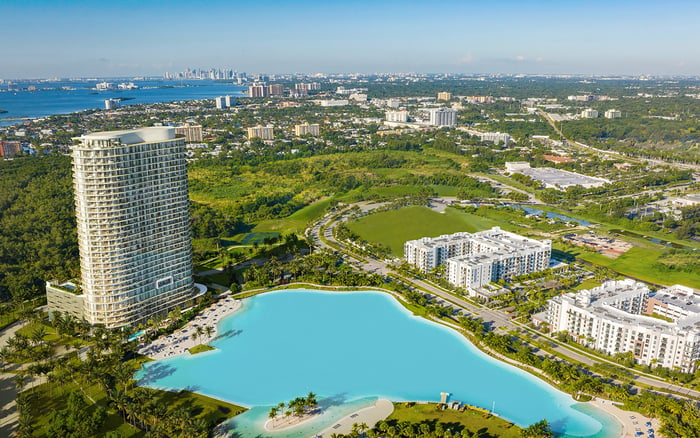
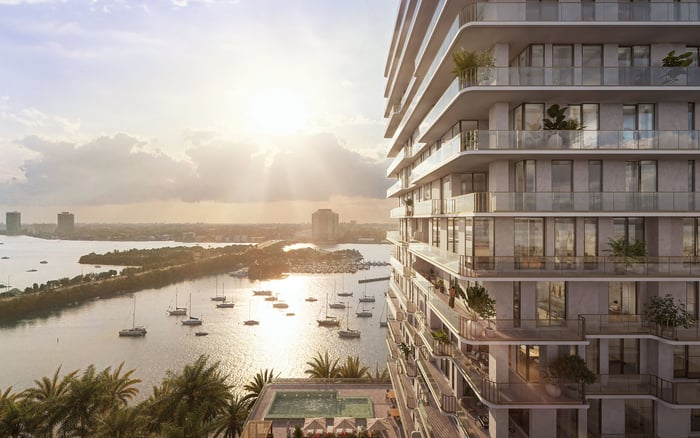
One Park Tower is marketed as a 33-story condominium with 292 residences within North Miami’s 184-acre SoLé Mia community. Its published address is 2411 Laguna Circle, North Miami, FL 33181. The project overlooks a 7-acre Crystal Lagoon and offers access to a private beach and master-community amenities.
That setting raises an important diligence question: which expenses belong to the condominium association, and which relate to the wider community? Buyers should request the governing documents and assessment allocations rather than assume the quoted condominium fee captures every obligation associated with amenity access. Those allocations are not established here.
Continuum is marketed at 1755 79th Street Causeway, North Bay Village, FL 33141. Published residence counts vary between 198 and 236. Current developer offering documents should resolve that discrepancy before a buyer relies on either number to evaluate shared expenses.
One Park Tower also has conflicting specifications: 303 units and 32 stories appear alongside 292 residences and 33 stories. These inconsistencies do not establish a financial problem. They reinforce the need to base decisions on current documents.
One Park Tower has been marketed at $1.17 per square foot with reserves, while other published figures place the fee at $1.20 per square foot. The quoted $1.17 rate does not establish an adopted association budget.
Continuum’s published estimate is $1.77 per square foot, including reserves. The billing period is unspecified and should be confirmed directly. Until both projects’ billing periods and assessment bases are reconciled, these figures do not provide a dependable comparison of annual ownership costs.
The review should also reconcile assessable square footage, included services, insurance assumptions, and budget dates. A higher advertised rate could reflect different inclusions or assumptions; it does not, by itself, demonstrate stronger financial management. A lower rate does not establish underfunding.
One Park Tower unit 208 has a published monthly association fee of $1,720. That is a unit-specific figure, not a building-wide assessment schedule. It should not be used to infer every residence’s obligation or validate another quoted rate without the applicable allocation documents.
The practical question is not simply whether a budget contains a reserve line. It is whether the funding plan addresses the assets the association must eventually repair or replace, with documented costs and timing assumptions.
Request the current reserve study and funding schedule, together with the operating budget and the proposed or adopted assessment allocation for the residence under consideration. Ask which capital components are covered, how their remaining useful lives are estimated, and when those estimates will be updated. If a document is not yet applicable or available for a new development, clarify when it is expected and who is responsible for it.
Review applicable reserve requirements and any restrictions on waiving or reducing reserve funding with qualified counsel, including during developer control. Compliance language is no substitute for examining the actual funding assumptions.
Verified reserve balances, adopted capital-project schedules, assessment histories, and long-term fee performance are not established here for either project. There is therefore no basis to declare either association better funded or more predictable.
New construction warrants a forward-looking review. Buyers should distinguish initial delivery obligations from future association maintenance and replacement responsibilities. Request construction warranties, turnover obligations, disclosed litigation, and any available capital-project schedule.
The objective is to understand who bears each obligation and when it may enter the association budget. Ask whether identified work is covered by construction commitments, warranties, operating funds, reserves, or another disclosed arrangement. Do not assume that newness eliminates future capital exposure or that a reserve contribution covers every category of work.
Review milestone-inspection status, the structural-integrity reserve study, and association meeting minutes where applicable. For a development still moving toward delivery, clarify which records exist now and which are expected later. Keep the distinction between a projected budget and an adopted budget explicit throughout the purchase review.
Continuum’s published deposit schedule calls for 20% at contract, 10% after 120 days, 10% at top-off, and 60% at closing. That places 40% before closing. Its estimated closing is Q1 2028-a projection, not a guaranteed delivery commitment.
Those milestones belong in a buyer’s liquidity plan alongside expected association charges. Funds committed before closing and recurring ownership expenses are distinct obligations; neither substitutes for the other.
Continuum’s published rental policy permits leases of at least 90 days, up to three times annually, with rentals described as available immediately after closing. Buyers considering rental use should confirm the controlling documents and avoid treating anticipated rental income as assured coverage for assessments.
The same document-first discipline applies when extending a search to Aventura and considering Avenia Aventura. This is a diligence principle, not a claim that its fees, reserves, or rental terms match either project discussed here.
Before committing, assemble a coherent ownership file: current budget, reserve study and funding schedule, unit allocation, capital obligations, warranties, turnover provisions, and disclosed litigation. Request written clarification wherever marketing figures and governing documents differ.
The better decision is not automatically the residence with the lowest quoted fee or the highest reserve-inclusive estimate. It is the purchase whose obligations are documented well enough to support the buyer’s intended holding period, use, and tolerance for change.
For a discreet perspective on luxury condominium ownership and your next purchase, explore MILLION.
If branded residences are on your mind — as a home or as an allocation — we would be glad to share what we are seeing, privately.
Begin a quiet conversationYes. One Park Tower has been marketed at $1.17 per square foot with reserves, while Continuum’s published estimate is $1.77 per square foot including reserves.
Not by itself. Reserve adequacy requires review of the budget, reserve study, replacement-cost assumptions, and funding schedule.
Published figures include $1.17 and $1.20 per square foot. They should be reconciled against current documents before being used to estimate ownership costs.
The billing period is unstated in the supplied fee information. Buyers should confirm it before calculating monthly or annual costs.
The published monthly association fee is $1,720. That unit-specific figure does not establish the assessment schedule for every residence.
Request the current budget, reserve study, funding schedule, unit assessment allocation, and capital-project obligations. Review warranties, turnover provisions, and disclosed litigation as well.
Marketing figures differ between 198 and 236 residences. Current developer offering documents should resolve the count.
It calls for 20% at contract, 10% after 120 days, 10% at top-off, and 60% at closing. The pre-closing installments total 40%.
The published estimate is Q1 2028. It is a projected date, not a guaranteed delivery commitment.
The published policy allows minimum 90-day leases up to three times annually, with rentals described as available immediately after closing. Buyers should confirm these terms in the controlling documents.