For collectors comparing Kempinski and Waldorf Astoria in Miami, the decisive questions concern the complete delivery route, written handling procedures and collection-specific environmental controls, not simply ceiling heights or branded service.
A residence can offer an exceptional setting for a collection without establishing how the works will arrive, be installed and remain protected. For buyers weighing Kempinski Residences Miami Design District against Waldorf Astoria Residences Downtown Miami, that distinction belongs at the start of the purchase conversation-not at the end of the interior-design process.
The meaningful comparison is operational: the route from truck to wall, responsibility at each handoff and the environmental conditions surrounding each work. Neither project’s disclosed details establish a winner in freight access, art handling or museum-standard climate control. Collectors should evaluate both against the same collection-specific brief, separating architectural promise from documented capability.
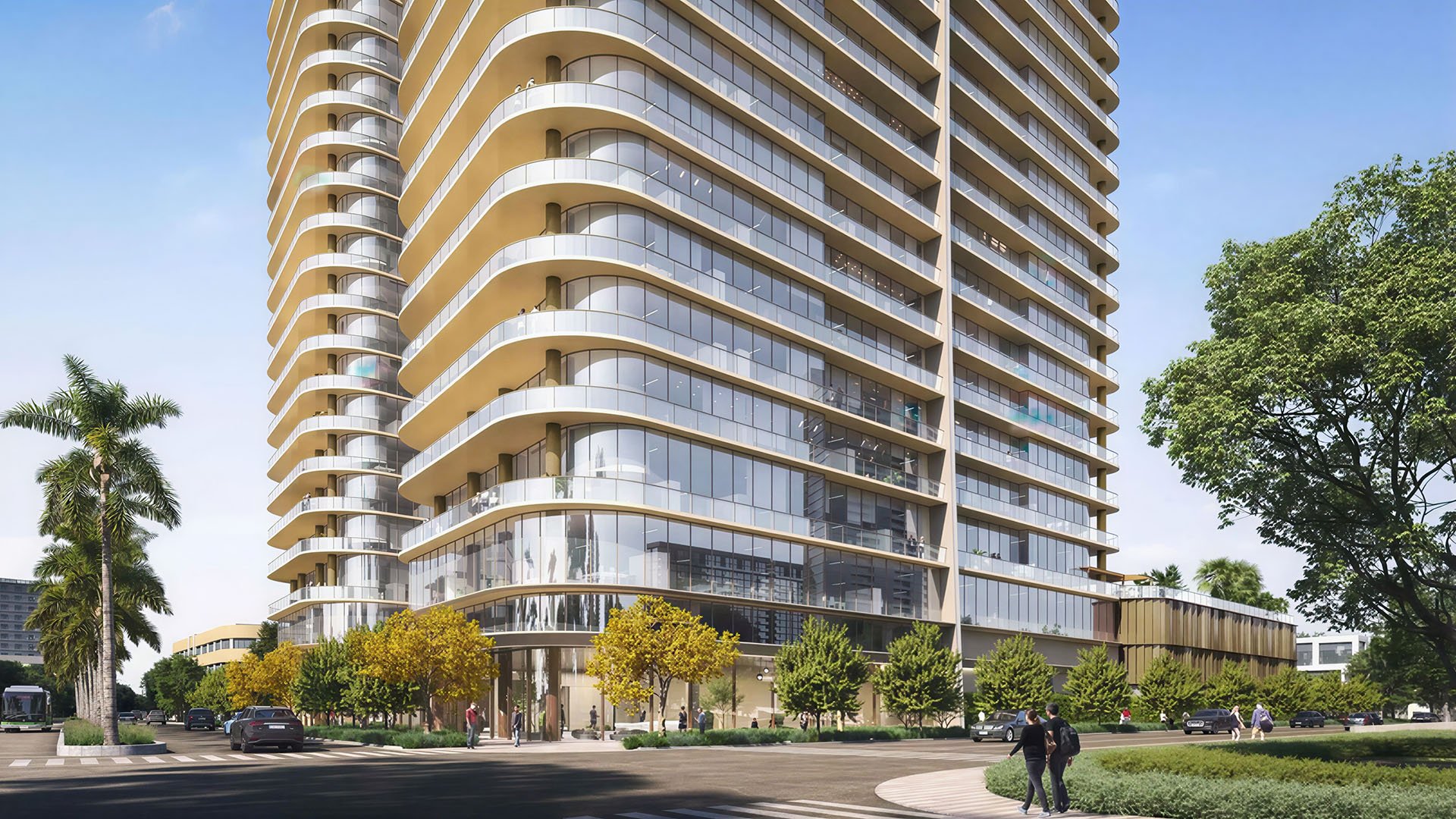
Planned at 3801 and 3883 Biscayne Boulevard, Kempinski Residences Miami Design District occupies a gateway position to the Design District. Its announced program includes two residential towers, six townhomes and 17 guest suites exclusively for sale to residents. Those suites should not be treated as general hotel inventory or presumed delivery-staging space.
Residence interiors measure approximately 2,100 to 3,100 square feet, with total living areas reaching approximately 3,700 square feet in some configurations. Layouts range from two bedrooms plus a den to four bedrooms plus a den. Private elevator vestibules and four homes per floor provide starting points for reviewing the final approach to a residence.
The specified 11-foot ceilings in principal interior spaces may inform display planning, but they do not establish clearance for oversized-art deliveries. Likewise, 10-foot-deep terraces describe residential space, not freight capacity. A crate must pass through the narrowest opening and negotiate every turn before the scale of the destination becomes relevant.
Request the selected residence’s complete delivery route rather than assuming its private vestibule connects to a suitable service path. Door openings, turning space and the transition into the home all require confirmation.
For Waldorf Astoria Residences Downtown Miami, the disclosed information considered here does not establish freight dimensions, dedicated art-handling procedures or climate-control performance. That does not mean these capabilities are absent. It means buyers should obtain project-specific answers before treating them as purchase advantages.
Branded residences warrant the same technical scrutiny as any other home that will house a collection. Service positioning is no substitute for a loading plan, an elevator load rating or written delivery rules. Kempinski’s more detailed residential descriptions do not, by themselves, make it the safer or more practical option for art.
Keep the comparison residence-specific. Ask both teams to address the same crate dimensions, handling requirements and environmental brief. This turns uneven descriptions into a clearer decision: which selected home has a documented plan for the collection you actually own?
Begin with an inventory prepared with the art handler: packed dimensions, weights, orientation restrictions and any requirements for uncrating or temporary staging. Use it to request loading plans, truck limits, elevator cut sheets, cab and door dimensions, and load ratings. These are diligence requests, not confirmed amenities at either project.
The route review should cover vehicle access, unloading, staging, elevator entry, travel to the residential floor and the final passage into the home. Ask the handler to identify the limiting opening or turn rather than relying on one favorable measurement. An ample cab does not resolve a restrictive doorway; a generous room does not resolve the approach to it.
The same discipline applies to a wider Downtown Miami search. A buyer considering Aston Martin Residences Downtown Miami should request the same residence-specific assessment, without assuming its delivery capabilities match either project discussed here.
Physical access and permission to use it are separate questions. Obtain written requirements for approved handlers, insurance, elevator reservations, security escorts and delivery scheduling. Clarify whether oversized crates require additional approval and who authorizes staging or uncrating outside the residence.
Surface protection deserves equal attention. Ask which party protects elevator interiors, corridors, thresholds and residential finishes, and how those protections are inspected. Confirm responsibility for damage, delays and interrupted deliveries before dispatching the collection.
The strongest plan assigns responsibility at every transition. The buyer’s handler, building management and installation team should agree on where custody changes, where works may wait and what happens if access is unavailable. A polished arrival experience is valuable; a written exception plan is more useful when a delivery cannot proceed as intended.
Kempinski’s all-corner residences feature more than 100 feet of glass, expansive terraces and views of Biscayne Bay and the Miami skyline. For collectors, that architectural openness calls for a placement study alongside the furnishing plan. Have a conservator or art handler review glazing exposure, wall locations, reinforcement needs and acclimatization before installation.
Request HVAC zoning, temperature and humidity targets, filtration specifications, seasonal tolerances and monitoring provisions at both projects. Ask about leak detection and emergency-power coverage, including which systems would remain operational. None of these performance characteristics should be inferred from a brand name or an amenity description.
Kempinski’s specified 99-bottle wine climate cabinet has dual-zone temperature control. It is not evidence of art-storage performance or whole-residence environmental stability. The collection’s requirements should guide whether dedicated controls are needed and whether proposed modifications are permitted. Avoid adopting a universal climate target without advice suited to the works themselves.
Kempinski’s planned completion is Q4 2029, not a guaranteed delivery date. For buyers planning a collection’s eventual move, timing should remain distinct from readiness: a projected completion milestone does not establish that handling arrangements or environmental settings have been finalized.
Before committing, assemble three coordinated deliverables: a handler-reviewed access plan, written handling responsibilities and a conservator-informed environmental brief. Identify unresolved items and request confirmation against the selected residence’s plans and applicable building requirements. Recheck relevant dimensions and procedures before dispatching the works.
The priority is not to award either address an operational distinction prematurely. It is to choose a home whose architecture, access and environmental planning can support the collection with clarity, discretion and documented care.
Explore collection-conscious South Florida residences with MILLION.
If branded residences are on your mind — as a home or as an allocation — we would be glad to share what we are seeing, privately.
Begin a quiet conversationNeither project’s disclosed details establish superior art-delivery access. Compare the complete route to the selected residence using handler-reviewed plans and measurements.
The development is planned at 3801 and 3883 Biscayne Boulevard, at the gateway to the Miami Design District.
No. Ceiling height describes principal interior spaces, while delivery clearance depends on doorways, elevator dimensions and turns along the route.
They are relevant to the final approach into a residence. Their dimensions and connection to the approved delivery route still need confirmation.
Their absence is not established. Buyers should request project-specific documentation rather than infer capability or deficiency from the available descriptions.
Request loading plans, truck restrictions, elevator cut sheets, cab and door dimensions, load ratings and the complete route to the selected home.
They should address handler approval, insurance, reservations, escorts, staging, surface protection, oversized crates and responsibility for damage or delays.
No. Its 99-bottle dual-zone wine cabinet does not establish art-storage conditions or whole-residence environmental performance.
Ask about HVAC zoning, temperature and humidity targets, filtration, seasonal tolerances, monitoring, leak detection and emergency-power coverage. A conservator should assess requirements for the specific collection.
Completion is planned for Q4 2029, not guaranteed. Confirm delivery arrangements and relevant building conditions before scheduling the collection’s move.