A buyer-focused flood-disclosure framework for Turnberry Ocean Club Sunny Isles, centered on flood-zone verification, building systems, insurance exposure, association preparedness, and long-term ownership risk.

Turnberry Ocean Club is a luxury oceanfront condominium tower in Sunny Isles Beach, positioned along South Florida’s Atlantic shoreline. That setting is essential to its appeal: horizon, light, beach proximity, and the architectural confidence that defines coastal high-rise living at its best. It is also why a sophisticated buyer should read flood disclosure with the same care given to floor plans, finish schedules, and amenity descriptions.
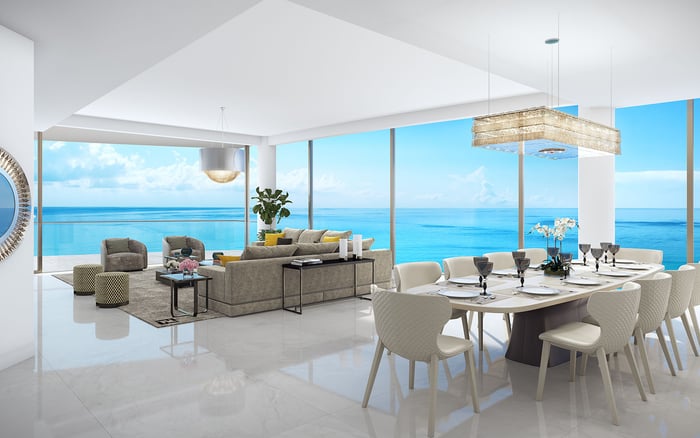
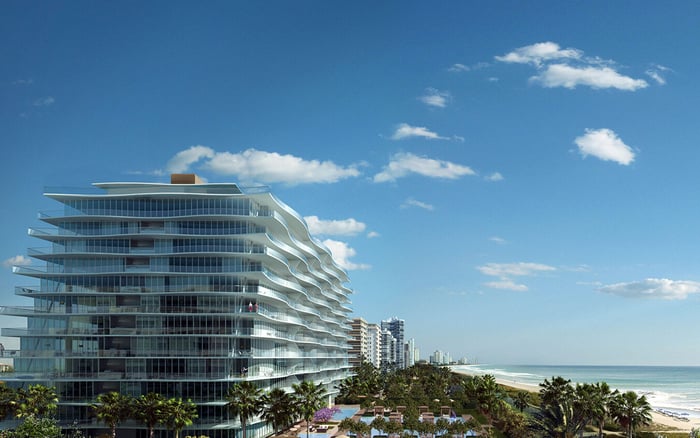
A rendering can communicate lifestyle. It cannot verify flood-zone status, identify the location of critical systems, explain insurance deductibles, or show how the association prepares for water intrusion after a storm. For a buyer studying Turnberry Ocean Club Sunny Isles, the central question is not simply whether a private residence is elevated. It is how the full building performs when coastal water, wind-driven rain, storm surge, and access disruption become practical ownership issues.
The first point to verify is the property’s exact flood-zone status. Tower height and elevated residences do not eliminate flood-risk questions, particularly in an oceanfront setting where exposure may be concentrated in lower-level building elements, access points, parking, lobbies, amenities, service rooms, and mechanical areas.
A disciplined file should include the applicable flood map panel, the elevation certificate if available, condominium documents, relevant building plans, and any association materials that clarify how flood exposure is disclosed, insured, maintained, and reserved for. Buyers should not rely on a generalized coastal assumption, whether favorable or unfavorable. The review should be parcel-specific, building-specific, and association-specific.
The same discipline applies across the Sunny Isles luxury corridor. Buyers comparing Bentley Residences Sunny Isles or St. Regis® Residences Sunny Isles should ask the same threshold question: what does the actual documentation say about flood exposure, not what the skyline suggests?
In coastal condominium ownership, resilience is not confined to the private unit. A residence can sit high above grade while the building’s operational vulnerability sits elsewhere. The review should identify where electrical, mechanical, life-safety, elevator, access-control, fire, communications, and water-management systems are located.
Parking, lobby areas, back-of-house corridors, service entrances, storage rooms, and amenity spaces deserve equal attention. A buyer should ask whether flood protections apply only to private residences or also extend to the shared infrastructure that makes the building livable after a weather event. The distinction matters. A private residence may be physically untouched, yet the ownership experience can still be affected if critical common areas are compromised or temporarily inaccessible.
For oceanfront ownership, beach access is part of the practical review. The question is not only whether the building holds a desirable coastal position, but how that position functions when storm conditions affect access, recovery, and everyday continuity.
In the ultra-premium market, insurance review is not an administrative afterthought. It is part of the financial architecture of ownership. Buyers should examine master association coverage, unit-owner coverage, deductibles, exclusions, flood-related limitations, and the possibility of special assessments tied to storm or water-damage events.
The master policy may address certain shared elements, while the unit-owner policy may be responsible for other components. Deductibles can be material. Exclusions can matter more than headline coverage amounts. Association budgets, reserve studies, and recent insurance line items can help a buyer understand whether flood risk is being priced into ownership or deferred into a future assessment conversation.
This matters for both investment and lifestyle ownership. Carrying costs can evolve, and long-term ownership should account for how insurance availability, lending expectations, regulatory changes, and association financial planning may affect liquidity. In a resale scenario, the next buyer is likely to ask many of the same questions.
A serious flood-disclosure review should ask whether the association has documented storm-preparedness, recovery, and water-intrusion protocols. The focus is not alarmist. It is operational. Who secures vulnerable areas? How are lower-level spaces monitored? What is the response sequence after water intrusion? How are residents informed? Which vendors are retained for remediation, restoration, and inspections?
Longer-term sea-level considerations also belong in the file. The point is not to predict a single outcome, but to understand whether the building’s documentation reflects both current exposure and future ownership conditions. Coastal access, insurance pricing, lending standards, and maintenance priorities may all evolve during the life of an ownership hold.
For a Sunny Isles buyer comparing established and newer coastal offerings such as Jade Signature Sunny Isles Beach or The Ritz-Carlton Residences® Sunny Isles, the most refined due diligence is not less emotional. It is simply more complete. Beauty remains part of the acquisition. Verification protects it.
Before a contract becomes irreversible, buyers should request and review the documents that translate coastal design into ownership reality: the current flood-zone determination, elevation certificate if available, structural and mechanical-system location plans, condominium declaration, association budget, reserve study, master insurance policy, deductible schedule, and any written storm or water-intrusion protocols.
Legal, insurance, engineering, and advisory professionals should be aligned before the review window closes. The goal is not to turn a luxury purchase into a risk exercise. It is to understand where the risk sits, who manages it, what is insured, what is excluded, and how future costs could flow through the association.
For Turnberry Ocean Club Sunny Isles, the rendering may begin the conversation. The flood-disclosure file is where a buyer learns how the building, the association, and the ownership structure respond to the realities of the Atlantic edge.
What should a buyer verify first? The exact flood-zone status for the property should be verified before relying on elevation, tower height, or marketing imagery.
Does a high-floor residence remove flood concern? No. A high-floor residence may be elevated, while parking, lobbies, mechanical systems, and common areas can still be relevant.
Which documents are most useful for review? Useful documents include the flood map panel, elevation certificate, condominium declaration, insurance policy, reserve study, and association budgets.
Why do mechanical systems matter? Mechanical, electrical, and life-safety systems affect whether the building can operate normally after water exposure or storm conditions.
Should amenities be included in the review? Yes. Buyers should ask whether flood protections extend to amenity spaces, common areas, and shared operational infrastructure.
What insurance items deserve attention? Review master coverage, unit-owner coverage, deductibles, exclusions, flood limitations, and potential special-assessment exposure.
Do storm protocols matter for luxury buildings? Yes. Written preparedness, recovery, and water-intrusion procedures show how the association intends to respond operationally.
How does sea-level change affect ownership analysis? It can influence future carrying costs, insurance conditions, lending expectations, maintenance planning, and buyer perception.
Is beach access part of flood due diligence? Yes. Coastal access disruption can affect daily use, recovery timing, and the practical ownership experience after storms.
What is the central buyer question? The key question is how the entire building performs during flood and surge events, not only how high the residence sits.
For a confidential assessment and a building-by-building shortlist, connect with MILLION.
If branded residences are on your mind — as a home or as an allocation — we would be glad to share what we are seeing, privately.
Begin a quiet conversation