From Brickell’s vertical urbanism to the pedestrian appeal of Clematis Street, five South Florida neighborhoods offer distinct approaches to car-optional luxury living. The deciding factor is how a particular residence connects to daily life.
For a luxury buyer, walkability is less about abandoning the automobile than reclaiming the choice to leave it behind. A residence becomes more compelling when dinner, shopping and everyday errands fit into a satisfying walk rather than another departure from the garage. The question is not whether a neighborhood sounds pedestrian-friendly, but whether its destinations align with your daily life.
South Florida offers several interpretations of that freedom: the vertical intensity of Brickell, Downtown Miami’s transit-supported urbanism, beach-oriented South Beach, the commercial core of Coral Gables and downtown West Palm Beach. This editorial ranking considers pedestrian convenience, luxury housing, amenities and transit. It is not a numerical score table, and car-optional is not a promise that every trip can comfortably happen without a vehicle.
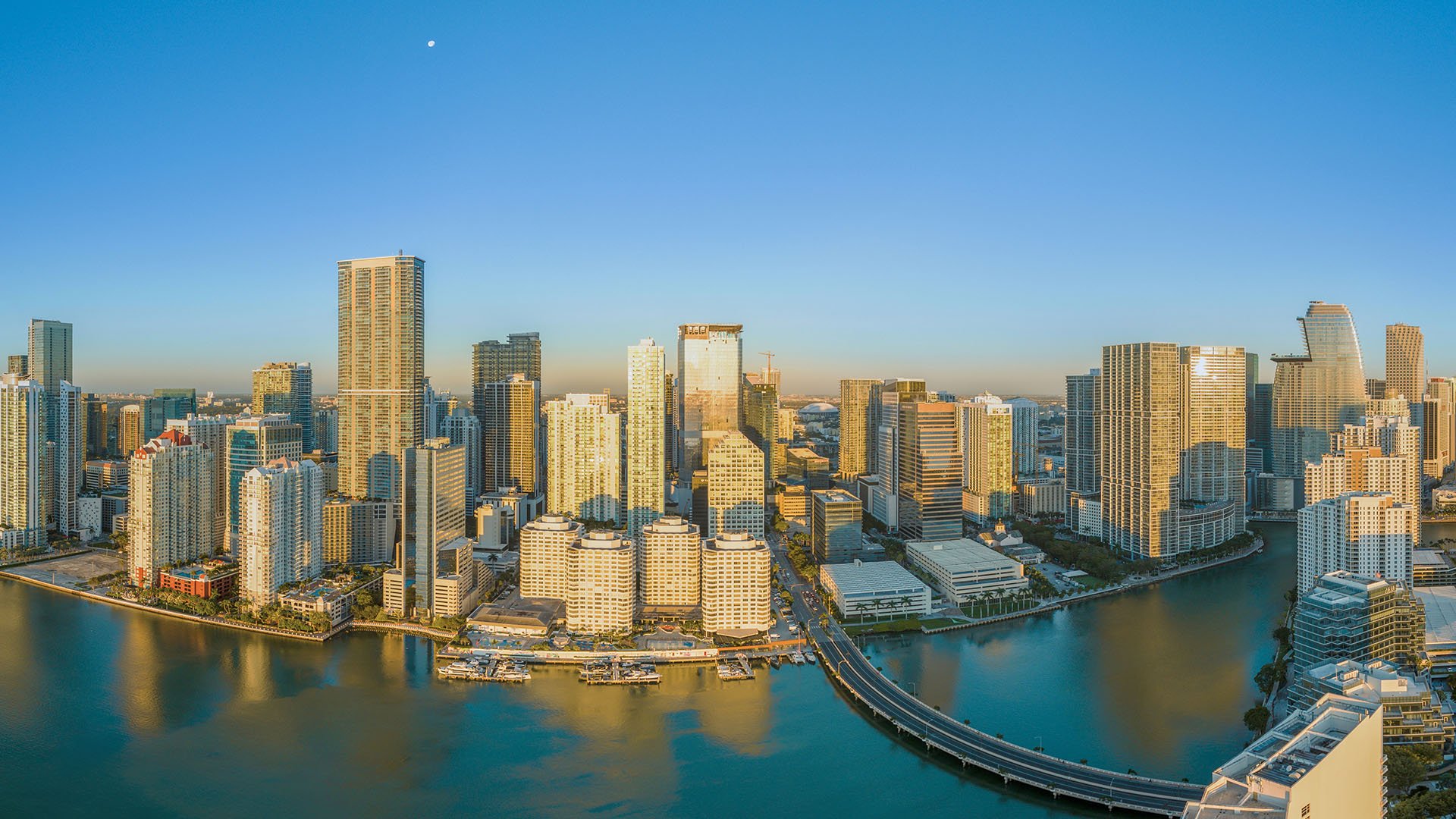
1. Brickell - Miami’s vertical-city choice
Brickell takes first place in this editorial selection for buyers seeking high-rise urban luxury in a dense setting. Its defining attraction is the vertical-city model: residential life concentrated within an urban district rather than spread across a lower-density enclave.
The strongest fit is a buyer who prefers a closely connected urban routine. Evaluate the individual building’s entrance and the destinations you would actually use. The neighborhood’s reputation is a starting point, not an assurance that every address delivers the same experience.
2. Downtown Miami - Walking with transit in mind
Downtown Miami merits consideration for buyers who want to evaluate pedestrian convenience alongside transit access. These serve different parts of the same daily routine: walking may suit nearby errands, while useful transit connections may help with journeys farther afield.
Its second-place position is an editorial judgment, not a claim that every address is less walkable than those in Brickell. Buyers should distinguish the broader district’s appeal from a prospective residence’s specific connections to everyday destinations and useful transit.
3. South Beach - Beach-oriented pedestrian living
South Beach is the clearest choice here for buyers seeking beach-oriented living alongside a compact concentration of restaurants, retail, hospitality and entertainment.
The attraction is the possibility of bringing leisure and daily life into the same pedestrian routine. The purchase decision should still turn on the routes that matter to you: a neighborhood rich in dining and entertainment is not automatically convenient for every household’s errands.
4. Miracle Mile / Coral Gables commercial core - An upscale commercial setting
The Coral Gables commercial core offers an alternative to Miami’s principal high-rise districts. For buyers drawn to Miracle Mile, the relevant question is how readily a prospective residence connects to the corridor and the destinations they expect to use.
Geography matters especially here. Buyers seeking pedestrian convenience should focus on the connection between a residence and the commercial core, rather than assume that a Coral Gables address alone delivers it. Assess transit separately rather than treating pedestrian appeal as a substitute for useful connections.
5. Clematis Street / Downtown West Palm Beach - Palm Beach County’s downtown selection
Clematis Street anchors this ranking’s West Palm Beach choice. The focus is the corridor and a residence’s practical connection to it, rather than a blanket judgment about every downtown address.
For buyers focused on Palm Beach County, the appeal is a downtown pedestrian lifestyle-not an assurance that every residence in the city offers the same convenience. Keep Clematis Street’s specific geography in view when evaluating a property marketed under the broader West Palm Beach name.
In Brickell, a buyer considering The Residences at 1428 Brickell should evaluate the property independently of the district’s reputation. Walk from the actual entrance to several destinations you expect to use. Assess whether those routes feel convenient enough to repeat, rather than merely possible on a map.
Apply the same discipline when considering Aston Martin Residences Downtown Miami. Downtown’s transit options are a reason to investigate, not a building-specific guarantee. Ask whether the available connections serve your schedule and destinations, including journeys beyond the immediate neighborhood.
For Miami Beach buyers exploring The Ritz-Carlton Residences® South Beach, distinguish leisure walking from practical walking. Identify both the outings you enjoy and the errands you need. A car-optional residence should support a meaningful share of each, in line with your priorities.
A Coral Gables search that includes Ponce Park Coral Gables should remain grounded in address-level assessment. The city name cannot substitute for examining a particular location. Establish which destinations are practical on foot and which would still involve another form of transport.
Similarly, buyers considering Mr. C Residences West Palm Beach should not assume that Clematis Street’s pedestrian appeal describes the property’s immediate surroundings. Use the downtown corridor as a reference for the lifestyle you want, then establish the residence’s actual connection to it. No project mentioned here inherits a neighborhood’s convenience simply through its name or city.
Before committing, build a short list of destinations that would genuinely change your driving habits. Walk those routes at the times you expect to use them, paying attention to crossings, comfort and the return journey. Separately, identify the trips for which you would still prefer a car or another transport option.
The best choice is the residence that makes your preferred routine easier while preserving the privacy, setting and residential experience you value. Brickell leads this ranking, but each of the five offers a distinct reason to look closely.
Explore South Florida residences aligned with your preferred way of living at MILLION.
If branded residences are on your mind — as a home or as an allocation — we would be glad to share what we are seeing, privately.
Begin a quiet conversationBrickell ranks first in this editorial selection for its dense, high-rise urban setting. Individual residences still require an assessment of their everyday walking routes.
Downtown Miami invites buyers to evaluate walking and transit as complementary options. The usefulness of each depends on the residence, destinations and schedule.
No. It means a residence may support less driving for selected daily activities, while other journeys may still call for a vehicle or another transport option.
South Beach combines beach-oriented living with a compact concentration of restaurants, retail, hospitality and entertainment. Buyers should evaluate practical errands separately from leisure outings.
No. Buyers should examine the particular residence’s connection to Miracle Mile and the commercial core rather than rely on the city name.
Yes. A convenient walk to dining or shopping does not establish that transit connections will serve a buyer’s other destinations.
No. Buyers should assess each residence’s actual connection to the corridor rather than assume the same convenience throughout the city.
No. It is an editorial selection considering pedestrian convenience, luxury housing, amenities and transit, not a numerical score comparison.
No building-specific scores are established in the article. Each residence requires its own assessment rather than inheriting a district’s reputation.
Walk from the actual building entrance to destinations you expect to use, preferably at relevant times of day. Assess practical errands separately from leisure outings and identify trips that would still require transport.