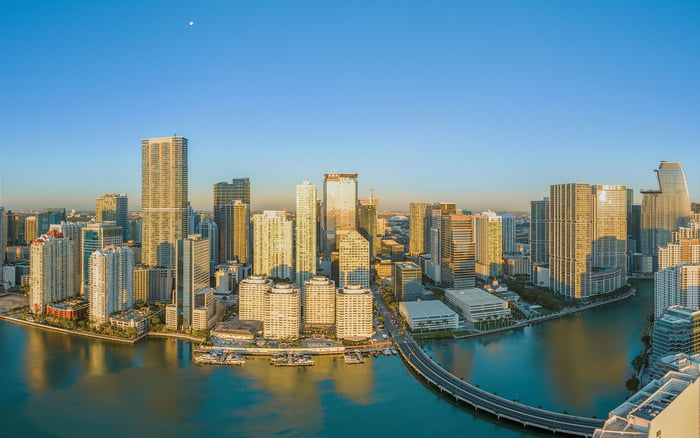
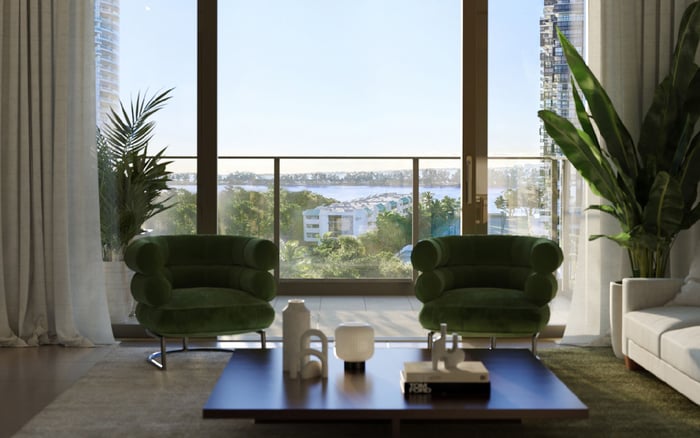
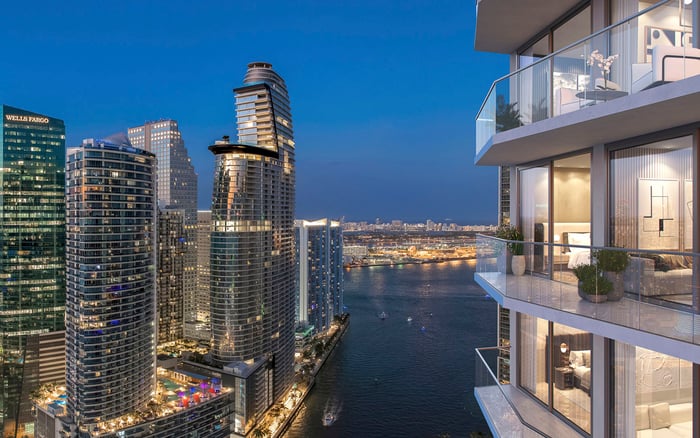
A polished luxury condo tour can conceal the questions that matter most. This MILLION Luxury guide outlines five high-value questions South Florida buyers should ask before they move from admiration to offer, with a focus on fees, reserves, compliance, restrictions, and climate exposure.
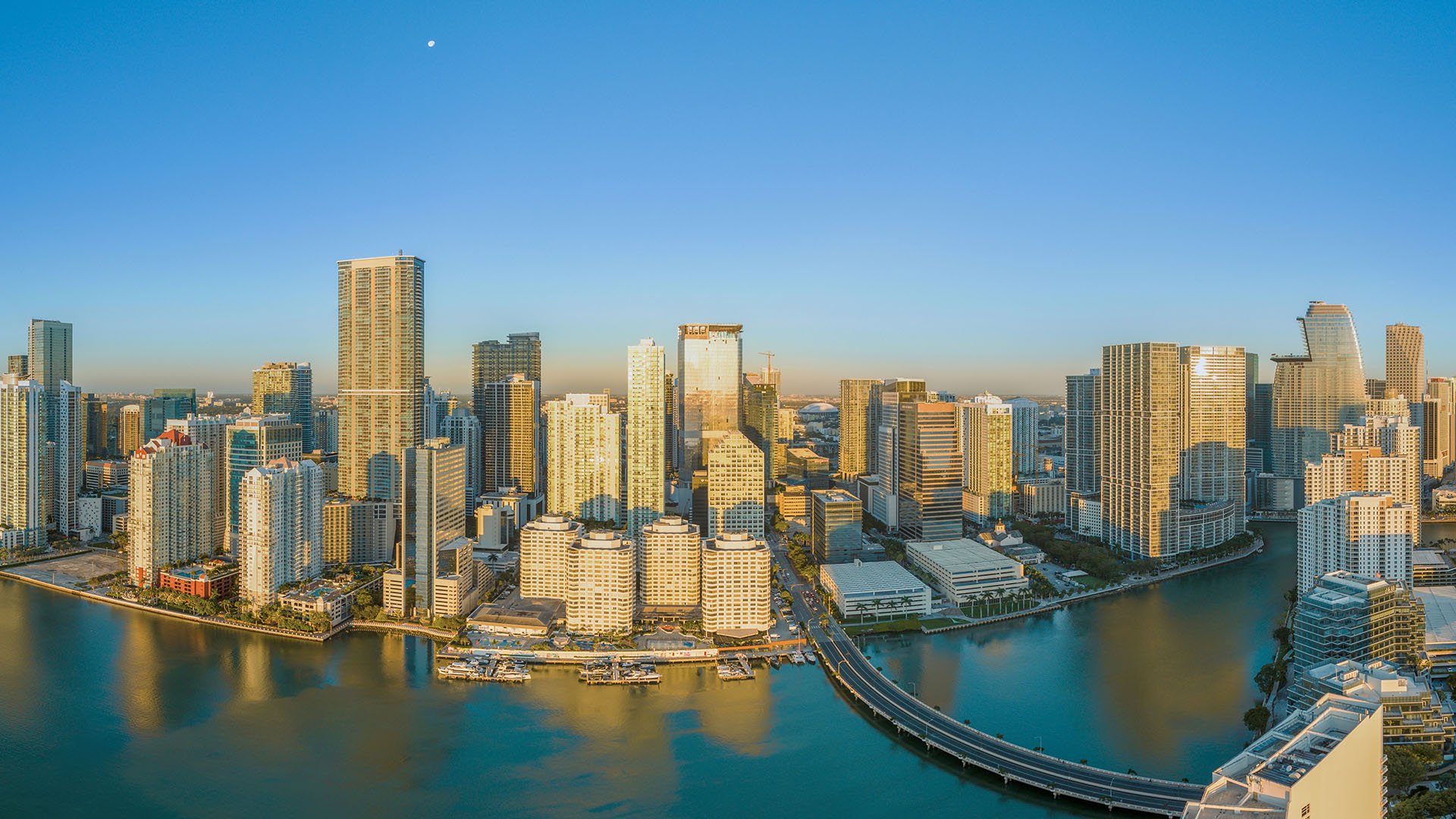
In South Florida, a refined condominium tour is designed to make a powerful first impression. The arrival sequence is polished, the finishes are carefully lit, and the amenity deck often feels like a private resort. Yet the questions that matter most rarely reveal themselves between the foyer and the terrace.
For discerning buyers, especially in markets such as Brickell, Miami Beach, Sunny Isles Beach, and West Palm Beach, real due diligence begins when the aesthetic conversation ends. A residence may be beautifully executed and still carry hidden ownership costs, governance constraints, or future capital obligations that materially alter the decision.
That is particularly true in South Florida’s condominium landscape, where reserve funding, milestone inspections, structural reporting, flood-related costs, and association rules have become central to value. A buyer touring a new address like The Residences at 1428 Brickell will focus on different practical details than someone considering an established oceanfront building, but the principle is the same: ask about what does not appear on the sales sheet.
1. What are the total fees, special assessments, and reserve requirements, and what do they actually cover?
This is the first question because it cuts through the most common illusion in condo buying: that the quoted purchase price tells the full financial story. In reality, monthly association fees, current special assessments, and reserve obligations can redefine affordability even at the highest price points.
The finer point is not simply the amount, but the purpose. Buyers should ask what reserves are funding, whether amenities increase long-term capital needs, and whether current charges are temporary or structural. In amenity-rich addresses, operating complexity may be part of the luxury proposition, but it can also shape future owner costs.
2. What is the building’s financial health, including reserve strength and any pending assessments?
Reserve adequacy is one of the clearest indicators of a condominium’s health. Underfunded reserves may point to deferred maintenance, weak planning, or a greater likelihood of future cash calls to owners. In South Florida, that question now carries even more weight because reserve studies and reserve funding are no longer abstract governance issues. They are financially material.
Ask whether the building is fully funding required reserves, whether recent budgets reflect new compliance obligations, and whether any major repair programs are being discussed but not yet billed. A buyer may admire the waterfront positioning of Rivage Bal Harbour, but elegance does not replace a serious review of reserves.
3. Are there any pending litigation matters, municipal violations, or unresolved code-enforcement issues?
A unit can show beautifully while the building itself carries legal or compliance issues that will ultimately reach owners. Pending litigation, city or county violations, and unresolved code matters can point to defects, delayed repairs, or costly remediation that may not be visible during a tour.
This is also the moment to ask for recent structural or engineering reports, along with milestone inspection status and recertification timing where relevant. In older towers, these are not peripheral questions. They are part of prudent luxury acquisition.
4. Is this fee simple or leasehold, and what restrictions apply to sales, rentals, renovations, pets, and parking?
Ownership structure matters. If a condominium is leasehold rather than fee simple, financing and resale can become more difficult as the lease term shortens. That distinction should be clarified before a buyer becomes attached to the residence.
Then come the bylaws. Ask for the declaration, rules, and association documents early. Rental restrictions, waiting periods, renovation limits, pet rules, parking assignment terms, and transfer restrictions can all affect how the asset functions over time. This is especially relevant for buyers balancing personal use with flexibility, or evaluating the residence partly through the lens of investment and future resale value.
5. What climate-resilience measures are in place, and what is the flood insurance outlook?
For coastal luxury condominiums, flood exposure is now as much an ownership-cost issue as a lifestyle one. Buyers should ask about flood zone considerations, flood history, elevation documentation, and whether insurance costs are stable or under pressure.
Just as important, ask what resilience upgrades have already been completed and what remains planned. Seawalls, pumps, elevated equipment, and related systems can reduce risk, but they may also lead to future assessments. Along the coast, buyers considering projects such as The Delmore Surfside, Alba West Palm Beach, and St. Regis® Residences Brickell should treat resilience planning as part of the luxury brief, not an afterthought.
South Florida has always asked buyers to think in layers: waterfront exposure, service quality, privacy, and long-term desirability. Today, however, the hidden layer is often the most consequential. Structural reserve studies, milestone inspections, and reserve funding have moved from back-office concerns to front-of-mind buyer considerations.
That shift has changed the tone of a sophisticated condo tour. The strongest buyers now want to understand whether the board is owner-controlled or still developer-controlled, whether the budget reflects realistic capital planning, and whether the building has kept pace with inspection and maintenance demands. This is not pessimism. It is simply the new standard of care.
In practice, it means asking for documents earlier and reading them more closely. It also means recognizing that title coverage does not protect against future special assessments. No matter how exceptional the design, buyers need condo-specific financial due diligence.
The tour itself can still tell you a great deal if you know where to focus. Look past the stone selection and ask whether common areas appear meticulously maintained or merely cosmetically staged. Ask whether back-of-house spaces feel orderly. Observe whether staff responses are precise or evasive when costs, reserves, or maintenance are mentioned.
In oceanfront and bayfront settings, ask direct questions about water management and equipment placement. In highly serviced towers, ask how signature amenities influence the operating budget over time. In boutique buildings, ask whether the smaller owner base makes future capital projects more concentrated per unit.
That lens applies equally across product types, from modern urban towers to coastal estates in the sky. The questions differ slightly by building and location, but the discipline is the same.
Before writing, request the current budget, reserve summary, disclosure of any pending or recent special assessments, engineering or structural reports if available, and the governing documents that control leasing, pets, renovations, parking, and use. Confirm whether the building is current on applicable inspection and reserve requirements. Ask whether there are open violations, active disputes, or meaningful planned capital projects.
If the residence is older, be even more exacting. If the building is amenity-rich, be even more specific about capital needs. If the property is coastal, be even more rigorous about flood exposure and resilience spending. Luxury purchasing is often emotional at first glance, but it should become analytical before commitment.
The most sophisticated condo buyers in South Florida understand that the best question on tour is often the one that makes the room slightly quieter. That is usually the question closest to the truth.
What is the first question I should ask on a luxury condo tour? Start with total monthly fees, special assessments, and what reserves actually cover, because ownership cost is often broader than the asking price suggests.
Why do reserve funds matter so much in South Florida condos? Reserve strength can signal whether a building is planning responsibly for repairs or setting owners up for future cash calls.
Should I ask about milestone inspections during the tour? Yes. For many older towers, inspection status and recertification timing are essential parts of due diligence.
Can a beautiful unit still hide building-level risk? Absolutely. Litigation, code issues, and structural concerns often exist beyond what a standard walk-through reveals.
What is the difference between fee simple and leasehold? Fee simple means you own the real property interest, while leasehold can carry expiration-related financing and resale risk.
Why do rental rules matter if I plan to live there full time? Restrictions can still affect future flexibility, marketability, and buyer demand when you eventually sell.
Should I review pet, renovation, and parking rules before making an offer? Yes. These restrictions can materially affect daily use and long-term resale appeal.
Do luxury amenities usually mean higher future costs? They can. Pools, spas, concierge operations, and other services may raise operating and capital requirements over time.
How should I evaluate flood risk in a coastal condo? Ask about flood history, flood zone context, elevation documentation, insurance outlook, and completed versus planned resilience measures.
What is the best way to shortlist comparable options for touring? Start with location fit, delivery status, and daily lifestyle priorities, then compare stacks and elevations to validate views and privacy.
If you'd like a private walkthrough and a curated shortlist, connect with MILLION Luxury.
If branded residences are on your mind — as a home or as an allocation — we would be glad to share what we are seeing, privately.
Begin a quiet conversation