A buyer-focused look at five Miami-area residences where terrace livability depends on climate-responsive design, wind moderation, shade, salt-aware detailing, and daily usability rather than spectacle alone.
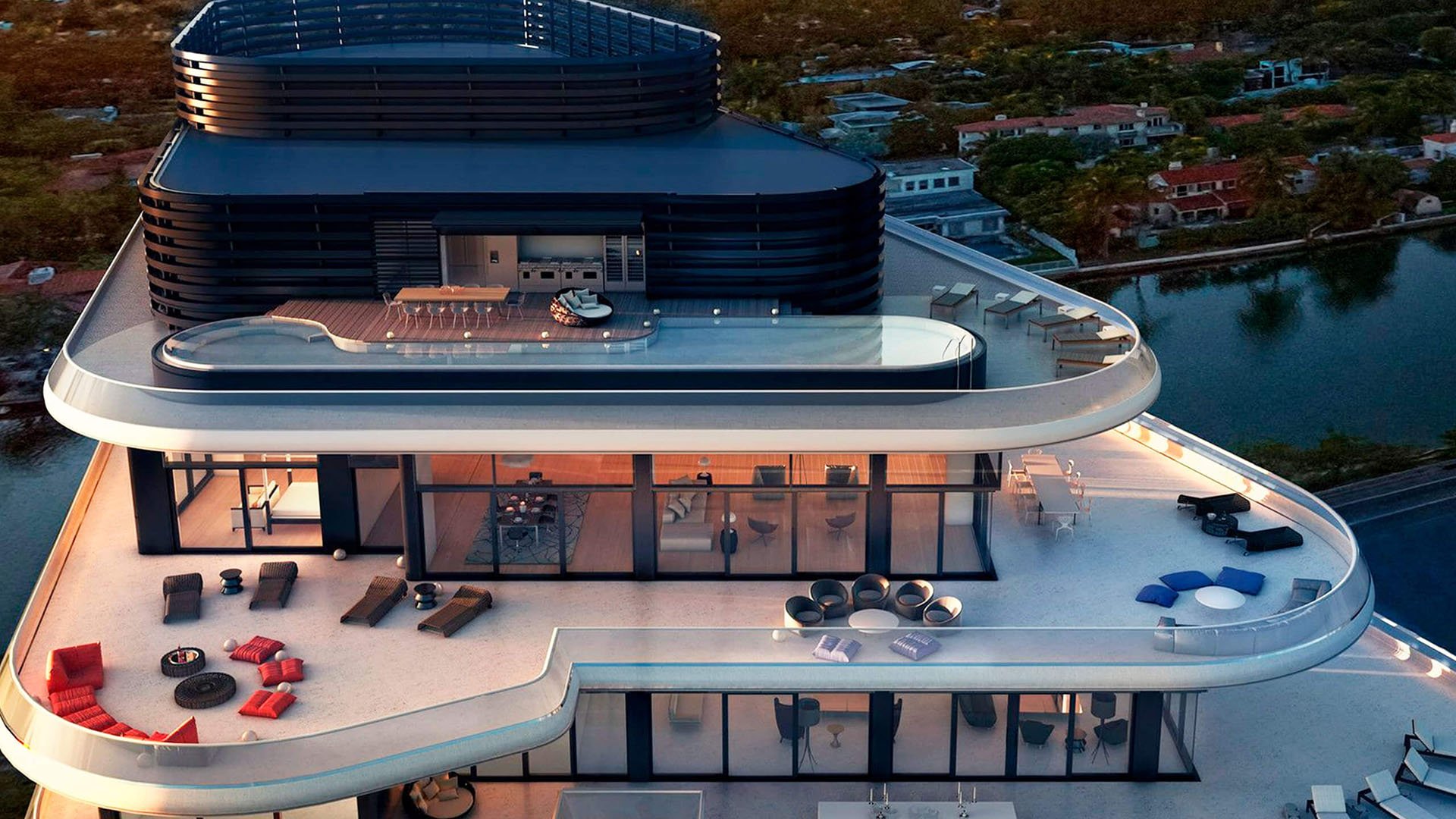
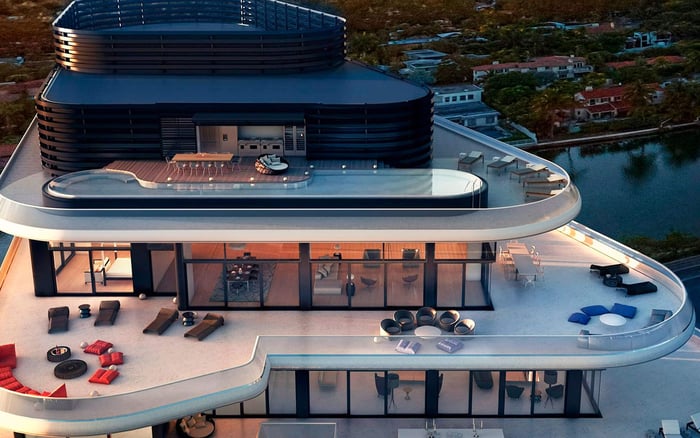
In Miami luxury real estate, the terrace is not a decorative extra. It is often the emotional center of the residence: the room that sells the view, the climate, and the promise of open-air living. Yet the gap between a beautiful terrace and a usable one can be substantial. Heat, wind, humidity, glare, and salt air reveal weak design quickly.
A true Miami terrace must perform at noon in July, on breezy winter evenings, and after months of marine exposure. Size alone is not enough. The strongest outdoor rooms combine shade, manageable airflow, durable materials, and building operations that treat outdoor living as part of daily life.
The five residences below stand out because they offer different answers to the same question: how can a high-rise terrace feel luxurious without becoming punishing? For buyers, the lesson is clear. The best terrace is not necessarily the widest, highest, or most photographed. It is the one that remains comfortable, maintainable, and useful in South Florida’s tropical marine environment.
1. Apogee South Beach - disciplined exposure at the edge of the city
Apogee South Beach belongs in the conversation because it frames the terrace as an extension of daily living, not a token balcony. In a coastal high-rise setting, that distinction matters. Outdoor space must withstand intense sun, reflected brightness, and breezes that can shift from pleasant to forceful over the course of a day.
For buyers evaluating Apogee South Beach, the key is balance. The terrace experience should feel open to the horizon while still offering enough architectural protection to make dining, reading, and evening entertaining realistic. In South Florida, that means studying shade depth, railing comfort, floor heat, and how the building manages salt-heavy exposure over time.
2. Faena House Miami Beach - oceanfront outdoor living with a climate test
Faena House Miami Beach is a useful benchmark for buyers who want the romance of oceanfront terrace life but understand its demands. The closer a residence sits to salt air and open water, the more critical the detailing becomes. Railings, hardware, flooring, soffits, and exterior furnishings all face a tougher maintenance environment.
The appeal here is not simply the view. It is the chance to occupy an outdoor room that must negotiate direct sun, marine wind, and humidity without losing refinement. Buyers should look beyond the visual drama and ask how the space feels over a full day: morning light, afternoon heat, evening breeze, and post-storm cleanup.
3. Grove at Grand Bay - tropical shade logic in a softer setting
Grove at Grand Bay brings a different kind of terrace intelligence. Its appeal is tied to a more gardened, tropical interpretation of Miami living, where shade, airflow, and greenery shape the outdoor experience as much as skyline or ocean exposure. That can be especially attractive to buyers who want terraces that feel residential rather than performative.
In this context, Grove at Grand Bay is a reminder that livability often comes from moderation. A terrace does not need to be maximally exposed to feel generous. Relief from glare, a sense of enclosure, and the ability to sit outdoors without fighting heat can be more valuable than uninterrupted exposure.
4. Oceana Key Biscayne - island conditions, practical expectations
Oceana Key Biscayne speaks to buyers who value a quieter island environment but still want serious outdoor living. Key Biscayne conditions require respect for salt, humidity, and open-air weathering. A terrace in this setting should be judged not only by its outlook, but by its resilience.
The best way to evaluate Oceana Key Biscayne is through use. Can the terrace support breakfast without glare, evening conversation without excessive wind, and furniture that remains elegant through coastal exposure? For island buyers, the ideal terrace feels natural, not fragile.
5. Eighty Seven Park Surfside - edge-of-park calm and marine realism
Eighty Seven Park Surfside offers another important terrace model: one where the setting can soften the outdoor experience while still demanding marine-grade thinking. The attraction is the possibility of outdoor rooms that feel connected to landscape and water, rather than only height and glass.
For buyers, the question is whether the terrace encourages regular use. If it functions only as a viewing platform, it is underperforming. If it offers shade, comfort, and a sense of protection from glare and gusts, it becomes part of the residence’s everyday architecture.
A terrace that works in Miami begins with shade. At roughly tropical latitude, the summer sun is high and intense, which means shallow overhangs may not protect the full depth of the outdoor area. Buyers should test how much of the terrace is shaded at different times of day, especially along the outer edge where seating is often placed.
Wind is the second test. A steady breeze is welcome, but high-rise turbulence can be uncomfortable around corners, glass edges, and exposed railings. The most livable terraces manage airflow without making the space feel enclosed. Good geometry can be more valuable than excessive square footage.
Salt air is the third test, and it is often underestimated. Marine exposure affects metals, coatings, furniture, lighting, and moving parts. A terrace may look pristine at delivery, but the buyer’s question is how it will age. Salt-aware detailing and consistent building maintenance are central to long-term value.
Heat underfoot is another overlooked factor. Dark surfaces can become unpleasant in direct sun, especially when humidity is high and air movement is limited. Flooring color, texture, drainage, and thermal performance all influence whether residents actually use the space.
The most revealing terrace tour is not always at sunset. Buyers should visit when conditions are less forgiving: late morning, midafternoon, after rain, or on a breezy day. That is when glare, drainage, furniture stability, and heat become obvious.
Ask how the terrace is cleaned, how exterior elements are maintained, and what rules govern shading devices, planters, grills, and furniture. Building operations matter because outdoor living in Miami is an ongoing relationship with climate, not a one-time design gesture.
Pay attention to sound as well. Wind noise, traffic, mechanical systems, and neighboring terraces can change the atmosphere dramatically. A terrace should feel private enough to use, even when the building is active.
Finally, compare the terrace to the interior plan. The strongest residences connect indoor rooms and outdoor rooms with purpose. Dining should align with dining. Living should extend naturally outside. A bedroom terrace should offer calm, not merely access to air.
For Miami’s ultra-premium buyer, terrace value is no longer measured by area alone. The decisive question is performance. Can the space remain comfortable under strong sun? Can it temper wind without losing openness? Can it age gracefully in salt air? Can it support daily rituals rather than occasional photographs?
Apogee South Beach, Faena House Miami Beach, Grove at Grand Bay, Oceana Key Biscayne, and Eighty Seven Park Surfside each belong in this discussion because they encourage buyers to judge outdoor living with greater precision. The right terrace is both beautiful and disciplined. In Miami, that discipline is the difference between a view and a lifestyle.
What is the most important feature in a Miami terrace? Shade is usually the first comfort test, followed closely by wind moderation and salt-resistant materials.
Are larger terraces always better in South Florida? No. A smaller terrace with good shade and calmer airflow can be more usable than a larger exposed one.
Why does salt air matter for luxury terraces? Salt exposure can accelerate wear on metals, coatings, lighting, furniture, and exterior hardware.
Should buyers tour terraces at sunset? Sunset is beautiful, but midday or breezy conditions reveal more about real comfort and performance.
What makes high-floor terraces challenging? Higher elevations can experience stronger winds and more turbulence around building edges.
Can landscaping improve terrace comfort? Thoughtful planting can soften glare and create privacy, but it must be suitable for wind and salt.
Is oceanfront always better for terrace living? Oceanfront views are prized, but they also bring greater exposure to wind, glare, humidity, and salt.
What should buyers ask building management? Ask about exterior maintenance, cleaning protocols, approved furnishings, shade rules, and storm procedures.
Do terrace materials affect comfort? Yes. Flooring color, texture, drainage, and heat retention all influence daily usability.
What defines a truly livable Miami terrace? It feels comfortable, durable, shaded, and usable across seasons rather than only visually impressive.
When you're ready to tour or underwrite the options, connect with MILLION.
If branded residences are on your mind — as a home or as an allocation — we would be glad to share what we are seeing, privately.
Begin a quiet conversation