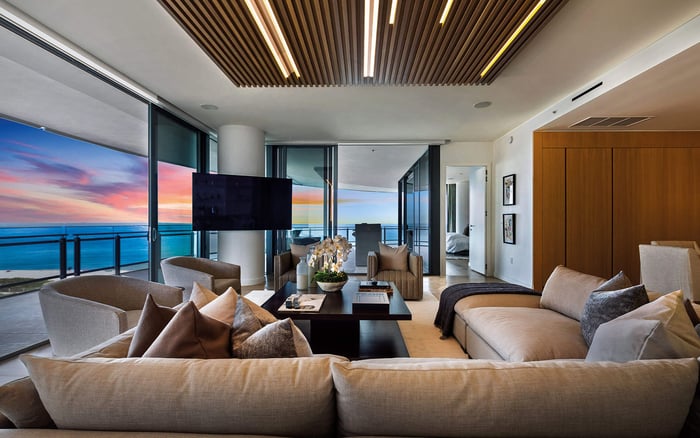
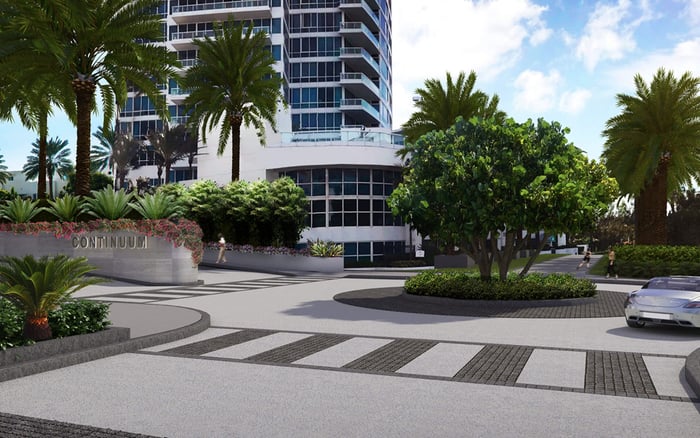
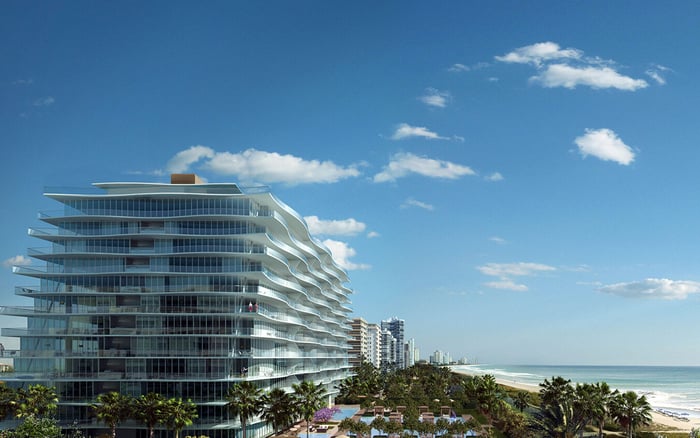
Five boutique residences illustrate how full-floor and half-floor planning can deliver a more discreet Miami Beach ownership experience.
In Miami Beach, privacy is increasingly expressed through architecture rather than ornament. Full-floor and half-floor residences reduce shared circulation, limit casual encounters, and create an arrival experience closer to that of a private home than a conventional condominium. For buyers balancing security, discretion, and service, the most compelling buildings make low density a central design principle.
This shift is particularly relevant on a narrow barrier island, where scarcity extends beyond frontage. It also reflects how many households share a floor, elevator core, and entrance sequence. The result is a select group of residences whose value lies as much in controlled access and psychological comfort as in views and amenities.
1. Glass: South of Fifth full-floor living
Glass takes the clearest position in this ranking with its full-floor residences. Its South of Fifth setting adds another layer of appeal for buyers seeking an established coastal neighborhood with minimal shared interior circulation. The essential proposition is vertical exclusivity: the sense that each level functions as an individual domain rather than part of a busy tower.
2. Arte: Surfside boutique discretion
Arte stands out for buyers drawn to a discreet, privacy-led residential experience in Surfside. Its place among Miami Beach's strongest full-floor and half-floor options reflects the importance of restrained scale, controlled access, and limited exposure to neighbors. The surrounding community offers an alternative to the social intensity of South Beach without sacrificing the barrier-island lifestyle.
3. Faena House: Mid-Beach privacy with cultural proximity
Faena House brings the privacy conversation to Mid-Beach, pairing an exclusive residential identity with a neighborhood known for design and hospitality. For owners, the attraction lies in enjoying a prominent Miami Beach address while preserving separation at home. Its floorplate concept reflects the market's broader move toward expansive private domains and reduced shared circulation.
4. Eighty Seven Park: North Beach calm
Eighty Seven Park appeals to buyers who equate privacy with both interior planning and neighborhood atmosphere. Its North Beach location provides a quieter context than the more animated districts farther south. Within this ranking, it represents a measured form of exclusivity centered on low-density living, discreet access, and the comfort of fewer routine encounters.
5. 321 Ocean: South of Fifth residential intimacy
321 Ocean completes the selection with a South of Fifth location and a privacy proposition shaped by expansive, limited-neighbor floorplates. It suits buyers who want proximity to the district's established lifestyle while preserving a more intimate residential experience. The appeal is not isolation, but control over when the neighborhood's energy enters daily life.
The right choice begins with the owner's preferred expression of privacy. Glass is the most direct fit for a buyer prioritizing the full-floor concept itself. Arte emphasizes Surfside's quieter cadence, while Faena House offers a Mid-Beach setting with a strong design and architecture sensibility. Eighty Seven Park connects low-density living with the relative calm of North Beach, while 321 Ocean returns the conversation to South of Fifth.
Buyers exploring the wider market can consider Arte Surfside and Faena House Miami Beach as distinct examples of privacy-oriented island living. Farther north, Eighty Seven Park Surfside offers another perspective on discretion, while 57 Ocean Miami Beach provides useful context for contemporary oceanfront ownership.
A label alone does not establish privacy. Buyers should confirm whether elevator access opens directly into the residence, a private vestibule, or a shared lobby. They should also understand service-elevator routing, staff access, guest authorization, and how deliveries move through the building. A half-floor plan with disciplined circulation can sometimes feel more private than a nominal full-floor residence with poorly separated back-of-house traffic.
Physical scale also shapes ownership economics. Boutique buildings may provide more personalized service and a higher ratio of amenities or staff to residents, but fewer owners can mean costs are distributed across a smaller base. Association obligations, reserve planning, and operating structure should be reviewed alongside the floor plan.
Finally, consider how the residence will be used. A primary resident may value everyday acoustic separation and seamless deliveries. A seasonal owner may focus more on security during absences and reliable property management. For families, staff, and frequent guests, bedroom zoning and secondary access can matter as much as the number of residences on each floor.
What is a full-floor residence? It occupies an entire residential level, typically minimizing or eliminating same-floor neighbors.
What is a half-floor residence? It generally shares a level with one other home, creating a lower-density arrangement than a standard condominium floor.
Does a private elevator guarantee complete privacy? No. Buyers should also examine vestibules, service routes, guest controls, and staff circulation.
Which residence leads this ranking? Glass ranks first for its especially clear full-floor proposition in South of Fifth.
Which option suits buyers seeking Surfside? Arte is the principal Surfside choice in this selection, with Eighty Seven Park positioned in North Beach.
Which property is in Mid-Beach? Faena House is the Mid-Beach selection, combining residential discretion with a design-conscious setting.
Are full-floor homes always quieter? Fewer same-floor neighbors can reduce corridor activity, but construction, mechanical systems, and service movement still matter.
Why do operating costs deserve attention? Lower-density buildings may spread staffing, maintenance, and amenity expenses across fewer owners.
Is neighborhood context part of privacy? Yes. Arrival patterns, surrounding activity, and the district's pace influence how discreet a residence feels.
What should buyers request before making an offer? Request floor plans, elevator and service-routing details, access protocols, association documents, and current financial information.
For a discreet conversation and a curated building-by-building shortlist, connect with MILLION.
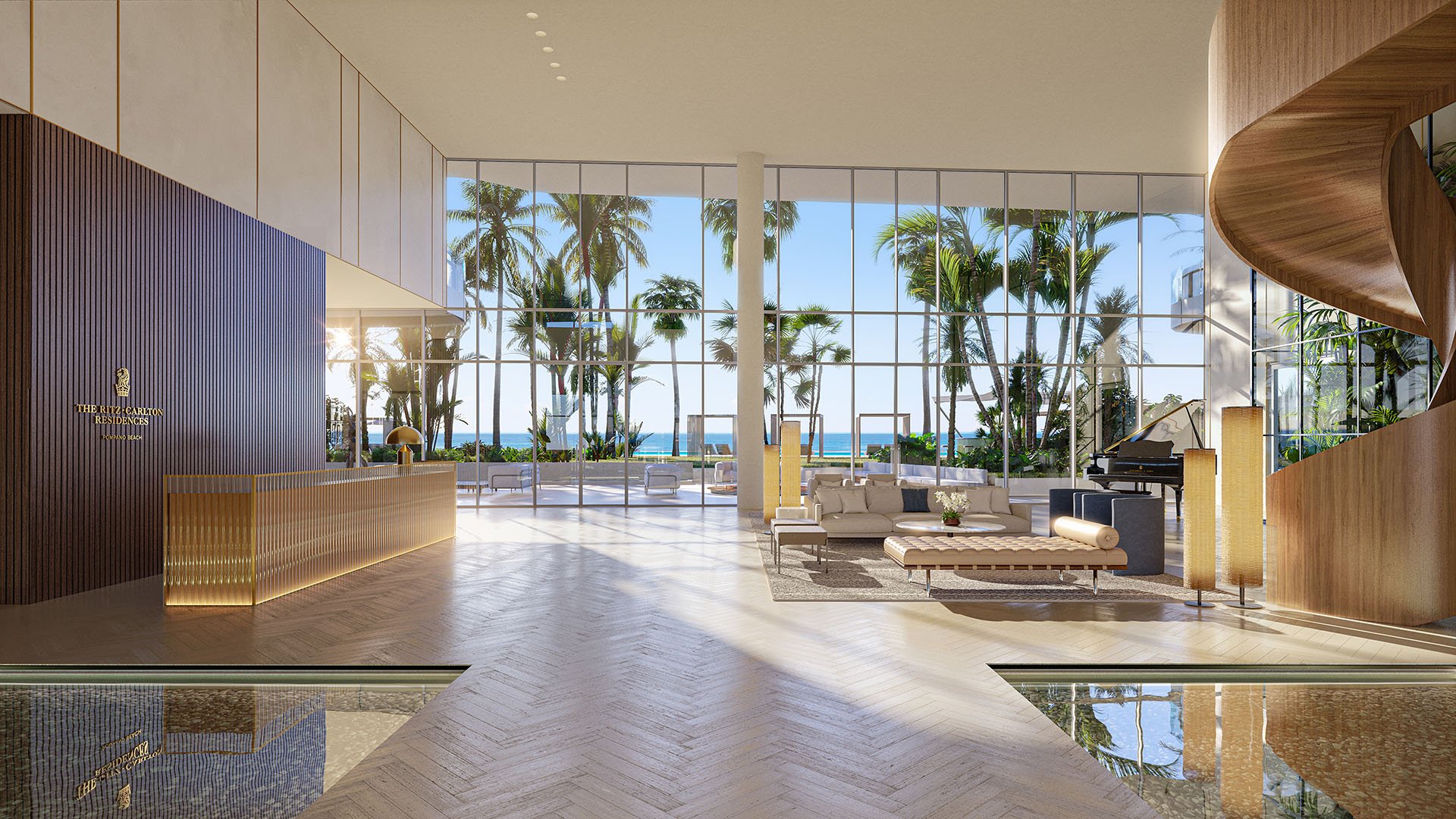
If branded residences are on your mind — as a home or as an allocation — we would be glad to share what we are seeing, privately.
Begin a quiet conversation