For Alina owners planning an art installation, the essential questions concern unit-specific approvals, verified wall capacity, vendor insurance, and delivery access. A finished residence and an art-oriented streetscape do not establish the rules for a private collection.
An art collection brings a distinctly personal dimension to a luxury residence. At Alina Residences Boca Raton, the ownership question extends beyond where a work looks best. Its attachment, installation team, and delivery plan must also be appropriate for the particular residence and its governing association.
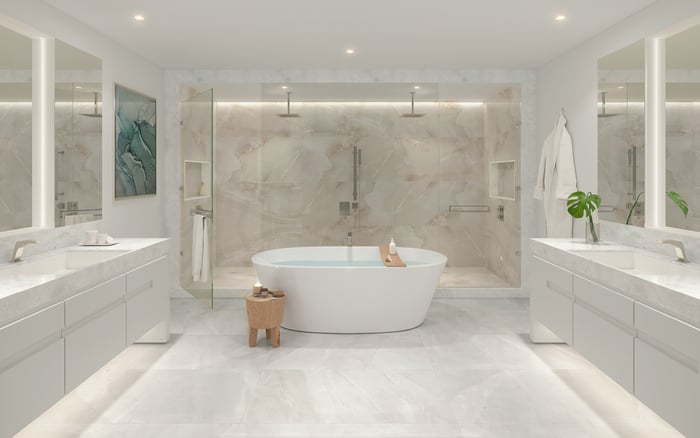
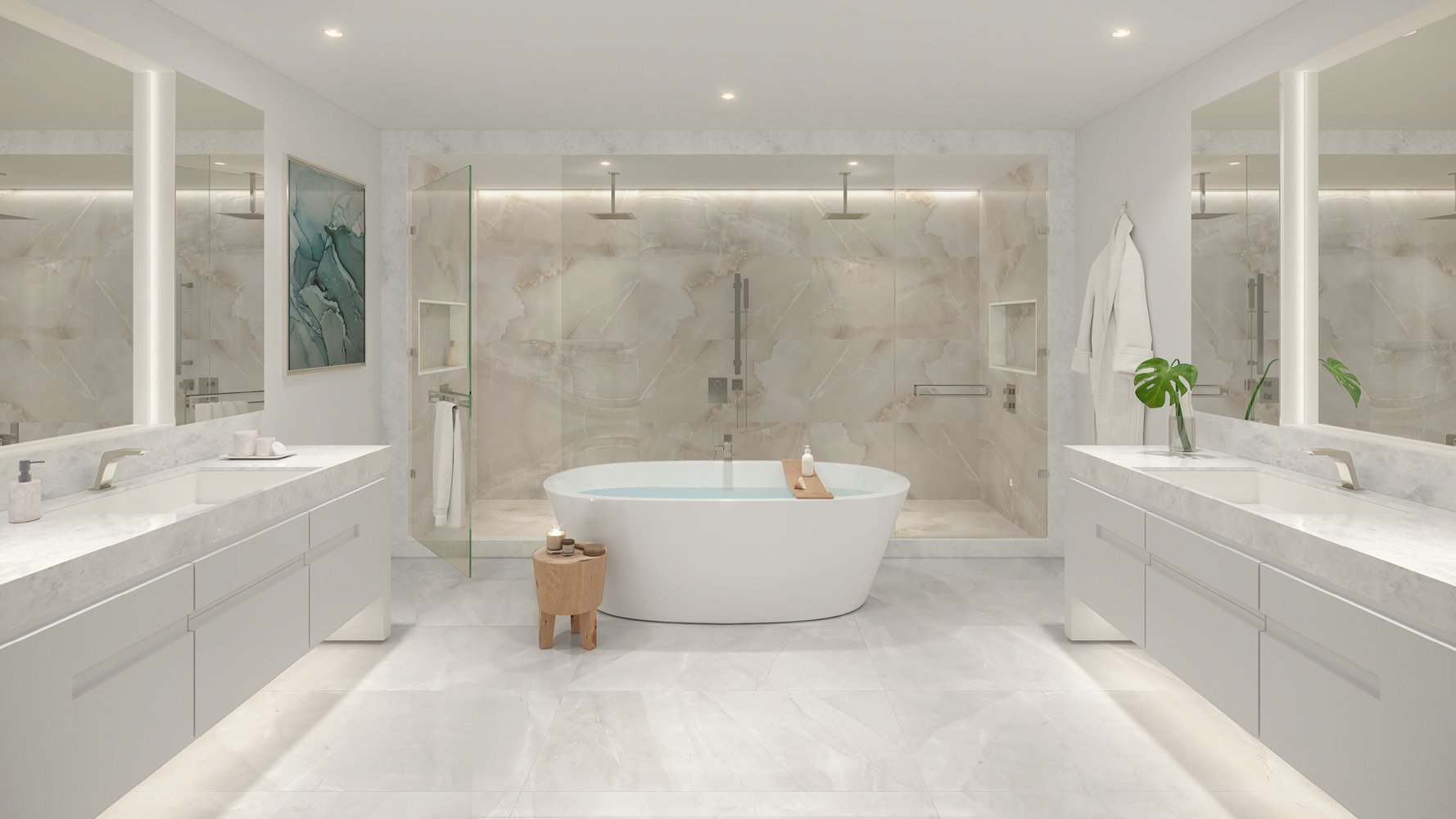
Alina’s residences are described as delivered fully finished, with flooring options that include 24-by-48-inch porcelain and hardwood. Living-area ceilings reach up to 11 feet in some residences; that height is not a universal specification. These details inform scale and placement. They do not establish wall capacity or authorize drilling, anchoring, or other modifications.
For a long-term owner, three distinct questions deserve written answers: what approval is required, what the wall can accommodate, and what insurance the installation vendor must provide. A fourth-whether the artwork can reach the residence safely-should be resolved before shipping.
Alina’s public-facing art program includes sculpture installations along the Southeast Mizner Boulevard promenade. That streetscape provides an artistic context, not an approval framework for work inside an individual residence. The presence of sculptures outside should not be treated as permission for an interior installation.
The distinction matters most when a piece requires more than conventional placement. Ask management whether the proposed installation is considered decorative work or an alteration, who has authority to approve it, and what documentation is required. Describe the installation precisely rather than relying on the general phrase “hanging art.”
Improvements, designs, and construction at Alina are subject to appropriate federal, state, and local permits and approvals. That requirement does not establish a specific condominium-association procedure for owner artwork. Ask separately whether the proposed installation requires an association decision, an engineer’s attachment detail, or a governmental permit.
Start with the exact building, phase, association, and unit. Request the applicable governing documents, alteration policy, delivery packet, and current vendor-insurance requirements. The objective is to understand the rules governing the proposed installation, not infer them from the development’s presentation.
A useful request specifies the artwork’s dimensions and weight, intended location, attachment method, and vendors involved. Ask management what must be submitted and whether review is required before scheduling the installer. These are due-diligence recommendations, not a confirmed Alina approval sequence.
For buyers also considering Glass House Boca Raton, the same questions can structure a comparison without implying that the properties share policies. Keep each residence’s answers separate. Approval at one address should not be assumed to satisfy another property’s requirements.
The visual relationship between a work and a room is only part of the decision. Do not assume a universal numeric wall-loading limit for Alina residences, whether expressed as pounds per anchor or allowable attachment weight. Confirm the appropriate limits for the specific installation before selecting hardware.
Seek written confirmation addressing the actual wall construction, artwork weight, anchor method, and load distribution. Ask how concealed utilities will be identified and whether the location involves a rated or shared wall with additional restrictions. Where appropriate, ask whether an engineer should assess the proposed attachment.
A generous ceiling height answers none of these questions. Neither does the visible wall finish. The aim is to assess the installation at its intended location, rather than let aesthetic confidence substitute for technical confirmation.
Obtain the applicable association’s current Certificate of Insurance instructions, minimum limits, and additional-insured wording before committing to an installation date. Do not assume that insurance requirements are absent simply because they have not been supplied to you.
Ask which entities must be insured, which policy types and limits are required, and whether endorsements must accompany the certificate. Confirm the certificate holder, submission timing, and treatment of subcontractors. Have the vendor address those instructions directly; do not assume a certificate prepared for another building will be accepted.
Keep this administrative review separate from the installation review. Ask management to confirm both the vendor documentation and any approval required for the work itself. A collector’s preferred installer may know the artwork intimately, but access requirements still need to be resolved for the specific property.
An installation plan begins before the work reaches the wall. Obtain Alina’s applicable service-elevator capacity and delivery-route clearance specifications directly before arranging shipment of oversized artwork.
Verify elevator dimensions and capacity, route clearances, loading arrangements, permitted hours, and any reservation or deposit requirements. Ask what protective coverings are required. Give management and the delivery team the transport dimensions-including the crate where applicable-not just the artwork’s display dimensions.
The porcelain and hardwood flooring options make protection a sensible part of the planning discussion, but they do not establish a building-specific protection standard. Ask for the applicable instructions. Resolving the route and access conditions in advance lets the installation team plan around confirmed constraints rather than discover them on arrival.
Long-term ownership should accommodate more than the first installation. A collection may be rehung, moved, or expanded. Consider keeping written decisions, attachment details, vendor documentation, and delivery instructions together so that a later project begins with a clear record.
Treat that record as a reference, not a permanent authorization. Before another installation, ask whether the proposed change requires fresh review and whether access or insurance requirements have changed. A heavier work or different attachment method warrants its own questions, not reliance on an earlier answer.
Buyers weighing The Residences at Mandarin Oriental Boca Raton alongside Alina can apply the same discipline during due diligence. The useful comparison is the clarity of each property’s written requirements, not an assumed equivalence between them.
For an Alina collector, the prudent approach is specific rather than restrictive: identify the governing association, clarify the approval requirement, verify the proposed wall attachment, confirm vendor insurance, and establish the delivery route. None of those answers should be inferred from a finished interior or the promenade’s sculpture program.
Written confirmation gives the owner, designer, and installer a shared basis for planning. The result is an art installation conceived for the residence as it actually operates, with practical details resolved before the collection arrives.
Explore South Florida residences with MILLION to bring the same considered approach to your next ownership decision.
If branded residences are on your mind — as a home or as an allocation — we would be glad to share what we are seeing, privately.
Begin a quiet conversationYes. Flooring options include 24-by-48-inch porcelain and hardwood, but finished delivery does not establish permission for owner modifications.
The stated height is up to 11 feet in some residences, not a universal specification. Confirm the dimensions of the particular residence.
The public-facing sculpture program should not be treated as permission for an interior installation. Confirm the applicable association’s requirements separately.
Do not assume a universal numeric limit. Seek written confirmation for the proposed wall, artwork, and attachment method.
Ask whether the work is decorative or an alteration, who must approve it, and whether an engineer’s detail or governmental permit is required.
Governmental permits and association approvals are separate questions. Ask management to confirm the applicable association procedure for the proposed installation.
Confirm wall construction, artwork weight, anchoring, load distribution, concealed utilities, and any rated or shared-wall restrictions.
Request the applicable association’s current minimum limits, certificate-holder details, and additional-insured wording. Ask whether endorsements and subcontractor documentation are also required.
Verify elevator dimensions and capacity, route clearances, loading arrangements, permitted hours, protective coverings, reservations, and deposits before shipping.
Ask whether the new work requires fresh review and whether current access or insurance requirements differ. Keep previous documentation as a reference rather than assuming it provides continuing authorization.