Five Coconut Grove and Coral Gables condominiums merit a closer look for private-aviation households, with a clear distinction between residential appeal and the financial documentation needed to assess ownership risk.
For a household arriving by private aircraft, the ideal South Florida residence offers more than a beautiful place to land. Privacy, a suitable delivery timeline and manageable ownership obligations deserve equal attention. Coconut Grove and Coral Gables offer distinct residential settings, but choosing among them requires separating lifestyle appeal from financial evidence.
The five projects below form an editorial shortlist ordered by development milestones, setting and residential character. They are not ranked by verified reserve strength, insurance transparency or protection against special assessments. Those judgments require current association documents-not architectural distinction or construction financing.
The private-island setting of Vita at Grove Isle illustrates the lifestyle appeal. Yet even a completed waterfront residence requires a separate review of budgets, reserves and insurance. Private-aviation relevance is likewise a lifestyle consideration here, not a claim of verified airport proximity, transfer times or dedicated aviation services.
1. Vita at Grove Isle: completed private-island setting
At 4 Grove Isle Drive, Vita is a seven-story, 65-residence waterfront condominium on the 20-acre private island of Grove Isle, just offshore of Coconut Grove. Its setting includes a private bridge and access to the island’s marina. Completion in December 2025, with closings underway after issuance of a Temporary Certificate of Occupancy, gives it the clearest delivery milestone on this shortlist.
That milestone, together with its island character, earns Vita first position. It does not establish reserve adequacy or eliminate future assessments. Buyers should distinguish the certainty of a completed building from its ongoing financial obligations.
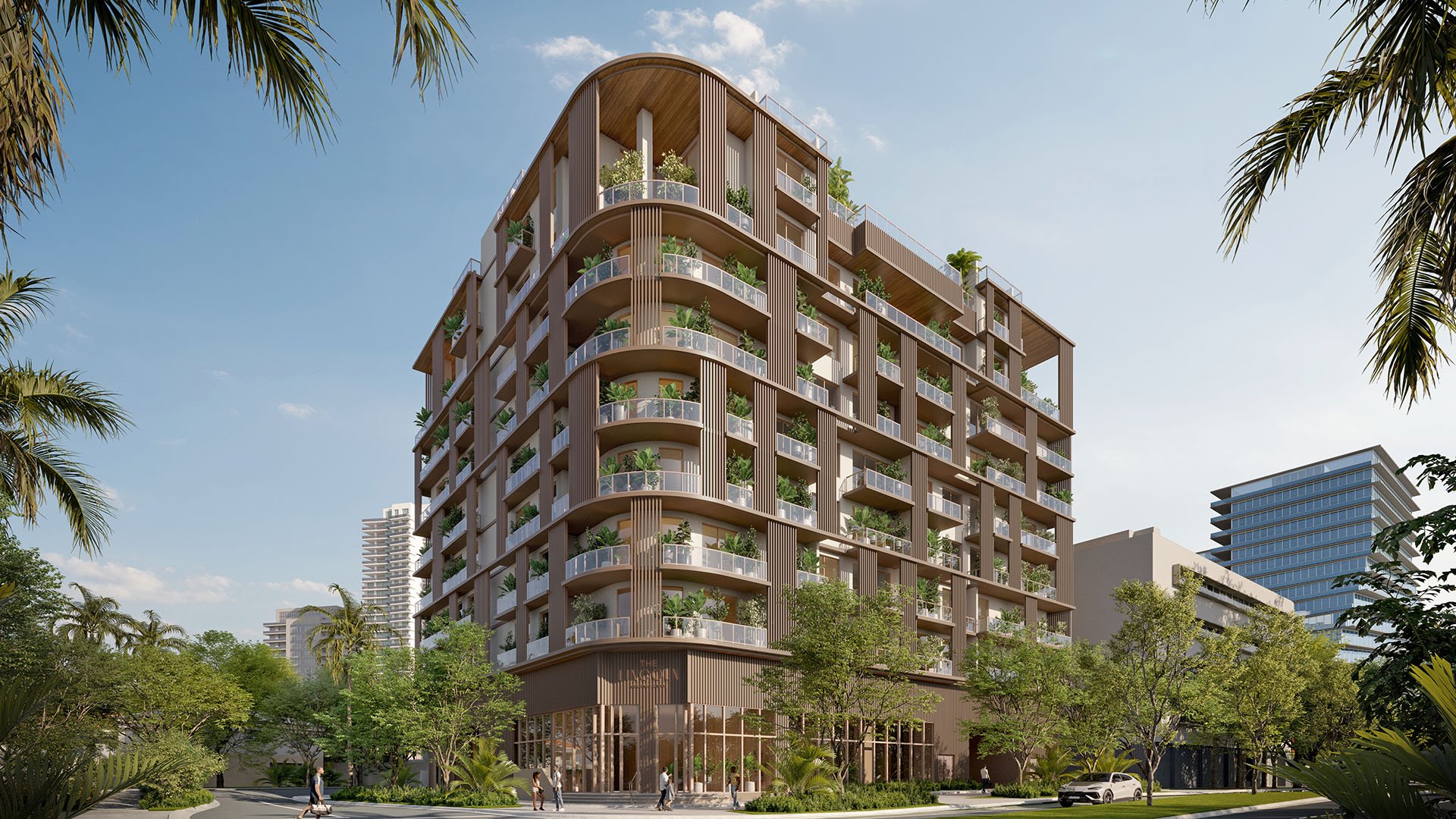
2. The Lincoln Coconut Grove: 48-residence scale
The Lincoln occupies 2650 Lincoln Avenue and comprises 48 residences, with one- to four-bedroom layouts and private balconies. Penthouses extend to 3,633 square feet. A $58 million construction loan was announced on September 4, 2026, marking a dated development-financing milestone.
Its second-place position reflects boutique scale and that financing milestone. For buyers considering a future South Florida base, the distinction matters: construction financing supports development, while association reserves address a separate set of obligations. One is not evidence of the other.
3. Ziggurat Coconut Grove: 19-residence boutique collection
At 3101 Grand Avenue, Ziggurat is marketed as a collection of 19 residences within a mixed-use development. A January 2026 milestone identified $138.5 million in construction financing for the development. Its third-place position reflects the intimacy of the marketed residential offering, not a financial-risk advantage.
Earlier descriptions listed 20 residences and pricing from $2.5 million to $8 million. Those figures are historical, not confirmation of current inventory or pricing. Buyers should verify the final residential configuration and examine how shared expenses are allocated, rather than assume fewer owners mean fewer financial surprises.
4. Ponce Park Residences: Coral Gables new development
Ponce Park Residences, developed by The Allen Morris Company at 3000 Ponce de Leon Boulevard, brings a Coral Gables option to the shortlist. Its June 2026 status was in development or under construction; that dated status should not be treated as a present-day delivery guarantee.
The fourth-place position reflects its location and identified development framework. Buyers should obtain updated construction and delivery information, then distinguish proposed operating assumptions from any established association finances available for review.
5. THE WELL Coconut Grove: branded new-construction option
THE WELL Coconut Grove rounds out the shortlist as a high-end branded new-construction condominium. Its position is provisional, with less established project detail than the other entries. Branding gives it a distinct residential identity but does not substantiate reserve funding, policy terms or future assessment exposure.
For buyers drawn to a branded residence, financial review should accompany lifestyle evaluation. No conclusion about operating-cost predictability should rest on the name alone.
Begin with the latest Structural Integrity Reserve Study, reserve schedule, annual financial statements and current association budget. Read them together. The central question is whether planned contributions and available funds support the identified obligations-not simply whether a reserve account exists.
For a development-stage purchase such as The Lincoln Coconut Grove, ask which figures are projections and which reflect established operations. Have your advisers reconcile assumptions across the documents rather than compare monthly dues in isolation.
Boutique scale deserves equally careful scrutiny. At Ziggurat Coconut Grove, the marketed 19-residence count describes residential scale, not financial resilience. Ask how costs are assigned between uses and owners, and which obligations fall within the residential budget. The objective is clarity about responsibility, not reassurance through size.
Insurance premiums and structural reserve funding are separate financial obligations. A lower premium does not remove a reserve contribution or rule out a special assessment. A useful review therefore treats insurance and reserves as distinct components of the ownership budget.
Request current policies, coverage limits, deductibles and renewal information, and have an insurance adviser explain their implications. For a development-stage residence, ask whether the insurance figures presented are estimates or terms applicable to the eventual association.
When evaluating Ponce Park Coral Gables, maintain that distinction between projected costs and established obligations. No project on this shortlist should be considered financially safest without a project-specific review of reserves, insurance and assessment history.
A special assessment is separate from monthly dues and covers expenses not met by the regular budget or reserves. Request each assessment’s purpose, amounts paid, remaining balances, payment arrangements and associated proposed projects. Have counsel clarify any obligations relevant to the purchase.
Apply the same discipline to THE WELL Coconut Grove as to the completed and boutique alternatives. New construction and branding cannot substitute for that review. Ask which costs are established, which remain estimates and what additional documentation is needed before committing.
For private-aviation users, evaluate the home and the journey separately. Ask your aviation and ground-transport teams to test the actual itinerary rather than infer convenience from a neighborhood name. Confirm property arrangements that matter during absences instead of assuming a particular service model.
The strongest choice will align residential preference with documented financial obligations and a workable travel routine. This shortlist offers five starting points, not five promises of assessment-free ownership.
Explore these residences and refine your South Florida shortlist with MILLION.
If branded residences are on your mind — as a home or as an allocation — we would be glad to share what we are seeing, privately.
Begin a quiet conversationNo. The order reflects development milestones, setting and residential character, not verified reserve adequacy, insurance terms or assessment risk.
Its private-island waterfront setting and December 2025 completion provide a clearer delivery milestone than the development-stage alternatives. Completion does not establish protection from future assessments.
It establishes a development-financing milestone announced on September 4, 2026. It does not establish the adequacy of association reserves.
Ziggurat is marketed as a 19-residence collection. Earlier descriptions referenced 20 residences, so buyers should confirm the final configuration.
Its June 2026 development snapshot placed it in development or under construction. Buyers should obtain updated construction and delivery information.
No. Branding does not substantiate reserve balances, insurance terms or future assessment exposure.
Request the latest Structural Integrity Reserve Study, reserve schedule, annual financial statements and current association budget. Review them together rather than relying on monthly dues alone.
A special assessment is a charge separate from monthly dues for expenses not met by the regular budget or reserves. Buyers should review its purpose, paid amounts, remaining balance and payment arrangements.
No. Insurance premiums and structural reserve funding are separate obligations, and lower premiums do not eliminate the possibility of special assessments.
No specific airport distances, transfer times or aviation services are established here. Buyers should evaluate their actual itinerary independently of the residential shortlist.