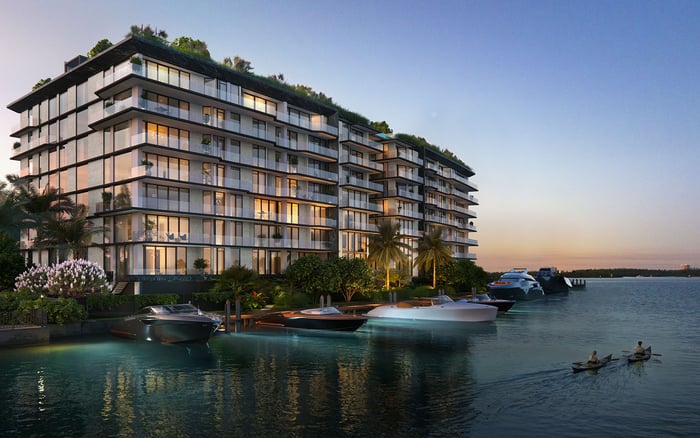
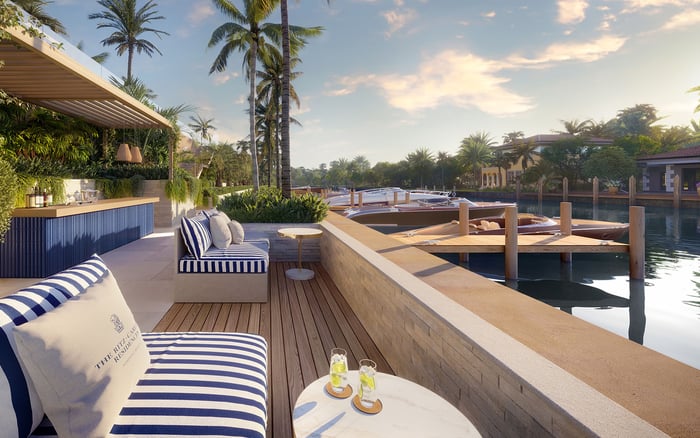
Five luxury condominium projects offer distinct starting points for art collectors in Bay Harbor Islands and North Bay Village. This editorial shortlist pairs pricing, scale, and design positioning with the water-system and outage questions buyers should resolve before committing.
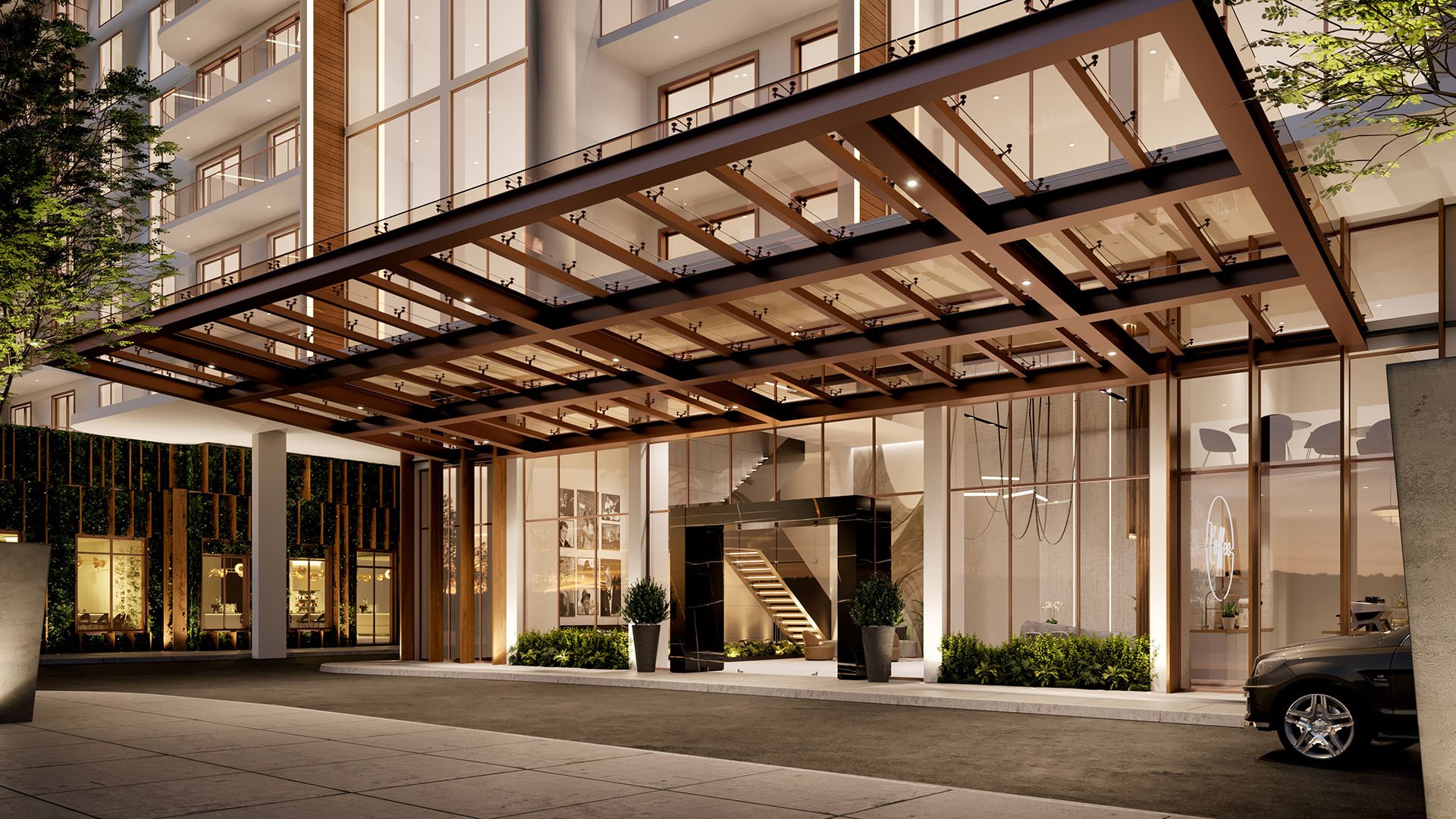
For an art collector, a waterfront condominium must satisfy two distinct briefs: how beautifully it accommodates a collection, and how clearly its operating plans address interruptions. Architecture, privacy, and penthouse scale may inspire desire. Water pressure, pump redundancy, and documented emergency-power coverage warrant a separate review.
The five projects below are ranked by reported pricing, boutique scale, and design positioning-not verified engineering performance. None is presented here as offering a confirmed conservation-grade environment, backup climate control, or tested water-system resilience. The distinction matters: a compelling residence invites due diligence; it does not replace it.
1. Pagani Residences - North Bay Village
Pagani leads this shortlist on pricing, with reported entry pricing around $3.7 million and two duplex penthouses carrying reported asking prices of $30 million and $28.5 million. These are the highest disclosed asking figures in this selection, not evidence of completed transactions or current availability.
Penthouse buyers should pair that upper-end positioning with equally exacting questions about domestic-water pressure at the intended residence. Request the applicable pressure zone, booster-pump arrangements, and emergency-power coverage. Neither price nor duplex format establishes how water service or private climate control would perform during an outage.
2. Tula Residences - 7918 West Drive, North Bay Village
Tula combines a Biscayne Bay waterfront address with a 21-story, 54-residence format. Its marketed inventory includes six penthouses, corner-only layouts, and a maximum of four residences per floor across part of the residential stack. A reported price range of approximately $2 million to $7 million provides context, not confirmation of current availability.
Boutique scale is the attraction here. For collectors considering an upper-floor home, the next step is to establish the engineering conditions serving that floor. Fewer residences should not be taken to mean better pressure, stronger redundancy, or more extensive backup power.
3. La Baia South - 9201 East Bay Harbor Drive, Bay Harbor Islands
La Baia South is described as a 68-residence waterfront development, with marketed amenities including a private marina, residents’ club, dockside areas, and boat slips available for purchase. Its place in the ranking reflects an emphasis on privacy and entertaining as an alternative to larger towers.
For a collector drawn to that waterfront setting, the practical review should cover flood elevations, waterproofing details, sump-pump capacity, and discharge arrangements. Ask explicitly about restrictions on lower-level artwork storage. Marina access is a lifestyle attribute, not a demonstrated water-management advantage.
4. Bay Harbor Towers - Bay Harbor Islands
Bay Harbor Towers earns its place through Kobi Karp architecture, interiors by Steven G, and marketed features that include turnkey residences, a private marina, and rooftop amenities. Its appeal is design-led; those attributes establish no engineering superiority.
Turnkey presentation should therefore prompt a second, less visible inspection. Before planning an installation, request written confirmation of any backup coverage for private-unit HVAC, dehumidification, leak detection, security, and dedicated art-storage equipment. Review each system separately rather than assuming a furnished residence includes collection-specific protection.
5. Shoma Bay - 1850 John F. Kennedy Causeway, North Bay Village
Shoma Bay is the larger-scale option in this selection, described as a 21-story, 333-unit development. The contrast with Tula’s smaller residence count gives buyers a different scale to evaluate, but establishes no difference in outage performance.
The key questions concern operating priorities: which pumps receive emergency power, what loads the generator supports, and how residents are informed when service is restricted. Size alone does not demonstrate superior redundancy, longer runtime, or uninterrupted service to a private residence.
A buyer considering Tula Residences North Bay Village should make the water-system review specific to the proposed home. The same discipline applies to every upper-floor candidate on the shortlist.
Request domestic-water riser diagrams, pressure calculations, booster-pump schedules, pressure-zone boundaries, and pressure-reducing-valve schedules. Ask the building’s engineering team to identify which provisions apply to the residence and what service is intended under normal and emergency conditions.
Keep the answers distinct. Pressure calculations, standby pump capacity, and emergency-power connections address different questions. A general assurance of reliable service should not replace documentation addressing all three.
At Shoma Bay North Bay Village, as at the other candidates, ask about domestic-water and drainage pumps separately. Request confirmation of duty/standby arrangements, automatic controls, alarms, and emergency-power connections. Ask how those arrangements would operate during a power interruption.
Then obtain the generator load list, fuel-duration assumptions, and refueling arrangements. A runtime statement is meaningful for the buyer’s intended use only when accompanied by its load assumptions. Confirm elevator restrictions and the resident communications procedure alongside the mechanical details.
For the collection itself, seek written answers about private-unit HVAC, dehumidification, leak detection, security, and dedicated storage equipment. Emergency power for building systems does not confirm coverage for those private systems. Establish what remains operational, what does not, and whom the owner contacts when conditions change.
Waterfront living and a carefully composed interior can be compelling reasons to consider Bay Harbor Towers. The acquisition review should nevertheless separate design credentials from the provisions governing water intrusion and service continuity.
For a Bay Harbor Islands residence, request the relevant flood elevations and waterproofing details, along with sump-pump capacity and discharge arrangements. Include any proposed storage area in that discussion-not merely the principal rooms where art will be displayed. Ask whether lower-level storage restrictions would affect the collection plan.
The objective is not to turn a viewing into an engineering inspection. It is to identify which questions require written answers before the residence is selected for valuable works.
Use this ranking to distinguish the candidates: Pagani for its pricing position, Tula for boutique scale, La Baia South for its marina-oriented setting, Bay Harbor Towers for design, and Shoma Bay for larger scale. Then compare the documentation, not the adjectives.
The strongest choice for an individual collector is the residence whose confirmed operating provisions align with the intended collection and ownership plans. Unresolved pressure, power, or storage questions should remain explicit purchase considerations, not assumptions concealed by beautiful finishes.
Explore your next South Florida residence with MILLION.
If branded residences are on your mind — as a home or as an allocation — we would be glad to share what we are seeing, privately.
Begin a quiet conversationNo. The ranking reflects reported pricing, boutique scale, and design positioning, not verified pressure, pump redundancy, or outage performance.
Its reported entry pricing around $3.7 million and duplex penthouse asking prices of $30 million and $28.5 million give it the highest disclosed pricing position in this shortlist.
Tula is a 21-story, 54-residence waterfront condominium at 7918 West Drive. Its marketed offering includes six penthouses and corner-only layouts.
A reported range is approximately $2 million to $7 million. These figures are pricing context, not confirmation of current availability.
The 68-residence waterfront development markets a private marina, residents’ club, dockside areas, and boat slips available for purchase.
Its described features include Kobi Karp architecture, interiors by Steven G, turnkey residences, a private marina, and rooftop amenities.
No. Its described 21-story, 333-unit scale does not establish superior pump redundancy, generator runtime, or private-unit backup coverage.
Request domestic-water riser diagrams, pressure calculations, booster-pump schedules, pressure-zone boundaries, and pressure-reducing-valve schedules applicable to the intended residence.
Seek written confirmation for private-unit HVAC, dehumidification, leak detection, security, and dedicated art-storage equipment. Also review generator loads, fuel-duration assumptions, and refueling arrangements.
Request applicable storage restrictions, flood elevations, waterproofing details, sump-pump capacity, and discharge arrangements. None of the five projects is established here as providing conservation-grade storage.