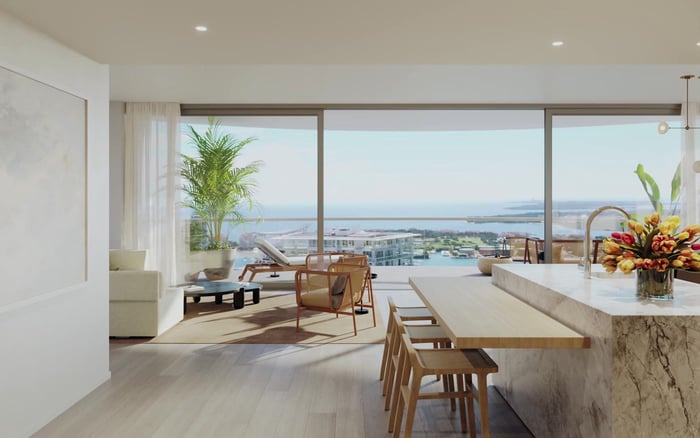
Five Miami-Dade residences offer useful starting points for buyers comparing lock-and-leave living, private family space, guest accommodations, and possible caregiver access. Building documents and current operating rules should guide the final decision.
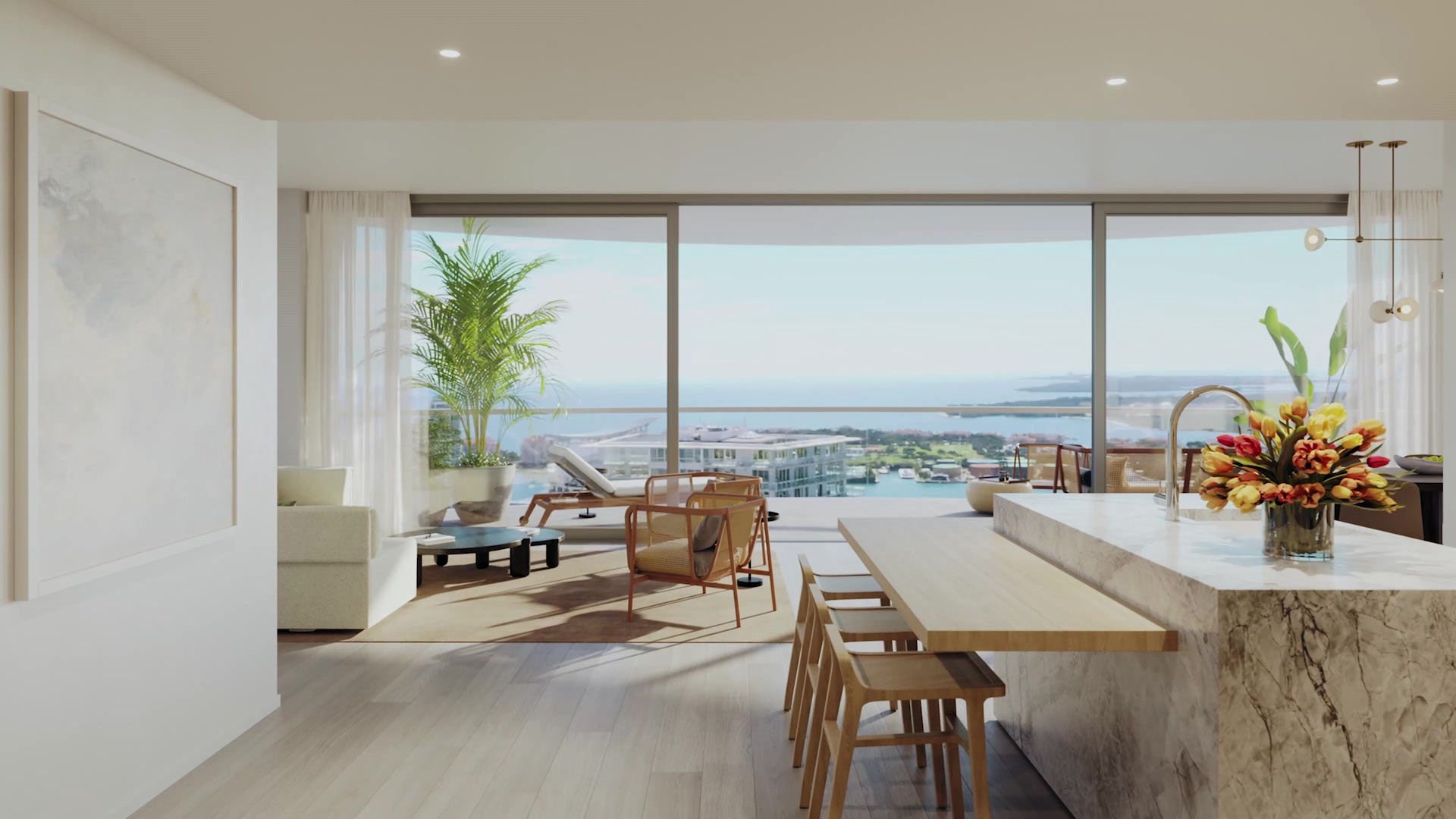
For a multigenerational household, lock-and-leave living involves more than securing a residence before departure. The layout, management structure, guest-accommodation options, and access procedures must also support privacy when relatives visit or a caregiver needs to be nearby.
A buyer should distinguish between space inside the residence, a reservable building suite, and separate hospitality accommodations. These arrangements are not interchangeable, and none should be assumed without reviewing current project documents and operating terms.
The following properties are useful starting points for a Miami-Dade search. Inclusion is not confirmation that a project provides a guest suite, permits caregiver occupancy, or guarantees accommodation availability.
This Miami Beach project belongs on the comparison list for buyers considering a primary or seasonal residence near family activities on the barrier island. Due diligence should establish whether the available residence layout and current guest arrangements fit the household’s privacy plan.
Buyers considering this project should compare its residence configurations and management framework with the expected frequency and duration of family visits. Any guest-accommodation or caregiver-access provision requires written confirmation.
3. St. Regis Bal Harbour Resort & Residences
This Bal Harbour option may be considered by households that want to evaluate a residential setting alongside nearby hospitality services. Buyers should verify which services are available to owners, which accommodations require separate reservations, and what terms apply.
4. The Residences at Six Fisher Island
This Fisher Island project provides a point of comparison for families assessing privacy, access logistics, and separate accommodations. The review should address how relatives, household staff, and caregivers enter the property and whether any relevant lodging is independently operated.
5. The Residences at 1428 Brickell
This Brickell project can help buyers evaluate how an urban location fits work, appointments, and family routines. The residence itself, rather than an assumed shared amenity, should first satisfy the household’s requirements for separation and privacy.
Ask for the current governing documents and written operating terms that address guests, access credentials, reservations, fees, cancellations, pets, and maximum stays. If a caregiver may use separate accommodations, obtain written confirmation that the intended occupant and length of stay are permitted.
Availability also matters. A reservable room has limited practical value if booking windows, seasonal demand, or stay restrictions conflict with the family’s usual schedule. Buyers should determine who controls reservations and whether procedures can change.
The residence layout deserves equal attention. Separate bedroom zones, bathrooms, entrances, or service circulation may improve privacy, but buyers should rely on the specific floor plan and completed-condition inspection rather than a general project description.
A household hosting occasional weekend visitors may prioritize differently from one expecting regular caregiving support. Before selecting a property, map the likely occupants, visit frequency, desired separation, mobility considerations, transportation needs, and backup lodging plan.
The strongest choice is the residence whose documented rules and physical layout work together. Legal, association, hospitality, and service arrangements should be reviewed independently before a buyer relies on them.
What does lock-and-leave mean for a multigenerational household? It describes a residence intended to be manageable when owners are away while still supporting practical privacy and access when family members visit.
Is a guest suite automatically included with a condominium? No. Buyers should confirm whether one exists, how it is controlled, and whether its use requires a separate reservation or fee.
Can a caregiver use a building guest suite? Only if the applicable rules and management procedures permit that occupant and intended stay.
Should buyers rely on an amenity list? No. Current governing documents and written operating terms are more useful for confirming access, eligibility, costs, and restrictions.
What reservation details deserve review? Buyers should examine booking windows, stay limits, cancellation terms, availability procedures, fees, and the party responsible for administration.
Why is the residence layout important? The specific floor plan determines whether family members can maintain suitable separation inside the home when outside accommodations are unavailable.
Are hotel rooms equivalent to resident guest suites? Not necessarily. They may have different booking channels, availability, pricing, access rules, and cancellation terms.
How should seasonal demand affect the decision? Buyers should test whether expected visit dates align with the accommodation’s actual reservation process and likely availability.
What should be confirmed for pets or mobility needs? Obtain written terms for animals, accessibility, entry procedures, and any assistance the household expects to use.
What is the best way to shortlist comparable options for touring? Start with location fit, delivery status, and daily lifestyle priorities, then compare stacks and elevations to validate views and privacy.
For a tailored shortlist and next-step guidance, connect with MILLION.
If branded residences are on your mind — as a home or as an allocation — we would be glad to share what we are seeing, privately.
Begin a quiet conversation