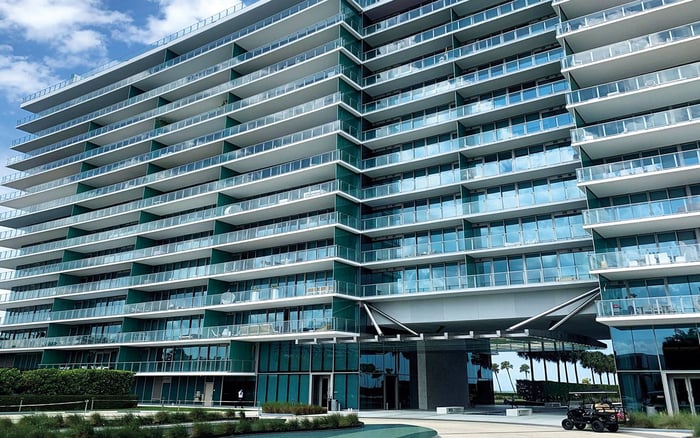
A discreet buyer’s guide to coordinating financial verification, entity authority, regulatory reporting, wire security, and practical privacy before a Key Biscayne closing.

A branded residence closing in Key Biscayne brings financial verification, entity governance, title requirements, regulatory questions, and personal privacy into the same process.
For a Key Biscayne buyer, discretion calls for careful coordination. Before execution, review how the contract buyer, anticipated deed name, source of funds, signer authority, lender requirements, and title company procedures fit together. That approach applies whether the search centers on Oceana Key Biscayne or includes comparisons with other residences across South Florida.
Ask the seller or developer, in writing, which proof-of-funds formats it will accept. Confirm the required amount, issue date, account identification, currency treatment, and whether the document must name the proposed purchasing entity.
Also ask which details may be redacted and who will review any unredacted information. If the buyer wants to conceal unrelated balances, account numbers, transaction history, or other holdings, obtain approval for the proposed redactions rather than assuming they will be accepted.
Buyers comparing The Residences at Mandarin Oriental, Miami should still confirm the requirements for the specific Key Biscayne transaction.
Ask whether the reviewing party needs only evidence of funds available for closing or also documents explaining where the purchase money originated. Confirm what period the review covers and whether transfers among trusts, entities, custodians, or family accounts require additional records.
Request a secure submission method and a named recipient. Ask whether documents may be shared with the seller, developer, title company, lender, association, outside counsel, or a regulatory authority. If clarification may be needed, identify who should contact the buyer’s attorney or family office and establish the expected response process.
The objective is an orderly record that answers the transaction’s requirements while limiting unnecessary circulation of sensitive material.
If an LLC or trust is being considered, ask Florida counsel to explain the financing, estate-planning, asset-protection, tax, administrative, and privacy implications for the buyer’s circumstances. The intended purchaser should be reviewed before the contract is signed.
Ask the title company which formation documents, governing instruments, resolutions, certificates, tax records, authority evidence, or trust excerpts it expects. Then confirm who may sign the contract, closing statement, lender documents, deed-related instruments, and post-closing association materials.
This coordination also matters when comparing a Key Biscayne purchase with Four Seasons Residences Coconut Grove. The purchase agreement, title file, ownership structure, and signer authority should be reviewed together, with counsel addressing any continuing administration after closing.
A financed buyer should ask whether the lender permits the proposed LLC or trust structure, whether title may be taken in the preferred name, and whether a personal guarantee or alternative borrower will be required. Address these questions before the contract identifies the buyer so that lender conditions can be considered alongside the closing documents and privacy plan.
A cash buyer should still ask what private compliance disclosures may be required. The absence of mortgage financing should not be treated as a promise that no ownership information will be requested.
Before signing, ask the title company whether the proposed Key Biscayne acquisition triggers beneficial-owner or other regulatory reporting. Have the title company and the buyer’s counsel identify the information required for this transaction rather than relying on assumptions.
Ask which ownership and identification records will be collected, who may access them, where they will be stored, how they will be transmitted, whether outside vendors are involved, and what retention or deletion practices apply. Buyers also comparing The Ritz-Carlton Residences® Miami Beach should keep public-record visibility separate from confidential disclosure to authorized parties.
Request a concise memo identifying what will be recorded publicly, retained privately, delivered to the association or management, supplied to a lender, and reported to regulators. Review any building application, insurance requirement, management record, resident directory, access system, parking record, utility account, and service account separately from title and government filings.
The privacy plan should identify each anticipated disclosure, its recipient, the transmission method, and any applicable retention practice. Counsel can then assess which steps are appropriate and legally available for limiting unnecessary exposure.
Ask the title company to explain its wire-verification protocol before funds are sent. Verify instructions independently through a trusted contact method obtained separately, confirm the recipient and account details, and repeat the verification process if instructions change.
What should I ask about a proof-of-funds letter? Request written guidance on the required amount, date, account naming, currency treatment, format, and permitted redactions.
Can an attorney, bank, or custodian provide the letter? Ask the seller or developer which issuers it will accept before relying on a particular format.
Are proof of funds and source of funds the same request? Ask the reviewing party whether it needs evidence of closing capacity, an explanation of the money’s origin, or both.
When should the intended purchasing entity be reviewed? Have Florida counsel review the proposed buyer and signer authority before the contract is executed whenever possible.
Which entity documents may be requested? Ask the title company for a transaction-specific checklist covering governing documents, resolutions, certificates, authority evidence, tax records, and any requested trust excerpts.
What should a financed buyer confirm? Confirm whether the lender accepts the proposed ownership structure, title name, borrower, signer arrangement, and any guarantee requirement.
Should a cash buyer expect privacy questions? Yes. Ask the title company and counsel which private disclosures or reporting requirements apply to the proposed transaction.
What should I ask about beneficial-owner reporting? Request a transaction-specific explanation of whether reporting applies, what information is required, who receives it, and how it will be transmitted.
What belongs in a closing privacy memo? The memo should map public recordings, private files, association or management disclosures, lender records, regulatory reporting, access controls, and record handling.
How should wire instructions be confirmed? Verify them independently through a trusted contact method and repeat the check if any detail changes.
When you're ready to tour or underwrite the options, connect with MILLION.
If branded residences are on your mind — as a home or as an allocation — we would be glad to share what we are seeing, privately.
Begin a quiet conversation