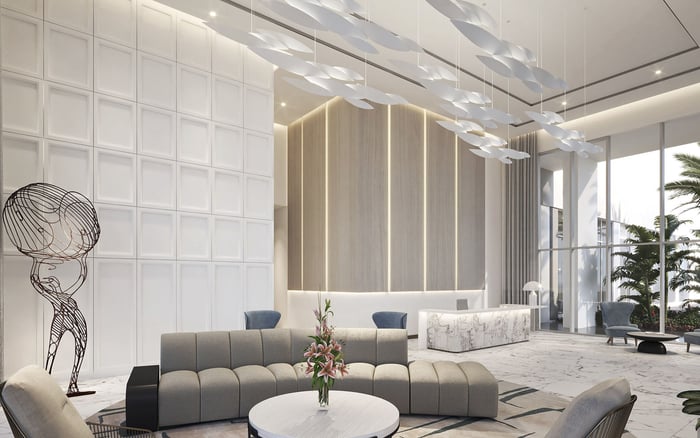
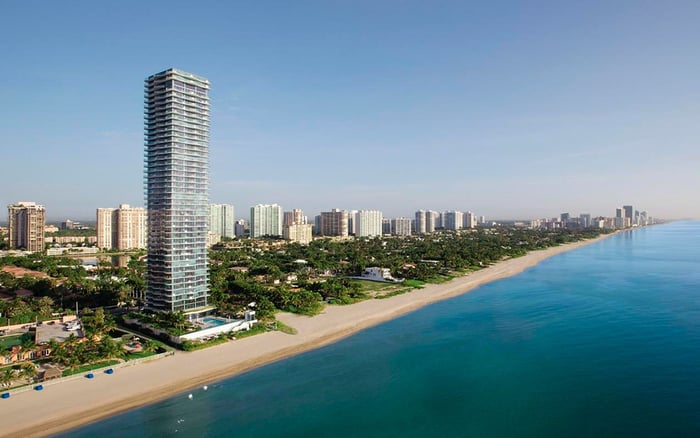
A buyer-focused MILLION guide to evaluating Fort Lauderdale residences through the lens of quiet elevators, short corridors, private foyers, and discreet circulation.
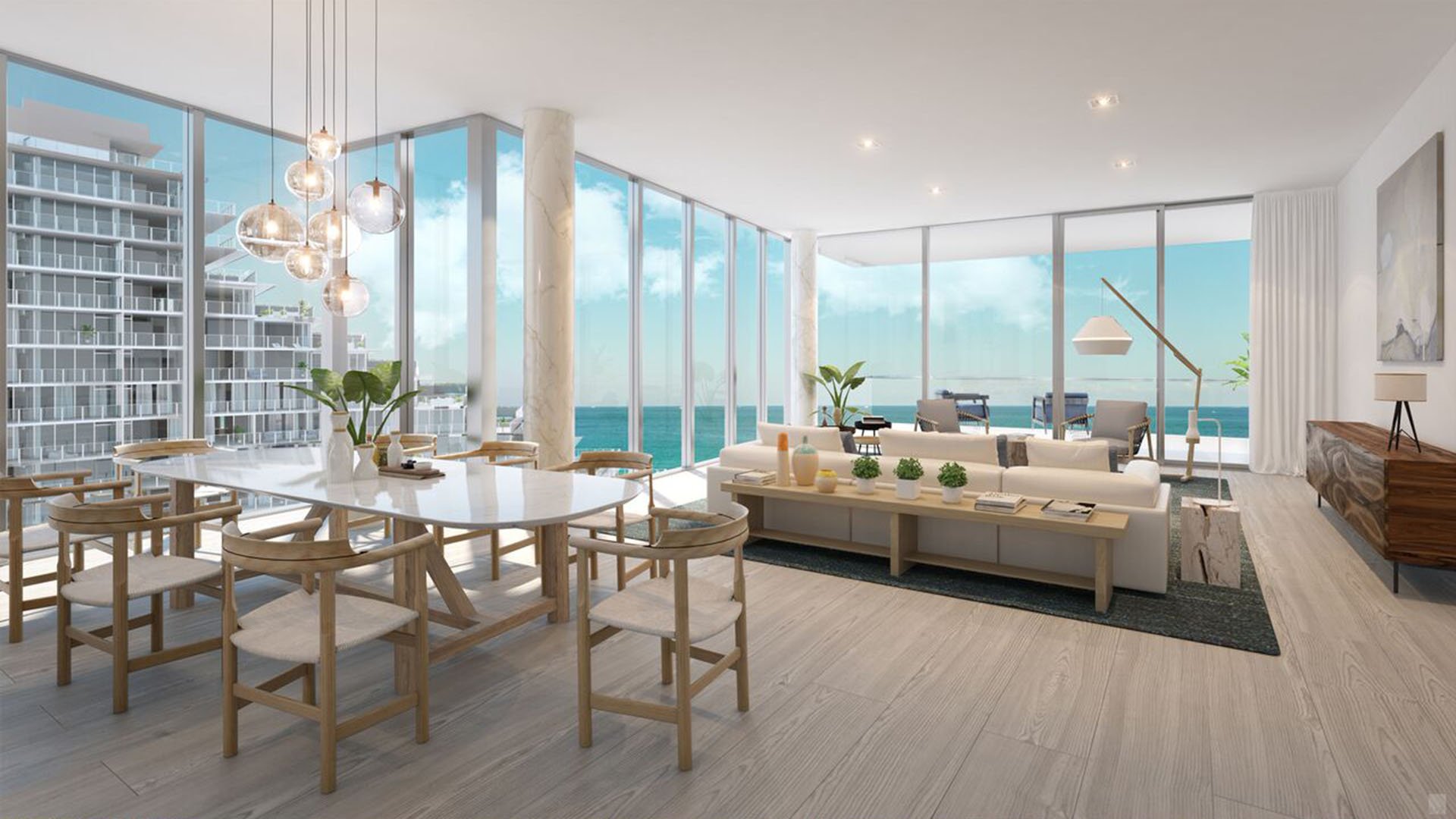
For a certain Fort Lauderdale buyer, the most meaningful luxury is not announced in the lobby. It is felt in the silence between the porte cochere and the front door, in the absence of long, hotel-like corridors, and in the way an elevator ride feels private rather than public. Views, finishes, and amenities still matter, but the most discerning residential decisions increasingly begin with circulation.
Quiet elevators and short corridors are not simply conveniences. They shape how a home lives at 7 a.m., after dinner, during a weekend guest arrival, and in the calm interval between city life and private life. A residence may be beautiful on paper, yet feel compromised if the approach is busy, indirect, or acoustically exposed. In Fort Lauderdale, where waterfront living, yachting culture, and relaxed sophistication define the top end of the market, the best homes often create a sense of retreat before the door even opens.
In local shorthand, Fort Lauderdale and Broward frame a broad luxury conversation, but the buyer question is more precise: how many people share the vertical path, how long is the walk from elevator to door, and how much of that path feels genuinely private?
1. Private-elevator residence - strongest discreet-arrival profile
The most compelling option for buyers focused on quiet elevators is a residence where the elevator experience feels attached to the home rather than shared by the building at large. This profile prioritizes a composed arrival, minimal passing traffic, and a foyer sequence that supports privacy from the first step out of the cab.
A private-elevator residence is especially attractive for owners who entertain, travel often, or value separation between public amenity life and the home itself. The defining question is not whether the elevator is handsome. It is whether the elevator ride, landing, and entry feel calm at the times the owner will actually use them.
2. Low-density boutique residence - best short-corridor profile
A boutique building profile can be highly persuasive when the goal is a short, quiet path home. With fewer residences sharing daily circulation, the walk from elevator to front door is often perceived as more personal, less institutional, and more aligned with a private coastal lifestyle.
For many buyers, this category offers the most balanced expression of discretion. It may not always have the largest amenity program, but it can deliver the daily quiet that larger buildings sometimes struggle to preserve. The strongest examples make corridors feel like extensions of private foyers rather than transitional hallways.
3. Corner residence with a defined foyer - best separation from traffic
A corner residence can support a more settled arrival when its entry is positioned away from the busiest shared path. The key is the relationship between the elevator landing, the corridor turn, and the front door. A well-placed foyer creates a subtle psychological pause, making the home feel set apart even within a larger building.
This profile appeals to buyers who want privacy without necessarily insisting on a fully private elevator. The corridor can be short, but it must also feel intentional. Good design reduces visual exposure, softens acoustics, and avoids the feeling of opening a front door directly into communal movement.
4. Low-floor residence with efficient elevator access - best everyday rhythm
Low-floor residences can be underrated by buyers who initially prioritize height. For those focused on quiet elevator use, a lower position may offer a simpler daily rhythm, especially when paired with an efficient elevator bank and a direct route to parking, lobby, or outdoor amenities.
The advantage is practical rather than theatrical. Fewer stops may mean a smoother arrival at certain hours, while a shorter vertical journey can make everyday life feel easier. Buyers considering this profile should focus less on floor number as status and more on whether the route supports the way they actually live.
5. Waterview residence in a calmer stack - best balance of outlook and privacy
A waterview residence can still satisfy the desire for quiet circulation when the stack is positioned thoughtfully within the building. The ideal profile combines the emotional reward of water outlooks with an arrival sequence that does not feel overexposed, crowded, or overly dependent on long shared corridors.
For many Fort Lauderdale buyers, this is the sweet spot: a home that honors the city’s waterfront character while preserving a refined sense of retreat. The strongest version feels serene in both directions, outward toward the view and inward along the path home.
A floor plan can suggest privacy, but the building experience confirms it. Buyers should pay attention to the first impression after the elevator doors open. Is there a direct line of sight to multiple residences? Does sound carry through the corridor? Is the route intuitive, or does it feel like a passage through a hotel wing?
These details become more important in luxury residences because expectations are higher. A long corridor may be acceptable in a resort setting, but a primary home requires a different level of calm. The best arrival sequences feel edited. They remove unnecessary turns, avoid congested landings, and make the transition from public to private life feel immediate.
New-construction buyers should be especially attentive to drawings, models, and walk-through opportunities. Renderings can emphasize interiors and views, while circulation is sometimes understood only after careful review. In completed residences, an in-person visit at more than one time of day can reveal how the elevator bank and corridor actually function.
Fort Lauderdale luxury has a particular cadence. The city is polished but not frantic, social but not performative. Many buyers arrive from markets where density is accepted as the cost of convenience, then discover that South Florida allows a more graceful alternative. In that context, a quiet elevator is not a small feature. It is part of the promise.
This is especially true for owners who split time between homes. A second residence should feel effortless from the moment of arrival. If the elevator is crowded, the corridor long, or the entry exposed, the home loses some of its restorative quality. Conversely, a short and quiet route can make even a compact residence feel more elevated.
Privacy also affects resale perception. Buyers may not always describe circulation in technical terms, but they recognize when a residence feels composed. They notice whether guests arrive elegantly, whether service movement is discreet, and whether the home has an immediate sense of separation from the building around it.
The most useful test is simple: after leaving the elevator, count not only the steps to the door but also the moments of exposure. A short corridor with poor sightlines can still feel public. A slightly longer path with thoughtful turns, soft lighting, and limited neighboring doors may feel more private.
Buyers should also consider how deliveries, guests, pets, and staff move through the same areas. A serene owner arrival can be undermined if every daily function converges at the same landing. The best buildings choreograph movement so residents experience convenience without constant encounter.
In Fort Lauderdale, where indoor-outdoor living is central, the arrival sequence should also complement the waterfront mood. A residence should not ask the owner to pass through visual noise before reaching a quiet interior. The corridor, elevator, and foyer should prepare the eye for the home, not distract from it.
The right choice is less about chasing a label and more about matching architecture to temperament. Some buyers want a highly social tower with a quieter stack. Others prefer a boutique footprint where fewer neighbors share the same daily path. Some will trade height for ease, while others will accept a longer elevator ride if the landing is private and the corridor abbreviated.
Treat circulation as a primary luxury criterion, alongside view, terrace depth, interior specification, and parking. In the best Fort Lauderdale residences, these elements do not compete. They work together to create a home that feels composed from arrival to retreat.
The quietest residence is not always the most obvious one. It is the one where the building’s daily choreography aligns with the buyer’s private life.
Why do quiet elevators matter in a luxury residence? They shape the daily arrival experience and help the home feel private before the front door opens.
Are short corridors always better? Not always. A short corridor should also have good sightlines, controlled acoustics, and limited shared traffic.
Is a private elevator necessary? It is highly desirable for privacy, but a well-planned shared elevator and landing can also feel discreet.
Can lower-floor residences be more convenient? Yes. Low-floor residences may offer a simpler routine when elevator access is efficient and routes are direct.
What should buyers inspect during a showing? Buyers should observe the elevator landing, corridor length, sound transfer, lighting, and entry sequence.
Do boutique buildings usually feel quieter? They often appeal to privacy-minded buyers because fewer residences may share the same circulation areas.
Can a waterview home still have a private-feeling arrival? Yes, if the stack, elevator landing, and corridor are planned to reduce exposure and unnecessary traffic.
Should circulation affect resale thinking? Yes. A calm arrival can strengthen the perceived quality and livability of a residence.
How many times should a buyer visit before deciding? More than once is wise, ideally at different times, to understand real daily movement patterns.
What is the simplest rule for choosing well? Choose the residence where the path from elevator to door feels calm, short, and naturally private.
For a tailored shortlist and next-step guidance, connect with MILLION.
If branded residences are on your mind — as a home or as an allocation — we would be glad to share what we are seeing, privately.
Begin a quiet conversation