A discreet Coconut Grove buyer’s guide to residences that balance family privacy, flexible daily living, and polished entertaining without relying on spectacle.

For a certain South Florida buyer, the ideal Coconut Grove residence is not defined by scale alone. It is defined by composure. The home must absorb school mornings, visiting relatives, quiet work calls, late lunches, and evening entertaining without forcing every part of life into the same room. That is the standard for residences that support family life without surrendering the pleasure of hosting beautifully.
The most persuasive homes in this category are not merely large. They are layered. They give children and guests places to retreat while preserving a gracious central rhythm for adults, dinners, celebrations, and informal gatherings. In Coconut Grove, where buyers often value privacy, greenery, and a more residential pace, the right plan can feel both grounded and resort-like.
A family-forward entertaining residence should answer three questions at once. Where does daily life happen? Where do guests arrive and gather? Where can everyone disappear when the evening ends? The answer is rarely one grand room. It is usually a sequence of connected zones that can expand or contract as the household changes.
1. Garden-level residence - indoor-outdoor family continuity
The garden-level residence is often the most intuitive choice for buyers who want family life to move naturally into fresh air. Its strength is not only outdoor access, but the ability to make everyday movement feel relaxed rather than staged.
For entertaining, this profile works best when the family area and hosting area are adjacent but distinct. A terrace, lawn-facing lounge, or shaded dining zone can draw guests outdoors while a den or secondary living space remains available for children, quieter relatives, or post-dinner retreat.
2. Full-floor residence - privacy by separation, not distance
A full-floor residence can be especially compelling for families because it offers horizontal separation. Bedrooms, family lounges, dining areas, and service zones can be arranged with a clearer sense of procession than a more compressed plan allows.
The entertaining advantage is discretion. Guests can arrive into a polished social zone without seeing every part of the household. Private rooms remain protected from the noise and visual exposure that can make open-plan living feel tiring over time.
3. Townhouse-style residence - vertical zoning for changing routines
The townhouse format suits buyers who want the feel of a private home with the convenience of a more curated residential setting. Its advantage is vertical logic: one level can support arrival and entertaining, another can hold bedrooms, and another can function as a family retreat, office, or media area.
This configuration is particularly useful for multigenerational schedules. Dinner can continue downstairs while children sleep above, or a guest suite can operate with a sense of independence. The best versions feel connected, not chopped into isolated levels.
4. Penthouse-style residence - entertaining above the daily rhythm
A penthouse-style residence appeals to buyers who want entertaining to feel elevated, literally and socially. It is not only about outlooks or dramatic arrival. It is about creating a setting where the public rooms feel occasion-ready while the family zones remain calm and protected.
For family use, the key is restraint. A residence that overcommits to spectacle can become difficult to live in. The better version includes a secondary family room, flexible study, or quiet bedroom wing, allowing the entertaining spaces to perform without consuming the household.
5. Boutique residence - intimacy, control, and quieter circulation
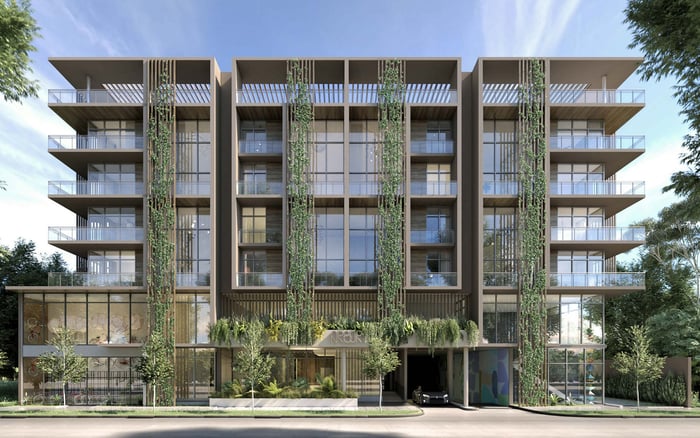
A boutique building or smaller residential setting can be appealing for families who prefer a calmer daily experience. Fewer shared thresholds can create a more private rhythm, which matters when children, guests, staff, and deliveries are all part of the household pattern.
The entertaining value lies in control. A smaller setting can make arrivals feel discreet and personal, while the residence itself carries the social weight through thoughtful rooms, outdoor areas, and a plan that does not require constant negotiation between public and private life.
A family zone is not simply an extra den. It has a job. It should support homework, casual television, play, reading, remote work, and overflow from entertaining without feeling like an afterthought. In the strongest residences, this room is close enough to be useful and separate enough to protect the main salon or dining area from daily clutter.
Buyers should look carefully at transitions. A beautiful great room may photograph well, but if it is the only place to gather, the household will eventually outgrow it. A secondary lounge, media room, or flexible study can preserve elegance in the main rooms while allowing the home to function honestly.
Storage is part of the same conversation. Family life requires places for sports bags, school items, luggage, toys, serving pieces, and seasonal objects. When storage is insufficient, the entertaining areas become storage by default. That is the moment a glamorous residence begins to feel compromised.
The best entertaining residences give guests a clear journey. Arrival, drinks, conversation, dining, and departure should feel natural. At the same time, the family should not have to reorganize the entire home every time people come over.
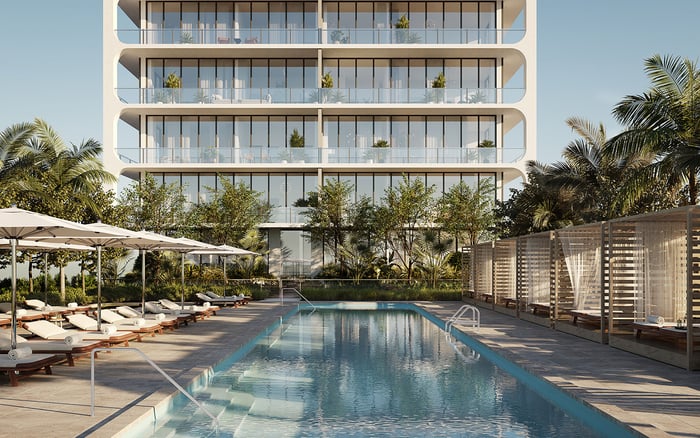
This is where circulation becomes luxury. A powder room that does not require guests to pass bedrooms, a kitchen that can support both family breakfast and catered service, and a terrace that acts as a second living room all help the home perform gracefully. A pool, where present, should feel integrated into the social plan rather than isolated from the residence.
For families, acoustic separation also matters. Entertaining has a sound profile: music, laughter, glassware, catering movement, and late-night conversation. A smart plan anticipates that energy and prevents it from dominating sleeping areas or children’s rooms.
Coconut Grove rewards buyers who value atmosphere as much as address. The neighborhood’s residential character makes it especially relevant for those who want proximity to Miami’s cultural and business life while preserving a softer daily environment. For this audience, the residence should not feel like a compromise between a city apartment and a family home. It should synthesize both.
Search terms can be useful shorthand when organizing the conversation: Coconut Grove for location, new construction for current planning preferences, boutique for scale, townhouse for vertical living, terrace for outdoor connection, and pool for leisure-oriented family routines. Yet the real test is lived experience. Does the plan remain elegant on a school morning? Does it host ten people without exposing the entire household? Does it give everyone a graceful place to be?
The answer should be visible before a buyer studies finishes. Materials matter, but sequencing matters more. A family residence that entertains well has a social spine, private pockets, outdoor release, and enough flexibility to change over time.
What makes a Coconut Grove residence work for family zones? It should offer more than bedrooms and a main living room. The strongest homes include flexible spaces where daily life can unfold without overtaking formal areas.
Can an open-plan residence still be family-friendly? Yes, if it includes secondary rooms or clear adjacent zones. Open living works best when supported by places for quiet, work, play, and retreat.
Why is entertaining flow important for families? Good flow allows guests to move naturally through the home while private family areas remain protected. It makes hosting feel elegant rather than disruptive.
Is a townhouse layout practical for luxury buyers? It can be highly practical when vertical zoning is well planned. Separate levels can support hosting, sleeping, work, and guest use with greater privacy.
Should buyers prioritize a terrace? A terrace can be valuable when it functions as a true outdoor room. It should connect naturally to living or dining areas, not feel like leftover space.
How important is a secondary family room? For many households, it is essential. It preserves the main entertaining spaces while giving children, guests, or relatives a relaxed place to gather.
Does a boutique setting suit families? It may suit families who prefer privacy, quieter circulation, and a more intimate residential rhythm. The residence itself still needs enough flexibility for daily life.
What should buyers watch for in entertaining kitchens? The kitchen should support both casual family meals and service during gatherings. Separation, storage, and circulation are often as important as finishes.
Can a penthouse-style residence feel family-oriented? Yes, if it balances dramatic social rooms with protected private areas. The best versions avoid making every room feel overly formal.
What is the first thing to evaluate during a showing? Watch how people would move through the home on an ordinary day and during a dinner. If both scenarios feel effortless, the plan is working.
When you're ready to tour or underwrite the options, connect with MILLION.
If branded residences are on your mind — as a home or as an allocation — we would be glad to share what we are seeing, privately.
Begin a quiet conversation