A buyer-focused ranking of five Boca Raton residential choices, weighing staffed access, guest handling, elevator privacy and the unanswered questions surrounding building-app data.
For a luxury condominium buyer, privacy is no longer defined solely by tinted glass, private elevators or a discreet porte cochere. It also depends on how a building receives guests, records invitations, routes deliveries and governs information stored within its resident technology. In Boca Raton, the most persuasive offering therefore combines attentive personnel, controlled physical circulation and transparent digital policy.
That distinction matters because a polished resident app can offer convenience without necessarily ensuring privacy. An interface may connect residents to services, amenities or cameras, yet those functions alone do not reveal how long visitor information is retained, which employees can access it or whether a former guest's information can be deleted. Buyers should treat these questions as part of residence-level due diligence, not technical fine print.
The conversation is especially relevant downtown. A tour may begin with Alina Residences Boca Raton and The Residences at Mandarin Oriental Boca Raton, then extend to Glass House Boca Raton or Mr. C Residences Boca Raton for broader market context. For readers exploring branded residences through MILLION Buyer's Guides, the essential point is to compare operating details, not brand language alone.
The strongest privacy proposition combines human judgment, controlled circulation and clear data rules.
1. ALINA Residences - 200 SE Mizner Boulevard
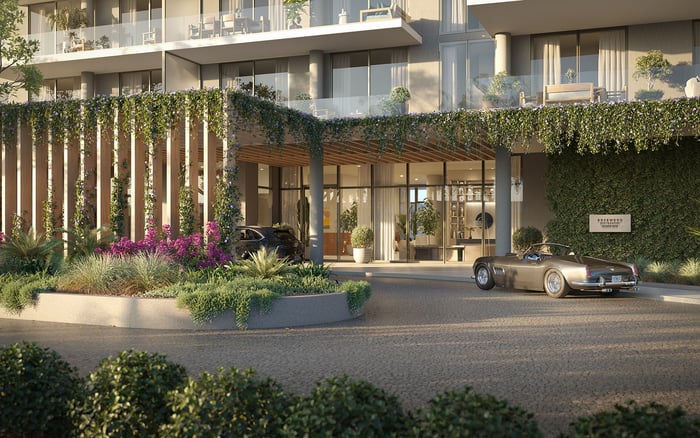
ALINA leads because its guest-control framework is the most clearly defined. The Mizner Boulevard entrance is staffed around the clock, with guests announced before entry. Each building also offers 24/7 lobby staffing, an on-site concierge, valet and security, while secured enclosed parking creates another controlled transition between vehicle and residence.
Its technology adds convenience but also warrants careful review. The building app offers smartphone or tablet access to services, amenities, cameras and trolley service. Given that breadth, buyers should confirm user permissions, retention practices and whether camera access or guest records can be segmented by household role.
2. Residences at Mandarin Oriental, Boca Raton - Via Mizner and Downtown
The Mandarin Oriental residences place brand-trained personnel at the center of the experience. The service model includes 24-hour concierge, valet, maintenance, housekeeping and security, complemented by controlled access and 24-hour access features. For an owner who values a staffed arrival sequence, that layered hospitality structure is a meaningful advantage.
App-specific privacy remains unresolved. Buyers should request the governing policy and vendor terms rather than assume that a high-touch service standard also defines digital retention, third-party sharing or deletion rights.
3. ALINA 210 - ALINA Phase 2
ALINA 210 ranks third as a distinct Phase 2 inventory choice within the broader ALINA ecosystem. Most Phase 2 residences have private or semi-private elevator access, reducing dependence on conventional shared circulation and creating a more controlled passage from lobby to home.
Its position also reflects access to the campus service model, including staffed operations and security. Even so, buyers should seek tower-specific confirmation of app configuration, staff roles and the treatment of recurring visitors rather than rely on campus-wide descriptions.
4. ALINA 220 - ALINA Phase 2
ALINA 220 follows closely, with the same Phase 2 emphasis on private or semi-private elevator access. That physical arrangement can be particularly attractive to owners seeking to minimize incidental encounters between the residence and shared areas.
This is not a separate master development, but another inventory choice within Phase 2. Less tower-specific information is publicly available about guest-app configuration. Contract and condominium-document review should therefore establish what is shared across the campus and what is administered at the individual building level.
5. Harborside Residences - Lake Boca Raton waterfront area
Harborside earns its place through physical privacy. Direct in-unit elevator access limits reliance on standard residential corridors, while dedicated garage parking supports a more contained arrival and departure sequence. For some buyers, that architectural separation may matter as much as a sophisticated visitor interface.
Digital guest-registration details are less clearly defined. Buyers should therefore evaluate the residence through direct questions about invitation controls, delivery handling, vendor access and guest-information storage.
A well-resolved visitor system should distinguish among a one-time dinner guest, recurring household staff, a contractor and a delivery. Resident-controlled tools can allow users to create invitations and modify guest-list entries, while secure management interfaces can help staff administer visitor access. The crucial issue is whether those capabilities are configured with sensible limits.
Ask whether invitations expire automatically, recurring access requires separate approval and residents can see who entered under an invitation. Permanent guest lists deserve particular scrutiny because personal information may remain in online forms. A system should not turn occasional hospitality into an indefinite digital record without clear resident awareness.
For buyers relocating from a gated community, familiarity with a gatehouse can create the false impression that every digital workflow operates the same way. A condominium may divide authority among concierge, security, valet, management and outside vendors. Each role should have access only to the information required for its task.
Begin with the app privacy policy, vendor agreement and data-retention schedule. Then request the breach-notification procedure, role-based access rules and process for deleting former guests. These documents can clarify whether the resident association, management team or technology provider controls the data and how responsibilities are divided.
Buyers should also ask whether residents can opt out of selected functions without losing essential building access. Confirm how permissions are assigned to household members, whether staff can export records, how former employees are removed and whether app access is promptly revoked when a residence changes hands. None of these points should be inferred from cameras, 24-hour staffing or smart-building language.
The same discipline applies to physical access. Private or semi-private elevators can reduce corridor exposure, but they do not establish who may release a visitor from the lobby. Announced guests are reassuring, yet buyers should still understand the protocol for unscheduled arrivals, deliveries and service professionals.
Boca Raton offers several compelling versions of controlled arrival. ALINA presents the clearest documented combination of announced guests, continuous staffing, concierge, valet, security and enclosed parking. Mandarin Oriental emphasizes brand-trained, round-the-clock service. ALINA 210 and 220 add elevator privacy within a shared campus model, while Harborside prioritizes direct residential access and dedicated parking.
The most considered purchase decision will test both halves of the proposition. The first is visible: staffing, entrances, elevators and garages. The second is largely unseen: permissions, retention, deletion and vendor accountability. In downtown Boca Raton, that dual review is becoming as consequential as finishes, views and amenity programming.
For private guidance on Boca Raton residences and a more exacting comparison of access and privacy considerations, connect with MILLION.
If branded residences are on your mind — as a home or as an allocation — we would be glad to share what we are seeing, privately.
Begin a quiet conversationALINA Residences ranks first because its Mizner Boulevard entrance is staffed 24/7 and guests are announced before entry.
Yes. Each ALINA building has 24/7 lobby staffing, along with on-site concierge, valet and security services.
The app has been described as providing smartphone or tablet access to services, amenities, cameras and trolley service.
No. Encryption, retention periods, staff permissions, third-party sharing and resident opt-out rights are not established by the available details.
The residences advertise brand-trained staff, including 24-hour concierge, valet, maintenance, housekeeping and security, plus controlled access.
No. They are separate Phase 2 inventory choices within the same ALINA project ecosystem.
Most Phase 2 residences have private or semi-private elevator access, though buyers should confirm the arrangement for a specific residence.
Harborside offers direct in-unit elevator access and dedicated garage parking, reducing reliance on conventional shared residential corridors.
Request the privacy policy, vendor agreement, retention schedule, breach procedure, role-based access rules and former-guest deletion process.
Buyers should confirm whether the system separates one-time visitors, recurring staff, vendors and deliveries instead of placing everyone on a permanent list.