A private-client shortlist of five Miami developments, separating planned dining and hospitality offerings from the chef access, service logistics, and event permissions that require written confirmation.
For a buyer who entertains frequently, a beautiful dining room is only the beginning. The more consequential questions are who can cook, where staff can circulate, which spaces residents may reserve, and whether a gathering can expand without compromising privacy. Hospitality branding can make a residence compelling, but it does not, by itself, establish those rights.
This shortlist considers five developments through that lens, retaining a qualitative order based on their dining and hospitality propositions. It is neither an investment ranking nor a confirmation of construction progress. Planned amenities should not be treated as operating services. The geographic scope also extends beyond Downtown Miami, Wynwood, and the Design District: Brickell supplies a dining-led comparator, while Aria Reserve offers a nearby waterfront alternative.
For all five, service-elevator dimensions, loading procedures, catering routes, and event guest-count limits are to be confirmed. That distinction is central to a useful private-client briefing.
1. Fouquet’s Hotel & Residences: Miami Design District
Fouquet’s is planned as an approximately 25-story hotel-and-residential development with 143 condominium residences across nearly two acres. Positioned as the Design District’s first residential offering, it pairs residential ownership with a hospitality brand. Its development partners include Raycliff Capital, Miami Design District Associates, Fort Partners, and Constellation Hotels Holding Ltd.
Its first-place position reflects the integrated hotel-and-residential concept and restaurant-brand positioning-not established private-event capabilities. For an owner planning regular hosted dinners, the decisive next step is written clarification of residents’ dining privileges, reservation priority, and any chef-service arrangements. Private-dining rights, chef access, and event capacities remain unestablished. The hospitality proposition is a reason to inquire, not permission to entertain on particular terms.
2. The Cloud One Hotel & Residences Wynwood: à-la-carte hospitality
The Cloud One is planned as an eight-story development with 85 loft-style residences, including 15 duplex penthouses. Condominium ownership is paired with à-la-carte hotel services. Planned amenities include an indoor-outdoor restaurant and bar, a rooftop pool deck with food-and-beverage service, and fitness and wellness facilities.
That combination offers potential for smaller hosted gatherings, but does not establish resident booking rights or a permitted guest count. The distinction is between enjoying restaurant or rooftop service and privately reserving either setting. A client brief should clarify whether hospitality services can support a residential dinner, whether rooftop reservations are available, and how hotel guests and residents would share the facilities. None of those arrangements should be presumed from the amenity descriptions.
3. Nobu Residences at 619 Brickell: the clearest planned chef access
The planned 75-story tower is positioned as Miami’s first Nobu-branded residential development. Its dining program includes a residents-only Nobu restaurant and a ground-floor Nobu restaurant with private dining. Planned residential services also include in-residence dining and private chef services, with Nobu Hospitality expected to oversee food and beverage.
Although third in this qualitative shortlist, Nobu has the strongest explicit planned chef-access offering. For a client whose priority is an intimate dinner prepared at home, that distinction may outweigh the overall order. Still, a private-chef service does not establish permission to bring an outside chef, guarantee availability on a particular evening, or define the scale of a catered gathering. Those operational details require separate confirmation.
4. Aria Reserve Miami: a waterfront restaurant anchor
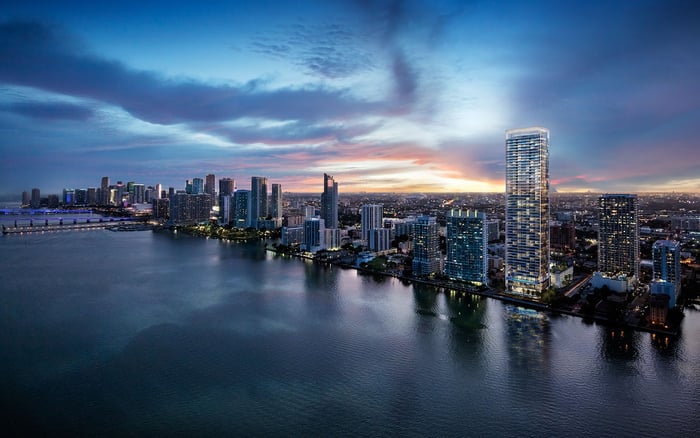
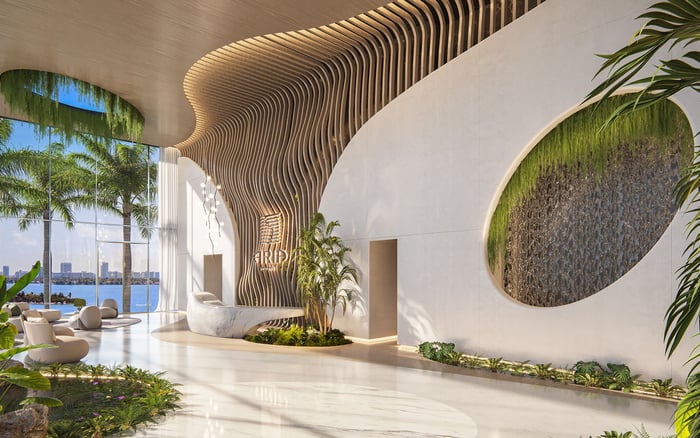
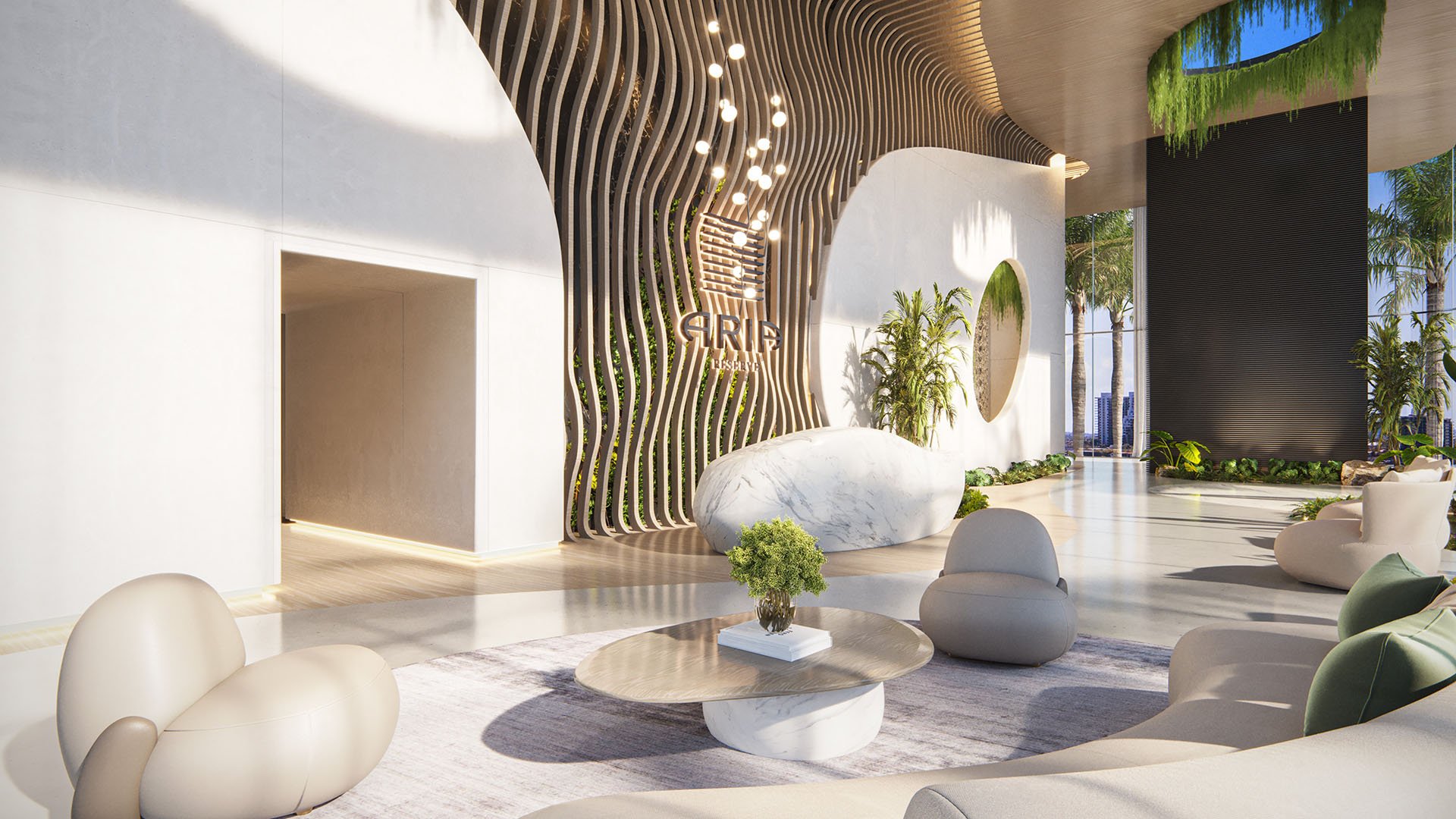
Aria Reserve is a waterfront development near Downtown Miami and the Design District, expected to contain approximately 743 luxury condominiums. Its clearest identified dining anchor is The Flatiron, a planned two-story waterfront restaurant. The combination of development scale and a named restaurant places it fourth in this entertaining-focused assessment.
For a buyer, the useful question is not whether a two-story restaurant sounds adaptable, but whether its eventual operating rules allow private rooms, partial reservations, or full buyouts. Neither the residential count nor the restaurant’s number of levels establishes event-size flexibility. Resident priority, guest access, private-chef arrangements, and permitted gathering sizes require confirmation; they cannot be inferred from scale.
5. Wave Group Development, Vitrium Capital, and Zambala Luxury Apartments condo-hotel: Wynwood lounge-led option
This proposed eight-story, 49-residence condo-hotel is planned to include approximately 3,000 square feet of ground-floor retail. Its documented amenities include an art-focused lounge, coffee bar, coworking spaces, and a fitness center. These features describe a hospitality-oriented setting with a different emphasis from the dining-led projects above.
It ranks fifth because a private restaurant or chef-service program is not confirmed. The lounge may warrant discussion for informal hosting, but its presence does not establish catering permissions, exclusivity, or event capacity. Buyers should also avoid treating planned retail space as a promised restaurant. For a client seeking recurring chef-led dinners, this option needs further clarification before it can be assessed alongside the branded dining programs.
The shortlist’s order should not obscure differences in evidence. Fouquet’s leads on its integrated hospitality concept; Nobu offers the more explicit proposition for planned private-chef and in-residence dining services. When reviewing 619 Residences by Foster + Partners + Nobu Hospitality, treat restaurant access, private dining, and cooking inside the home as three separate service questions.
For a waterfront-oriented buyer considering Aria Reserve Miami, focus on The Flatiron’s eventual reservation and operating terms rather than assuming the development’s scale translates into larger events. In Wynwood, The Cloud One’s planned restaurant and rooftop service offer a more explicit food-and-beverage proposition than the lounge-led condo-hotel.
A broader Downtown Miami search might also place Waldorf Astoria Residences Downtown Miami on the client’s comparison agenda. That is a separate inquiry-not a sixth ranked recommendation or an assertion of equivalent dining rights.
Ask for written answers that distinguish advertised amenities from resident entitlements. For private dining, establish reservation rights, resident priority, buyout availability, staffing responsibilities, and charges. For chef access, distinguish an operator-provided chef from an outside professional, and confirm kitchen access and cleanup obligations.
Service-elevator diligence should be equally specific. Request dimensions, delivery windows, loading procedures, and the approved route from arrival to kitchen or event space. Ask whether catering staff can use that route during the proposed event hours. All such logistics remain to be confirmed across this shortlist.
Finally, test event-size flexibility against the intended occasion. Seek permitted seated and standing guest counts, noise limits, insurance requirements, and rules for outside vendors. A restaurant, rooftop, or lounge becomes useful to a host only when its access and operating terms fit the gathering. The strongest selection will pair an appealing setting with clear written permissions.
For a discreet discussion of your residential priorities and entertaining requirements, connect with MILLION.
If branded residences are on your mind — as a home or as an allocation — we would be glad to share what we are seeing, privately.
Begin a quiet conversationFouquet’s Hotel & Residences ranks first for its integrated hotel-and-residential concept and restaurant-brand positioning. That position does not establish private-dining rights or event capacities.
Nobu Residences at 619 Brickell has the strongest explicit planned chef-access offering, including private chef services and in-residence dining.
The described dining programs are planned offerings and should not be treated as operating services. Availability and operating terms require confirmation.
No. Nobu in Brickell is included as a Downtown-area comparator, and Aria Reserve is a waterfront alternative near Downtown Miami and the Design District.
The Cloud One plans an indoor-outdoor restaurant and bar, plus a rooftop pool deck with food-and-beverage service. Private reservation rights and guest limits remain to be confirmed.
The Flatiron is a planned two-story waterfront restaurant. Its private-event terms and capacity are not established.
A private restaurant or chef-service program is not confirmed. Its documented amenities include an art-focused lounge, coffee bar, coworking spaces, and fitness center.
Service-elevator dimensions, loading procedures, and catering routes remain to be confirmed for all five projects.
No such permission is established here. Buyers should obtain written confirmation of outside-chef policies, kitchen access, and staffing requirements.
Request written terms covering reservation rights, buyouts, guest limits, staffing, noise restrictions, outside vendors, and event insurance. Confirm catering access and service routes separately.