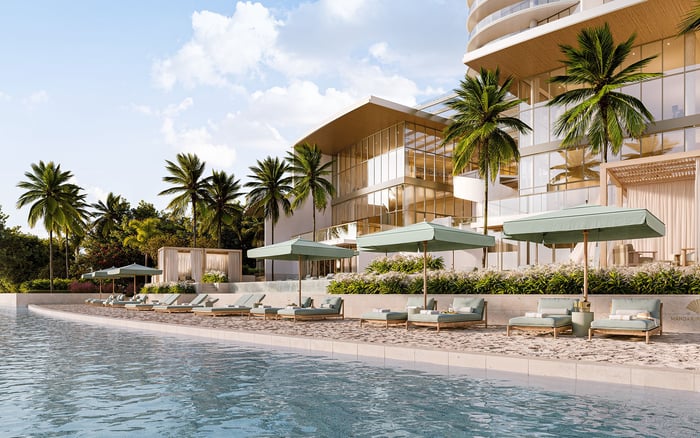
Private guest suites are planned at Mandarin Oriental Residences, West Palm Beach, but their value to an owner depends on written access rules. A buyer-focused examination of reservation priority, cancellation exposure, seasonal availability, and the documents to request before relying on the amenity.

For a waterfront homeowner, a private guest suite promises a graceful separation: family nearby, visitors comfortably accommodated, and the residence itself undisturbed. At Mandarin Oriental Residences, West Palm Beach, private guest suites are a planned resident amenity. The essential purchase question is not whether they feature in the vision, but what access an owner can reliably expect.
Publicly disclosed details establish neither a specified annual night allowance nor guaranteed peak-season availability or owner booking priority. They also leave suite inventory, nightly rates, minimum stays, reservation windows, and cancellation penalties undefined. These are unresolved diligence items-not evidence that reservations are unrestricted or cancellations are free. Written policies may exist even where public descriptions omit them.
The development is planned at 5400 N. Flagler Drive, West Palm Beach, FL 33407, along the Intracoastal Waterway with direct waterfront access. The announced 31-story building includes two- to four-bedroom residences, two multilevel private villas, and a full-floor penthouse. It remains an upcoming residential property, not an established operating address.
Planned amenities include a rooftop pool deck, wellness spa, fitness center, pickleball court, sports lounge, and private dining spaces. That breadth makes the hospitality proposition compelling, but it does not resolve how any individual amenity will operate. Buyers should distinguish the planned offering from documented use rights, operating charges, and reservation procedures.
If a guest suite is central to your floor-plan decision, treat its availability as a purchase criterion. Do not substitute anticipated access for a bedroom you know your household will need.
Start with capacity and allocation. Request the number of suites, their intended occupancy limits, and the inventory available for resident reservations. Then establish the booking hierarchy: whether owners receive an advance window, how simultaneous requests are handled, and whether any inventory is reserved for particular users or purposes.
Ask separately about owners, resident guests, and rental-program occupants. Address other categories only if applicable. A useful written policy should specify whether reservations are first-come, subject to allocation, or handled through another mechanism. None of these arrangements should be assumed here.
Next, establish eligibility. Confirm whether family members may stay without the owner present, whether reservations may be transferred, and whether limits apply per residence, household, or guest. Ask who must make the booking and who is responsible for charges. These distinctions determine whether the amenity supports independent family visits or only owner-hosted stays.
A general assurance of availability is less useful than a policy tested against your intended travel dates. Ask how winter holidays, social-season events, and peak spring travel are treated. Request any blackout dates, minimum and maximum stays, advance reservation windows, and limits on concurrent or repeat bookings.
Use a hypothetical family visit to make the discussion concrete. Ask when the reservation can first be submitted, when it becomes confirmed, and what happens if the preferred suite is unavailable. Request the waitlist procedure, if one exists, and clarify whether a confirmed booking can later be displaced under the rules.
For buyers also considering Mr. C Residences West Palm Beach, apply the same document-led comparison to any guest accommodation offered. Compare written access rights rather than assuming hospitality-oriented residences operate alike. This is a diligence framework, not a statement that another property offers equivalent suites or policies.
The disclosed information does not establish a project-specific guest-suite cancellation schedule. Do not assume general hotel cancellation rules govern a resident guest-suite reservation.
Request a policy specifying the cancellation deadline, deposit requirements, and financial consequences of cancelling at each stage. Determine whether the exposure is a forfeited deposit, a fixed charge, a percentage of the reservation, or liability for the full stay. Ask whether no-shows, early departures, and date changes are treated differently.
Seasonal rules require a separate answer. Confirm whether peak periods carry earlier deadlines or stricter penalties, and whether charges can change after confirmation. Ask for a worked example using your proposed dates and stay length, including any applicable service charges. These are questions to resolve, not confirmed project restrictions.
A Mandarin Oriental hospitality rental program is part of the publicly described offering. That does not establish shared inventory, reservation priority, or cancellation terms with the private guest suites. The rental policy remains subject to finalization in HOA documents before closing.
Request the rental-program agreement and owner-use calendar alongside the guest-suite policy. Establish whether participation affects guest-suite eligibility or booking windows, and whether the two arrangements have different administrators. Do not infer a benefit or disadvantage from rental participation without written terms.
Even when comparing The Residences at Mandarin Oriental, Miami, shared branding should not substitute for project-specific documents. The relevant question is which agreement governs this reservation at this property-not which expectations the name inspires.
The planned waterfront offering includes a promenade and marina facilities with private dockage along the Intracoastal frontage. Apply the same capacity-and-priority questions to dockage and other limited amenities: what is available, who qualifies, how access is allocated, and what separate charges or agreements may apply.
Guest-suite costs also belong in the broader ownership budget. HOA fees remain listed as TBD in pre-construction information, leaving final recurring costs unestablished. Ask which guest services, if any, are covered by assessments and which are billed separately. Request the rate sheet and service-charge schedule rather than assuming a resident amenity is complimentary.
Before relying on guest accommodation, request the condominium declaration, association bylaws and rules, guest-suite rate sheet, reservation and cancellation policy, rental-program agreement, owner-use calendar, and service-charge schedule. Have counsel reconcile any differences between sales representations and the governing documents.
Identify who administers reservations, who can amend the rules, and whether a booking is treated as a condominium amenity reservation, hotel accommodation, or managed service. Ask what notice accompanies policy changes and which terms govern an existing confirmation.
The goal is not to diminish the appeal of hospitality at home. It is to distinguish dependable use rights from discretionary access before those expectations influence a purchase. Until the terms are settled, plan important visits with an alternative accommodation option rather than a presumed reservation.
For a discreet discussion of South Florida residences and the ownership details that matter, connect with MILLION.
If branded residences are on your mind — as a home or as an allocation — we would be glad to share what we are seeing, privately.
Begin a quiet conversationThe development is planned at 5400 N. Flagler Drive, West Palm Beach, FL 33407, along the Intracoastal Waterway with direct waterfront access.
It is identified as an upcoming residential property. Buyers should distinguish planned amenities from finalized operating policies.
Yes, private guest suites are identified as a planned resident amenity. Their inclusion does not establish a specified annual night entitlement.
Publicly disclosed information does not establish owner booking priority. Request the written booking hierarchy and advance reservation windows.
The disclosed amenity information does not establish guaranteed peak-season availability. Confirm any seasonal allocation rules, blackout dates, and stay limits.
A project-specific cancellation schedule is not established by the disclosed information. Request deadlines, deposit terms, and any fixed, percentage, or full-stay penalties.
No complimentary annual night allowance is established by the disclosed details. Request the rate sheet and service-charge schedule before budgeting for visits.
The described rental program does not establish shared inventory, priority, or cancellation terms with the guest suites. Review the rental agreement and guest-suite policy separately.
That eligibility detail is not established by the disclosed information. Confirm owner-presence requirements and reservation-transfer rules in writing.
Request the condominium declaration, bylaws and rules, guest-suite rate sheet, reservation and cancellation policy, rental-program agreement, owner-use calendar, and service-charge schedule. Ask counsel to review which terms govern and who can change them.