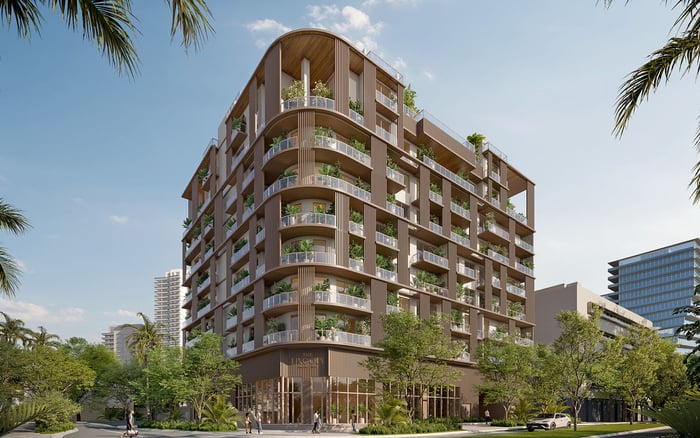
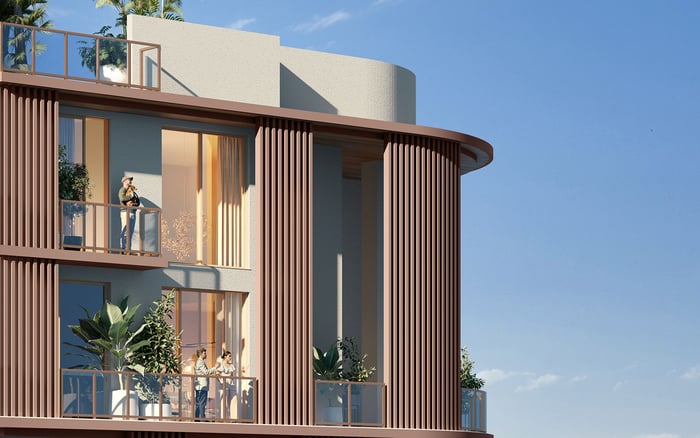
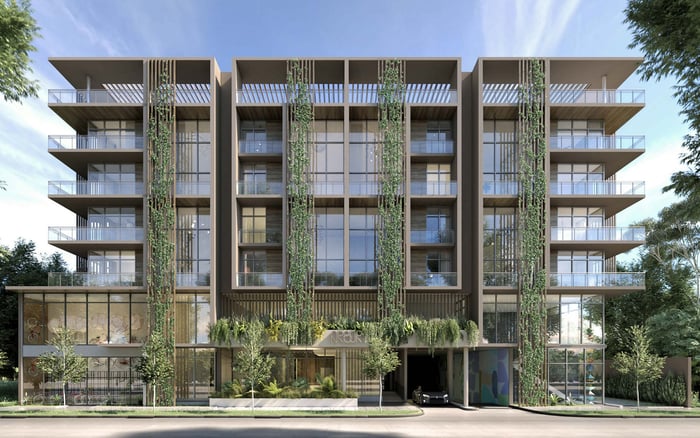
A buyer-focused comparison of two distinct Coconut Grove luxury propositions: The Well Coconut Grove’s preventive-health infrastructure and The Lincoln Coconut Grove’s heritage-led, village-scale architecture.
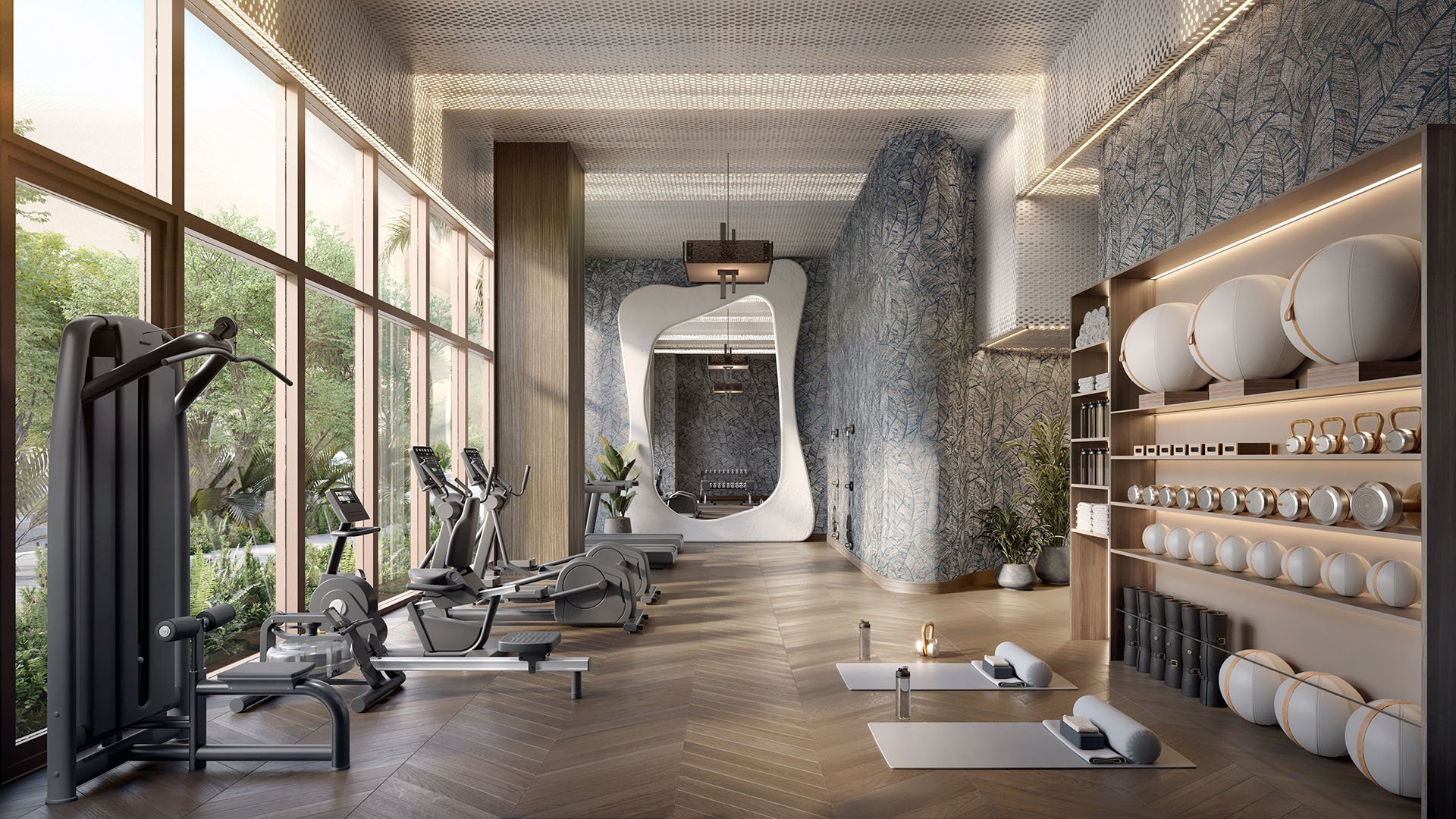
In Coconut Grove, the most compelling new residential conversations are no longer only about finish palettes, concierge scripts, or square footage. They are about what a home is meant to do. In one corner, The Well Coconut Grove advances a modern proposition in which the residence itself becomes part of a preventive health strategy. In the other, The Lincoln Coconut Grove argues for a more enduring kind of value: architecture that belongs to the Grove, respects its village rhythm, and draws from its Mediterranean and historic residential language.
For buyers moving through the upper tier of new construction in Coconut Grove, this is a meaningful divide. One project is framed around medical-grade wellness infrastructure, including advanced air filtration, water treatment, circadian lighting, and access to an integrative health ecosystem. The other is presented as an architectural response to the neighborhood itself, with deep overhangs, timber expression, terracotta sensibility, and courtyard-centered planning that feels consonant with the Grove’s long-established identity.
Neither vision is incidental. Each asks affluent buyers to prioritize a different kind of permanence. The Well suggests that true luxury is physiological performance. The Lincoln suggests that true luxury is cultural continuity and architectural character.
The Well Coconut Grove is not positioned as a conventional amenity-driven condominium with a wellness veneer. Its identity is more exacting than that. The project is framed around preventive health technologies and building systems that move beyond the expected spa-and-gym formula often seen in boutique luxury product.
That matters because buyers in this segment increasingly understand the distinction between wellness as branding and wellness as infrastructure. At The Well, the narrative centers on hospital-grade HEPA filtration in residences, centralized water purification protocols, and circadian lighting strategies intended to support daily rhythms rather than simply flatter interiors. The amenity mix also leans toward fitness, recovery, diagnostics, and ongoing wellness services, with an integrative model that includes on-site practitioners such as functional medicine doctors and registered nutritionists.
In practical terms, that positioning appeals to a buyer who may already own a polished urban residence elsewhere, but wants a primary or second South Florida home that supports longevity, recovery, and a lower-friction health routine. The planning is described as wellness-compatible, suggesting layouts oriented to uses beyond formal entertaining alone.
This places The Well in conversation with a broader evolution in premium residential thinking, one also visible in health-forward concepts outside the Grove such as The Well Bay Harbor Islands and, in a more lifestyle-led expression, Four Seasons Residences Coconut Grove. Yet The Well Coconut Grove’s proposition remains unusually specific: not simply living well, but living inside a system designed to support wellness outcomes.
The Lincoln Coconut Grove approaches luxury from nearly the opposite direction. Rather than leading with technology, it leads with memory, proportion, and context. Its design language is rooted in Mediterranean Revival and Key West influences associated with historic Grove architecture, favoring a low-rise, village-scaled presence over a generic global-glass approach.
For many sophisticated buyers, that distinction is not nostalgic. It is strategic. In a market where so much new product seeks differentiation through spectacle, contextual architecture can feel rarer, and in some cases more defensible over time. The Lincoln emphasizes traditional details such as terracotta tile, timber elements, courtyard planning, and deep overhangs, all of which speak to both climatic intelligence and neighborhood continuity.
Just as importantly, the project is framed to align with the design expectations that shape this part of Coconut Grove, including the area’s historic and preservation-minded sensibility. Near heritage landmarks and long-established village patterns, The Lincoln’s residential concept appears designed to feel discovered rather than imposed.
That makes it particularly compelling for buyers who want the Grove experience in its most legible form: walkable streets, a sense of local lineage, and architecture that feels like it could have emerged from the neighborhood’s own design memory. In spirit, it belongs to the same contextual family as Arbor Coconut Grove and Opus Coconut Grove, where lower-scale living and neighborhood fit carry as much weight as amenities.
The easiest reading is to say that The Well is for wellness buyers and The Lincoln is for architecture buyers. That is directionally true, but too simple for the level of capital these projects attract.
The more nuanced distinction is this: The Well asks whether a residence can actively improve the quality of everyday life through environmental and service systems. The Lincoln asks whether a residence can deepen one’s relationship to Coconut Grove through architecture that reflects place, history, and urban texture.
A buyer drawn to The Well may see the home as a high-functioning private environment, one that filters, calibrates, restores, and supports routine. A buyer drawn to The Lincoln may see the home as a cultural object as much as a residence, with value rooted in materials, scale, and compatibility with the Grove’s established character.
There is also a subtle difference in the social expression of each project. The Well’s identity is inherently inward and performance-based. The Lincoln’s is more outward and civic in tone, with communal courtyards and placemaking suggesting a relationship not just to residents, but to the neighborhood fabric itself.
For the new-project audience in South Florida, Coconut Grove remains one of the rare submarkets where two very different luxury ideals can coexist credibly. Buyers who prioritize measurable environmental quality, integrated health services, and a residence shaped around preventive living will likely find The Well’s proposition unusually aligned with contemporary priorities.
Buyers who care more about village-scale design, historical resonance, and architecture that feels inseparable from Coconut Grove itself may view The Lincoln as the more emotionally intelligent purchase. It is less about optimization and more about belonging.
There is no need to force a winner because the value systems are not interchangeable. The Well is not trying to be romantic. The Lincoln is not trying to be clinical. Each is clear about its thesis, and that clarity is itself a luxury.
In a marketplace often crowded with broad claims of exclusivity, both projects stand out by being more precise. One treats health as the new frontier of residential excellence. The other treats heritage as a form of scarcity that cannot be replicated once lost.
Because publicly disclosed pricing and comparable data remain limited, buyers should focus less on headline positioning and more on alignment with personal living patterns. If daily wellness rituals, air and water quality, recovery programming, and practitioner access are central to how you define domestic comfort, The Well’s concept is likely more than marketing language.
If your priorities lean toward architectural integrity, a lower-scale residential atmosphere, and a home that participates in the visual and cultural identity of Coconut Grove, The Lincoln may offer the stronger long-term emotional fit.
The decisive question is not which project is more luxurious in the abstract. It is which one interprets luxury in a way that matches your life. In Coconut Grove, that is becoming the only comparison that matters.
What is the main difference between The Well Coconut Grove and The Lincoln Coconut Grove? The Well centers on medical-grade wellness infrastructure and services, while The Lincoln emphasizes classic Grove architecture and contextual design.
Is The Well Coconut Grove focused more on amenities or health systems? Its positioning is more health-system driven, with air, water, lighting, recovery, and practitioner access central to the concept.
What architectural style informs The Lincoln Coconut Grove? It draws from Mediterranean Revival and Key West influences associated with Coconut Grove’s historic design language.
Which project is better for buyers prioritizing longevity and preventive living? The Well is the clearer fit for buyers who want wellness integrated into the building and daily residential experience.
Which project better reflects historic Coconut Grove character? The Lincoln is more directly aligned with the Grove’s village-scale, heritage-minded architectural identity.
Are both projects considered boutique developments? Both are presented with a more curated Coconut Grove sensibility rather than a high-density tower approach, though their concepts differ sharply.
Do either of these projects rely on classic social amenities alone? No. The Well shifts toward diagnostics, fitness, and recovery, while The Lincoln foregrounds courtyards, form, and placemaking.
Is pricing the best way to compare these two residences? Not entirely. The sharper comparison is between lifestyle alignment, architectural preference, and the kind of value each home is built to deliver.
Why does Coconut Grove support both concepts so well? The neighborhood attracts affluent buyers who value walkability, discretion, and a more layered idea of luxury than many other South Florida markets.
Who should explore both projects further? Any buyer weighing health-oriented new construction against heritage-driven residential design in Coconut Grove should compare both closely.
For a confidential assessment and a building-by-building shortlist, connect with MILLION Luxury.
If branded residences are on your mind — as a home or as an allocation — we would be glad to share what we are seeing, privately.
Begin a quiet conversation