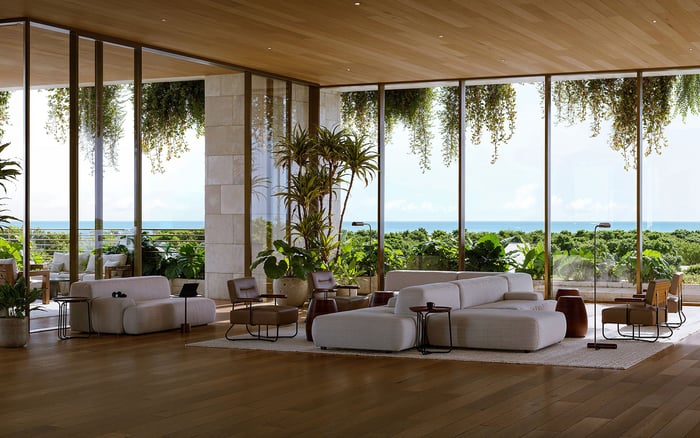
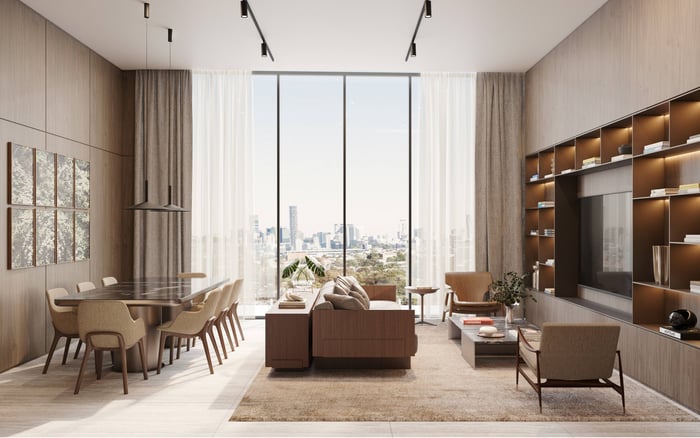
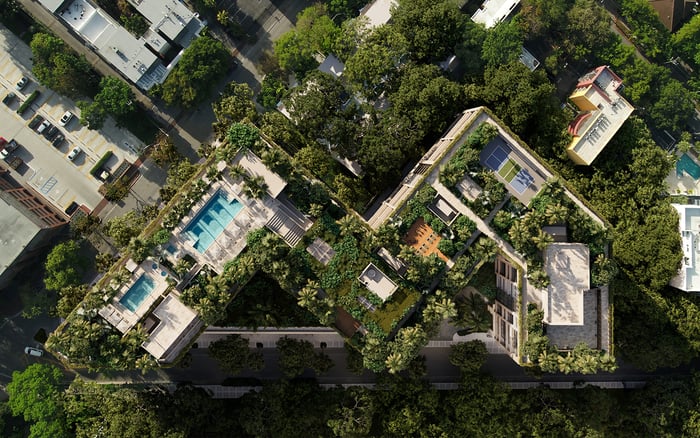
In Coconut Grove, luxury buyers are weighing two distinct architectural attitudes. Ziggurat Coconut Grove presents a sculptural, stepped silhouette designed to stand apart, while The Lincoln Coconut Grove favors contextual modernism, measured proportions, and understated integration with the neighborhood’s historic fabric. For readers, the comparison is less about headline drama than about lifestyle alignment: statement architecture versus calm refinement, unconventional floorplans versus familiar luxury typologies, and visual landmark potential versus seamless village living.
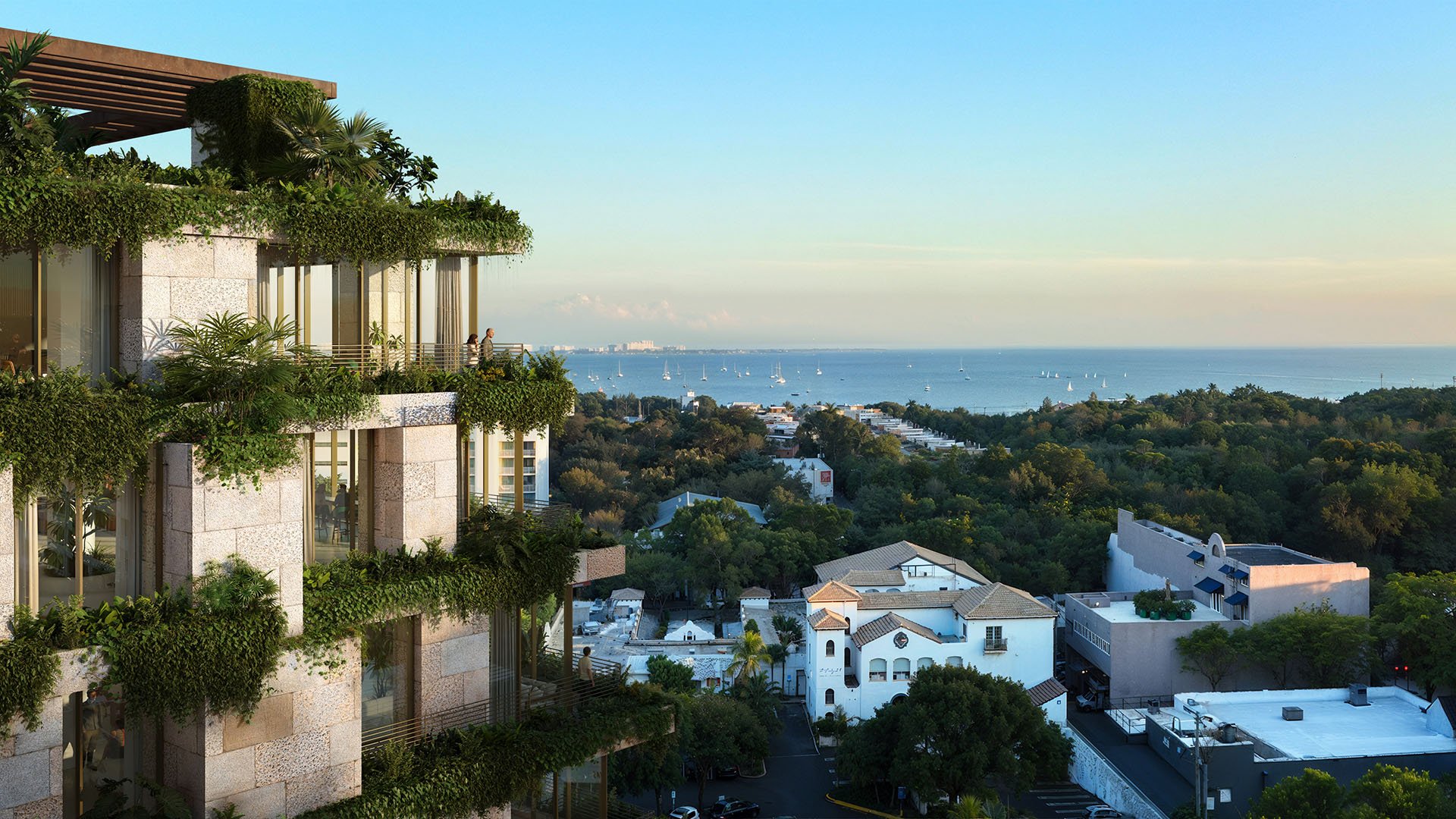
Coconut Grove occupies a rare position in South Florida luxury real estate. It is both deeply established and newly refined as an ultra-premium, walkable enclave, with the Village Center, dining, and the waterfront helping sustain long-term buyer interest. Because it is also Miami’s oldest residential neighborhood, design here carries a different burden than it does in districts where novelty alone can drive the conversation.
That tension makes the comparison between Ziggurat Coconut Grove and The Lincoln Coconut Grove especially revealing. Both address the top tier of the local market, yet they approach luxury from opposite directions. One treats the building as an object of architectural authorship. The other positions it as a refined participant in a historic streetscape.
For buyers, this is not simply a matter of taste. It shapes how a residence feels on arrival, how floorplans are experienced, how outdoor space is woven into daily life, and how naturally a project settles into Coconut Grove’s long memory.
Ziggurat Coconut Grove is the more expressive proposition. Its pyramid-tiered massing and stepped geometry depart from the rectilinear language still common across much of Miami’s luxury condominium inventory. The result is a form that reads less like a standard residential stack and more like a composed silhouette designed to be recognized at once.
That stepped profile is not merely visual theater. It suggests a residential experience organized around layered terraces and outdoor rooms, with the architecture itself creating depth, shadow, and spatial variation. In a market where many projects compete through finishes and amenities, Ziggurat Coconut Grove appears to compete first through form.
This is why it is best understood as object-oriented architecture. The residence is not only inside the building; the building itself becomes part of the ownership proposition. Buyers drawn to strong authorship, landmark potential, and a more individual expression of luxury are likely to see that as a meaningful advantage.
Yet the same qualities that make Ziggurat Coconut Grove compelling may also make it less conventional. Stepped geometry can produce layouts that feel more tailored and less standardized than a typical open-plan luxury product. For some purchasers, that is precisely the appeal. For others, especially those who prioritize planning efficiency or more predictable room arrangements, it may require a more deliberate fit.
If Ziggurat Coconut Grove seeks distinction, The Lincoln Coconut Grove is framed around restraint. Its design language is more minimalist and proportionally composed, with clean lines, measured rhythm, and a stronger instinct for contextual fit. In Coconut Grove, that approach carries its own sophistication.
Rather than pursuing sculptural drama, The Lincoln Coconut Grove is better understood as understated luxury. The appeal lies in balance, discretion, and the way the project aligns with neighborhood life rather than trying to dominate it. That can be especially persuasive in a district where buyers often value the experience of walking to restaurants, shops, and waterfront destinations as much as they value the residence itself.
The Lincoln Coconut Grove also appears closer to the conventional luxury typologies many buyers already understand: open-plan layouts, familiar bedroom configurations, and a lifestyle proposition tied to ease of use. In practical terms, that may broaden its appeal among purchasers who want a polished new-construction experience without committing to a more experimental architectural statement.
This is an important distinction. In luxury, understatement is not the absence of ambition. It is a different kind of confidence.
Coconut Grove is not a blank canvas. Its age, preservation expectations, and established identity mean that every contemporary project enters into dialogue with the neighborhood. Some developments aim to disappear into that conversation; others seek to elevate it through contrast.
Ziggurat Coconut Grove clearly belongs to the latter camp. It aims to stand out visually, and for certain buyers that sense of singularity is inseparable from value. A residence that feels unmistakable can carry emotional power well beyond square footage. The question is whether that distinction feels like an enhancement of place or a challenge to it.
The Lincoln Coconut Grove belongs to the former camp. It is positioned to blend more seamlessly into the historic streetscape, which may feel especially appropriate to buyers who see Coconut Grove less as a stage for architectural bravura and more as a cultivated neighborhood where proportion, rhythm, and discretion should prevail.
This broader Grove conversation can also be seen in the surrounding luxury inventory. Projects such as Arbor Coconut Grove and Vita at Grove Isle reflect the area’s appetite for highly designed residences, but each interprets prestige through a different relationship to landscape, privacy, and neighborhood texture.
For sophisticated buyers, architecture matters most when it enhances or complicates daily life. This is where the contrast between the two projects becomes tangible.
Ziggurat Coconut Grove is likely to resonate with purchasers who want their home to feel curated, unusual, and visually memorable. They may place a premium on terraced living, on spaces that do not feel interchangeable, and on the intangible prestige of owning within a building that is instantly identifiable. This is often the mindset of the design-forward buyer, someone who values authorship as much as convenience.
The Lincoln Coconut Grove is likely to appeal to buyers who want a refined residence embedded within the rituals of the neighborhood. They may prioritize straightforward livability, proximity to the Village Center, and a polished but less performative expression of status. For this audience, the luxury lies in frictionless use: an elegant plan, walkable surroundings, and architecture that does not ask to be explained.
Neither profile is inherently more sophisticated. They simply express different versions of taste.
Both developments sit within Coconut Grove’s upper-tier market, but pricing, active inventory, and availability are not disclosed with enough consistency to allow for a stable side-by-side numerical comparison. In practice, buyers evaluating either project should treat the decision as one of architectural alignment first and current opportunity second.
That is particularly true in a neighborhood where walkability, waterfront proximity, and cultural familiarity can shape demand nearly as much as building identity. A buyer deciding between Ziggurat Coconut Grove and The Lincoln Coconut Grove is not merely purchasing a residence. The buyer is choosing between two interpretations of what new luxury should look like in one of Miami’s most historically sensitive enclaves.
The takeaway is clear. Ziggurat Coconut Grove is the bolder, more maximalist proposition, designed for those who want architecture to signal presence. The Lincoln Coconut Grove is the quieter, more contextual proposition, designed for those who see prestige in restraint. In Coconut Grove, that is not a minor stylistic difference. It is the entire thesis.
What is the core design difference between Ziggurat Coconut Grove and The Lincoln Coconut Grove? Ziggurat Coconut Grove is defined by stepped, sculptural massing, while The Lincoln Coconut Grove favors restrained contextual modernism.
Which project feels more avant-garde? Ziggurat Coconut Grove reads as the more avant-garde option because its architecture is conceived as a visual statement.
Which project is more understated? The Lincoln Coconut Grove is the more understated choice, emphasizing proportion, rhythm, and seamless neighborhood fit.
Does Coconut Grove’s history affect new development? Yes. New luxury projects in Coconut Grove must respond more carefully to context because the neighborhood carries preservation expectations and a long-established identity.
Are the floorplans likely to feel different? Yes. Ziggurat Coconut Grove may produce less conventional layouts, while The Lincoln Coconut Grove is associated with more familiar luxury typologies.
Who is the likely buyer for Ziggurat Coconut Grove? It is best suited to a design-driven purchaser who wants the residence to double as an architectural statement.
Who is the likely buyer for The Lincoln Coconut Grove? It is likely to appeal to buyers who prioritize daily livability, walkability, and discreet luxury over formal drama.
Is one project definitively better for investment? Not on publicly disclosed information alone. The stronger choice depends on timing, availability, and how each buyer values architecture versus ease of use.
Why is walkability so important in this comparison? In Coconut Grove, access to the Village Center, dining, and the waterfront is part of the luxury equation and shapes buyer preference.
What should buyers focus on before making a decision? They should evaluate design philosophy, floorplan comfort, terrace use, and neighborhood fit before reducing the choice to price.
When you're ready to tour or underwrite the options, connect with MILLION Luxury.
If branded residences are on your mind — as a home or as an allocation — we would be glad to share what we are seeing, privately.
Begin a quiet conversation